

Training and development in aviation play a vital role in improving safety, operational efficiency, customer service, and employee performance. This guide explores essential aviation training programs, effective learning methods, leadership development, and future industry trends to help airlines, airports, and ground handling teams build a skilled and professional workforce.
Table of Contents
Introduction

The aviation enterprise depends on skilled, informed, and properly trained employees to hold aircraft operations safe, airport services green, and passengers satisfied. From pilots and cabin crew to ground managing staff, renovation technicians, airport security personnel, and operations managers, each professional has a critical responsibility.
This is why training and improvement in aviation is more than a human resources pastime. It is a critical part of operational safety, carrier quality, worker overall performance, and long-term-period commercial enterprise fulfillment.
Aviation specialists’ paintings are in a traumatic surroundings where methods have to be accompanied cautiously, conversation has to be clear, and selections frequently want to be made below strain. Even skilled employees need possibilities to refresh their expertise, exercise new skills, and recognize modifications in system, generation, and operating methods.
In this manual, we can explore the importance of aviation schooling, the one-of-a-kind types of training programs, effective employee improvement methods, common demanding situations, and sensible techniques airways and airports can use to build a more potent body of workers.
What Is Training and Development in Aviation?

Training and development in aviation refers to the structured process of improving employees’ knowledge, technical abilities, professional behavior, and job-related competencies.
Although the terms are closely related, training and development in aviation have slightly different purposes.
Training focuses on helping employees perform their current duties correctly, safely, and efficiently. It may include learning standard operating procedures, handling airport equipment, responding to emergencies, or using airline systems.
Development focuses on preparing employees for greater responsibilities and future career opportunities. It includes leadership development, management skills, communication, decision-making, and professional growth.
For example, a newly recruited ground handling agent may receive training on passenger check-in, baggage procedures, and aircraft turnaround activities. Later, that employee may participate in leadership development to prepare for a supervisor or duty officer position.
Both activities contribute to a competent workforce. The International Civil Aviation Organization (ICAO) promotes competency-based training approaches that focus on the knowledge, skills, and behaviors required to perform specific tasks to an established standard.
Why Is Aviation Training Important?
Aviation operations involve multiple teams working together within strict time frames. A small communication failure or misunderstanding can affect safety, operational efficiency, and the passenger experience.
A well-planned training program helps employees understand their responsibilities and perform them consistently.
1. Improving Aviation Safety
Safety is the foundation of aviation operations. Employees must understand hazards, follow approved procedures, use equipment correctly, and report unsafe conditions.
Aviation safety training may cover ramp safety, aircraft ground damage prevention, fire awareness, emergency procedures, personal protective equipment, and hazard reporting.
For example, ramp personnel must understand the risks associated with moving vehicles, aircraft engines, baggage-loading equipment, and restricted operating areas.
Regular training and competency assessments help reinforce safe working practices. However, training must also be supported by proper supervision, suitable equipment, clear procedures, and an effective safety management system.
2. Improving Operational Efficiency
Airports operate through coordination between airlines, ground handling companies, airport authorities, security teams, baggage services, and other operational departments.
Employees need to understand how their individual responsibilities affect the wider operation.
Training can improve staff scheduling, aircraft turnaround coordination, baggage handling, passenger processing, and communication between departments.
Consider a delayed departure caused by baggage-loading problems. A trained supervisor should be able to coordinate with the ramp team, load control, and relevant airline personnel while following approved procedures.
Effective coordination can reduce avoidable delays and improve operational reliability.
3. Enhancing Customer Service
Passengers may encounter long queues, delayed flights, missed connections, lost baggage, or unexpected changes to their travel plans.
In these situations, frontline employees need more than technical knowledge. They also require patience, empathy, communication skills, and the ability to explain available options clearly.
Customer service training helps employees listen carefully, manage complaints professionally, provide accurate information, and remain calm under pressure.
A passenger who receives respectful and useful assistance may have a better impression of the airline, even when the original problem cannot be resolved immediately.
4. Reducing Operational Errors
Many aviation tasks require employees to follow precise instructions and complete checks in the correct sequence.
Training helps staff understand why procedures matter instead of simply memorizing individual steps.
Practical exercises, supervised work, and competency assessments can help identify misunderstandings before they lead to operational problems.
Employees should also be encouraged to report mistakes and near misses through the appropriate reporting systems so that organizations can identify risks and improve their processes.
5. Supporting Employee Career Growth
Aviation offers career opportunities across ground handling, passenger services, baggage operations, cargo, airport administration, safety, training, and management.
Training helps employees build the competencies needed to progress into more responsible positions.
For instance, a passenger service agent may develop the skills required to become a team leader, shift supervisor, duty officer, or airport operations manager.
A clear development pathway can also improve motivation, employee engagement, and staff retention.
Major Types of Training and Development in Aviation
Different aviation roles require different training programs. The content should reflect the employee’s responsibilities, applicable regulations, organizational procedures, and operational risks.
1. Aviation Safety Training
Safety training helps employees recognize hazards, understand safe working practices, and respond appropriately to abnormal situations.
Common topics include:
- Airport ramp safety and hazard awareness.
- Aircraft ground damage prevention.
- Emergency response procedures.
- Fire safety and evacuation awareness.
- Personal protective equipment.
- Incident and hazard reporting.
- Human factors and error management.
Training requirements vary according to the employee’s job, applicable regulations, and employer procedures.
2. Technical and Operational Training
Technical training provides employees with the knowledge and practical skills needed to perform their assigned duties.
For airport ground handling personnel, this may include baggage-loading procedures, ground support equipment, aircraft turnaround coordination, load-related communication, and the safe movement of equipment around aircraft.
Airline operations staff may require training in flight information systems, departure control systems, operational documentation, and disruption management.
Maintenance personnel, pilots, and air traffic controllers have separate role-specific training, qualification, and licensing requirements.
The objective is to ensure that employees can perform the tasks assigned to them to the required standard.
3. Customer Service Training
Customer service is an important part of airline and airport performance because employees regularly interact with passengers from different countries and cultural backgrounds.
Useful training subjects include
- Professional communication.
- Complaint handling and service recovery.
- Cultural awareness and sensitivity.
- Passenger assistance and special service requests.
- Conflict management and de-escalation.
- Managing queues and difficult situations.
- Providing accurate travel information.
Employees should practice realistic situations rather than relying entirely on classroom presentations.
For example, a trainer can simulate a passenger whose baggage has not arrived. The employee must listen, verify the available information, explain the next steps, and follow the applicable baggage-handling process.
4. Leadership and Management Development
Supervisors and managers need skills that extend beyond technical knowledge.
They must coordinate teams, allocate resources, monitor performance, communicate with stakeholders, and make decisions within their authority.
Leadership development may cover:
- Staff planning and shift management.
- Team briefings and debriefings.
- Conflict resolution.
- Performance monitoring.
- Decision-making under pressure.
- Incident escalation and reporting.
- Coaching and mentoring.
- Coordination between operational departments.
A supervisor who can communicate expectations clearly and identify problems early can help the team work more effectively.
5. Aviation Security Training
Aviation security training prepares employees to understand and follow applicable security procedures.
Depending on the role, training may address access control, restricted areas, security awareness, suspicious activity reporting, passenger screening responsibilities, and the handling of security-related incidents.
Security training must follow applicable national regulations, airport security programs, and employer requirements. Employees should receive the training appropriate to their authorized duties.
6. Emergency and Crisis Management Training
Airports and airlines need employees who understand how to respond to unexpected events.
Examples include medical emergencies, severe weather, equipment failures, operational disruptions, and security incidents.
Training may include tabletop exercises, simulated scenarios, drills, and coordination exercises involving relevant departments.
The aim is to clarify responsibilities, strengthen communication, and help employees follow established emergency plans.
7. Digital and Systems Training
Technology continues to change how airlines and airports manage passengers, baggage, flights, and operational information.
Employees may need training on departure control systems, baggage reconciliation systems, workforce scheduling tools, reporting platforms, and other systems used in their roles.
Digital training should also cover data accuracy, access permissions, cybersecurity awareness, and the correct use of operational information.
When employees understand the systems they use, they are better prepared to work efficiently and identify problems that require support.
Effective Methods for Aviation Staff Training

The best training method depends on the task, the employee’s experience, and the level of risk involved.
Aviation organizations often benefit from combining several learning methods.
Classroom Training
Classroom sessions are useful for introducing procedures, explaining regulations, discussing safety principles, and developing theoretical knowledge.
Instructors can use presentations, demonstrations, group discussions, and case studies to help employees understand the subject.
However, classroom learning alone may not be enough for tasks that require practical ability.
On-the-Job Training
On-the-job training allows employees to practice tasks in their actual working environment under appropriate supervision.
For example, a new airport employee may observe an experienced colleague before performing assigned tasks under supervision.
The trainer should provide clear instructions, demonstrate the correct method, monitor performance, and give constructive feedback.
Employees must not perform restricted or safety-critical duties independently until they meet the applicable authorization and competency requirements.
Simulation-Based Training
Simulations allow employees to practice selected scenarios without exposing real operations to unnecessary risk.
Examples include aircraft turnaround coordination exercises, emergency response scenarios, passenger disruption simulations, and role-play activities involving difficult customer interactions.
Simulations are particularly useful when a situation is difficult to practice safely or frequently during normal operations.
E-Learning and Digital Courses
Online learning gives employees flexible access to course materials, assessments, and refresher training.
It can be particularly useful for large organizations with employees working across different shifts or locations.
Digital learning should complement practical instruction when employees need hands-on experience or direct assessment.
Coaching and Mentoring
Coaching helps employees improve specific skills through guidance, feedback, and repeated practice.
Mentoring provides longer-term professional support from experienced colleagues who can share knowledge about career development, workplace expectations, and leadership responsibilities.
Both methods can help preserve organizational knowledge when experienced employees move into other roles or leave the organization.
Competency-Based Training
Competency-based training focuses on whether an employee can perform a task to the required standard, rather than simply whether the employee has attended a course.
ICAO’s training guidance supports the development of structured training based on defined competencies and performance objectives.
For example, a ramp employee might need to demonstrate the correct application of relevant safety procedures, while a supervisor may be assessed on communication, coordination, and decision-making in a simulated operational scenario.
Assessment criteria should be clear, documented, and appropriate to the role.
How to Develop an Effective Aviation Training Program
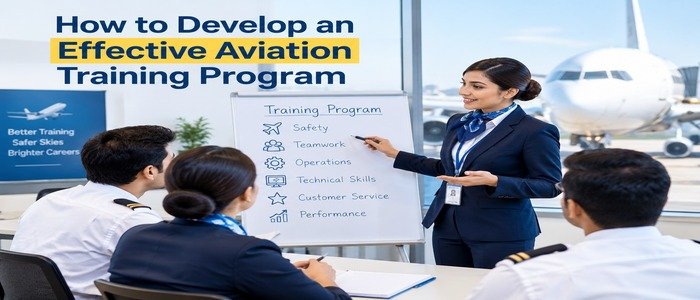
A successful training program begins with a clear understanding of what employees need to learn.
Step 1: Identify Training Needs
Review job requirements, performance records, audit findings, incident reports, employee feedback, and changes in operating procedures.
Identify the difference between the skills employees currently demonstrate and the competencies their roles require.
Not every performance problem requires training. Some issues may result from insufficient staffing, unclear instructions, unsuitable equipment, or ineffective processes.
Step 2: Define Learning Objectives
Each course should have specific objectives that describe what employees must know or be able to do.
For example, after a baggage-handling course, employees may need to demonstrate the correct procedure for identifying and escalating a baggage discrepancy.
Clear objectives help trainers select suitable learning activities and assess whether the training has achieved its purpose.
Step 3: Develop Relevant Training Materials
Training materials should reflect current approved procedures and the responsibilities of the intended audience.
Useful resources include practical checklists, diagrams, short videos, case studies, demonstrations, and scenario-based exercises.
Materials should be reviewed when procedures, equipment, or applicable requirements change.
Step 4: Select Qualified Trainers
Trainers should have the appropriate subject knowledge, practical experience, and instructional competence for the course they deliver.
Where required, they must also hold relevant qualifications or approvals.
An experienced operational employee can provide valuable practical insight, but experience alone does not automatically qualify someone to deliver every type of regulated training.
Step 5: Deliver the Training
Choose the method that best matches the learning objectives.
A course may combine classroom instruction, supervised practice, online modules, demonstrations, and simulated exercises.
Employees should have opportunities to ask questions and practice the tasks relevant to their roles.
Step 6: Assess Employee Competency
Use written tests where theoretical knowledge needs to be checked and practical assessments where employees must demonstrate a skill.
Assessment should measure performance against established criteria.
If an employee does not meet the required standard, provide additional instruction and reassessment as appropriate.
Step 7: Monitor Results and Improve
Training should not end when a certificate is issued.
Managers should monitor whether employees apply what they learned during daily operations.
Useful indicators include competency assessment results, recurring procedural errors, audit findings, service complaints, operational delays, and employee feedback.
The organization can use these findings to improve course content and identify further training needs.
Challenges in Aviation Training and Development
Although aviation training is essential, organizations may face practical difficulties when implementing it.
Managing Shift Work and Operational Demands
Airports operate across different shifts, and employees may not be available for training at the same time.
Organizations can address this challenge by offering multiple sessions, planning refresher training in advance, and using digital learning for suitable subjects.
Keeping Training Materials Updated
Procedures, equipment, systems, and regulatory requirements can change.
Outdated materials may create confusion or encourage incorrect working practices.
Training teams should use controlled documents, review schedules, and appropriate communication processes to keep content current.
Measuring Training Effectiveness
Course attendance does not necessarily prove that an employee can perform a task correctly.
Organizations should combine knowledge tests with practical assessments and workplace performance monitoring.
They should also consider other factors that affect results, such as staffing levels, equipment availability, supervision, and workload.
Maintaining Employee Engagement
Employees may lose interest when training is repetitive, overly theoretical, or disconnected from their daily duties.
Trainers can improve engagement by using realistic examples, interactive discussions, short scenarios, and practical demonstrations.
Employees should understand how each course relates to their responsibilities and professional growth.
Balancing Costs and Training Quality
Training requires time, instructors, equipment, facilities, and sometimes specialist simulators.
Reducing unnecessary costs is reasonable, but essential safety and competency requirements must remain in place.
A more effective approach is to prioritize training according to operational risk, regulatory requirements, and demonstrated performance gaps.
How Can Aviation Training Be Measured?
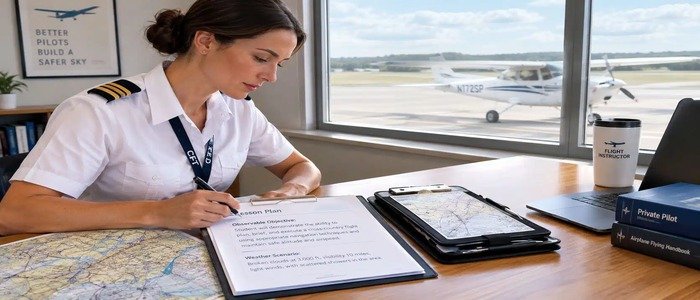
Aviation managers need reliable ways to determine whether training is producing useful results.
A balanced evaluation should consider several indicators.
1. Competency assessment results: Measure how many employees meet the required performance standards.
2. Compliance and audit findings: Review whether employees follow approved procedures and whether recurring gaps are identified.
3. Operational performance: Monitor relevant indicators such as avoidable turnaround delays, baggage discrepancies, and procedural errors.
4. Customer service performance: Examine complaint patterns, service quality assessments, and passenger feedback.
5. Employee development: Track completion of required learning, progress toward role-specific competencies, and readiness for additional responsibilities.
6. Training feedback: Ask participants whether the course was clear, practical, and relevant to their jobs.
No single indicator can prove that training caused an improvement. Managers should review trends alongside other operational factors and use the results to guide further action.
The Future of Training and Development in Aviation
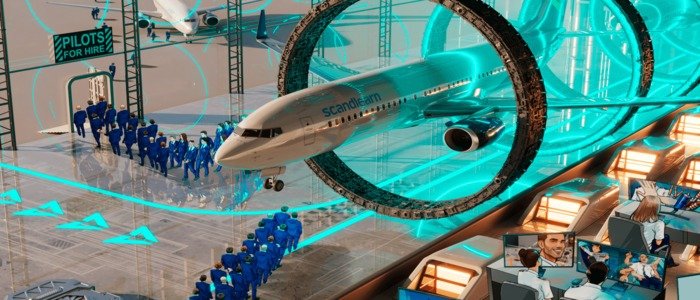
Aviation training is evolving as organizations adopt new technology, digital learning tools, and more structured approaches to competency assessment.
Artificial Intelligence and Adaptive Learning
AI-supported learning tools may help organizations personalize learning materials, recommend refresher topics, and provide practice exercises.
These tools should be reviewed for accuracy and suitability, particularly when content relates to safety-critical procedures. They should not replace approved training or qualified human assessment where these are required.
Virtual Reality and Immersive Simulations
Virtual reality can provide realistic practice environments for selected tasks, including emergency scenarios, equipment familiarization, and procedural training.
Its value depends on how well the simulation reflects the actual task and whether learning outcomes transfer to real working conditions.
Continuous Professional Development
Employees need opportunities to update their knowledge throughout their careers.
Refresher courses, mentoring, leadership programs, technical workshops, and supervised practice can help professionals maintain their competencies and prepare for changing responsibilities.
Greater Focus on Human Factors
Human factors training helps aviation professionals understand how communication, workload, fatigue, teamwork, and decision-making can influence performance.
It can support better coordination and error management when combined with appropriate operational systems and organizational practices.
Data-Driven Training Decisions
Training teams can use assessment results, audit findings, and operational data to identify recurring weaknesses.
For example, if several teams demonstrate the same misunderstanding of a procedure, managers may need to review the training materials or the procedure itself rather than treating the issue as an individual employee failure.
Conclusion Training and development in aviation

Training and development in aviation are essential for maintaining a competent workforce, supporting operational safety, improving customer service, and preparing employees for future responsibilities.
Airlines, airports, and ground handling companies should treat training as an ongoing process rather than a one-time requirement. Effective programs begin with clearly identified needs, use suitable learning methods, assess practical competency, and evaluate workplace results.
Employees also have an important role in their own development. By improving technical knowledge, communication, teamwork, problem-solving, and leadership skills, aviation professionals can strengthen their performance and prepare for new career opportunities.
Ultimately, a strong aviation workforce is built through the combination of effective training, competent supervision, clear procedures, and a commitment to continuous improvement.
Training and development in aviation (FAQs)

1. Why is training and development in aviation is important?
Training and development in aviation help aviation employees perform their duties safely, follow approved procedures, improve operational efficiency, deliver better customer service, and prepare for additional responsibilities.
2. What types of training are required in the aviation industry?
Training depends on the employee’s role and applicable requirements. Common areas include aviation safety, technical operations, customer service, aviation security, emergency response, human factors, and leadership development.
3. What is competency-based training in aviation?
Competency-based training focuses on whether an employee can demonstrate the knowledge, skills, and behaviors needed to perform specific tasks to an established standard. It combines clear learning objectives with appropriate assessment methods.
4. How can airports and airlines improve employee training?
They can identify performance gaps, use current training materials, select qualified instructors, combine theoretical and practical learning, assess competency, and review workplace performance to identify further improvement opportunities.
5. What are the future trends in aviation training and development?
Important trends include digital learning, simulation-based training, virtual reality, AI-supported learning, continuous professional development, human factors training, and data-informed competency assessment. These approaches should complement applicable regulatory requirements and approved operational procedures.
Facebook: https://www.facebook.com/rehan.ghauri
Instagram: https://www.instagram.com/contentflyers0/
Twitter: https://www.twitter.com/contentflyers0/
Pinterest: https://www.pinterest.com/contentflyers0/
