

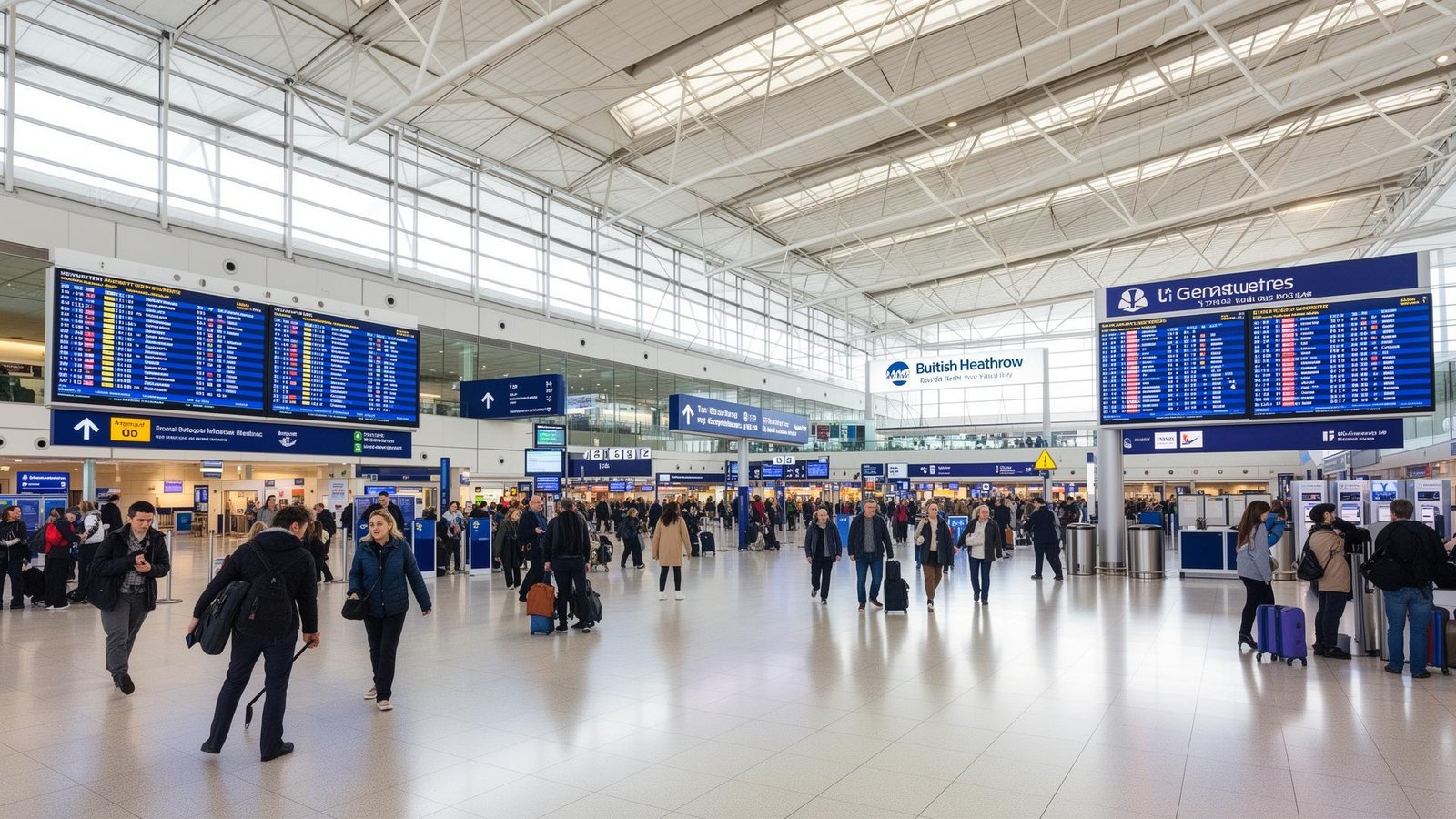
Airport branding strategies are more than transportation hubs; they are powerful business destinations and important gateways to cities and countries. In today’s competitive aviation industry, building a recognizable airport brand is essential for attracting passengers, strengthening reputation, and creating valuable commercial opportunities.
But what makes some airports stand out while others struggle to gain recognition?
The secret lies in effective airport branding strategies that combine excellent passenger experiences, professional customer service, digital marketing, modern technology, and consistent brand communication.
Airport brand visibility is not achieved through advertisements and attractive logos alone. It requires a complete approach that connects airport operations, passenger satisfaction, commercial development, and marketing activities.
In this guide, we reveal nine powerful airport branding strategies that airport authorities, management teams, and aviation marketing professionals can use to increase brand visibility, build passenger trust, attract business partnerships, and establish a stronger position in the aviation market.
Table of Contents
Introduction for Airport branding strategies

Imagine arriving at an international airport where everything feels organized, professional, and welcoming. The signage is clear, airport employees are helpful, facilities are modern, and passengers can easily find the information they need. Even before boarding their flights, travelers begin forming an opinion about that airport.
This is the power of airport branding.
The aviation industry has become increasingly competitive, and airports are no longer viewed simply as places where aircraft take off and land. Modern airports operate as complex business environments that provide passenger services, retail facilities, restaurants, lounges, transportation solutions, and commercial opportunities.
As passenger expectations continue to grow, airports must find effective ways to differentiate themselves and build a recognizable identity.
Airport branding strategies play an important role in achieving this goal. They help airports communicate their values, promote their services, improve passenger engagement, and establish a positive reputation among travelers, airlines, and business partners.
However, successful airport branding strategies involve much more than designing an attractive logo or displaying promotional advertisements. It requires consistent brand communication, excellent customer service, efficient airport operations, digital marketing, and a memorable passenger experience.
For example, an airport that provides clear information, professional assistance, comfortable facilities, and efficient passenger processing can create a stronger impression than one that depends entirely on expensive advertising campaigns.
In this article, we will explore nine Airport branding strategies that can help airport authorities, airport managers, and aviation professionals improve brand visibility, strengthen passenger relationships, and create a competitive advantage in the aviation industry.
1. Develop a Strong and Consistent Airport branding strategies Identity

The foundation of successful Airport branding strategies is a clear and recognizable brand identity.
An airport’s identity should communicate its personality, values, location, services, and long-term vision. It should also differentiate the airport from competing airports.
A strong airport identity usually includes:
- A recognizable airport logo.
- Consistent brand colors and typography.
- A clear brand message and tagline.
- Professional airport signage.
- Consistent communication across digital and physical platforms.
- A recognizable visual identity throughout the terminal.
For example, an airport serving a major tourist destination may emphasize hospitality, convenience, and tourism. An airport serving an important business center may focus on efficiency, connectivity, and premium passenger services.
Airport management should ensure that the same brand identity appears across websites, social media accounts, advertising campaigns, airport signage, staff uniforms, and promotional materials.
Consistency makes an airport easier to recognize and helps establish a professional image.
Practical recommendation: Airport authorities should develop brand guidelines explaining how logos, colors, typography, photography, and communication styles should be used across all departments and communication channels.
2. Airport branding strategies Improve Passenger Experience Through Quality Customer Service

Passenger experience is one of the strongest elements of Airport branding strategies.
Passengers may forget an advertisement, but they are more likely to remember an airport where they received excellent customer service or experienced an efficient and comfortable journey.
Every interaction contributes to the airport’s reputation.
These interactions include:
- Check-in and baggage services.
- Security screening.
- Immigration and customs.
- Information and assistance counters.
- Boarding and departure procedures.
- Arrival and baggage collection.
- Special assistance for passengers with reduced mobility.
Airport employees play an important role in creating a positive brand image.
Professional behavior, clear communication, helpful assistance, and efficient problem-solving can significantly improve passenger satisfaction.
For example, imagine a passenger who has missed a connecting flight because of a delay. If airport staff provide clear information, coordinate with the airline, and guide the passenger toward an appropriate solution, the passenger may still develop a positive impression of the airport.
On the other hand, poor communication, unhelpful employees, and confusing procedures can damage the airport’s reputation.
This is why Airport branding strategies should not be treated as the responsibility of the marketing department alone.
It is a shared responsibility involving airport management, ground handling companies, airlines, security teams, customer service personnel, and other service providers.
3. Airport branding strategies Strengthen Digital Marketing and Social Media Presence

Digital marketing has become an essential component of airport brand visibility.
Passengers increasingly use digital platforms to search for flight information, airport facilities, transportation options, restaurants, lounges, and travel-related services.
Airports should maintain an active and professional presence across relevant digital platforms.
Important digital marketing channels include:
- Official airport websites.
- Facebook.
- Instagram.
- LinkedIn.
- YouTube.
- X (formerly Twitter).
- Search engines and local search listings.
Each platform can serve a different purpose.
For example, Instagram can showcase terminal architecture, airport facilities, retail outlets, and passenger experiences. LinkedIn can highlight airport developments, business partnerships, achievements, and industry updates.
Facebook can communicate passenger information, public announcements, and promotional activities.
YouTube can feature airport tours, behind-the-scenes operations, destination promotions, and educational aviation content.
Airports should also publish useful and engaging content rather than relying entirely on promotional messages.
Examples include
- Passenger travel guides.
- Airport facility information.
- New airline announcements.
- Destination highlights.
- Airport development projects.
- Customer service initiatives.
- Sustainability activities.
A consistent digital presence helps airports build stronger relationships with travelers and business partners.
4. Invest in Professional Airport Signage and Visual Communication

Airport signage is an important part of both airport operations and brand visibility.
Airports serve passengers from different countries, cultures, and language backgrounds. Clear visual communication helps passengers navigate the terminal while reinforcing the airport’s identity.
Effective airport signage should be:
- Easy to understand.
- Clearly positioned.
- Visually consistent.
- Readable from appropriate distances.
- Supported by universally recognized symbols.
- Available in relevant languages where necessary.
Important signage areas include check-in counters, departure gates, arrival halls, baggage claim areas, immigration, security checkpoints, washrooms, and transportation facilities.
Digital screens can also provide flight information, airport announcements, promotional campaigns, and information about commercial services.
However, advertising should never interfere with operational information or passenger safety.
A well-designed signage system improves passenger confidence, reduces confusion, and creates a more professional airport environment.
Airport management should regularly review signage quality, visibility, accuracy, and maintenance.
5. Build Strategic Partnerships With Airlines and Commercial Businesses

Airports are commercial ecosystems involving multiple stakeholders.
Airlines, ground handling companies, travel agencies, hotels, restaurants, retailers, transportation providers, and tourism organizations all contribute to the airport’s overall reputation.
Strategic partnerships can increase brand exposure and create additional commercial opportunities.
For example, airports can collaborate with airlines to promote new routes, highlight international destinations, and develop joint marketing campaigns.
Partnerships with tourism organizations can promote local attractions and encourage international visitors.
Retail and hospitality businesses can also participate in promotional campaigns that highlight the airport as a convenient and attractive destination.
Some effective partnership opportunities include:
- Joint advertising campaigns with airlines.
- Destination marketing initiatives.
- Airport retail promotions.
- Tourism board collaborations.
- Corporate sponsorships.
- Travel and hospitality partnerships.
- Industry exhibitions and events.
These activities can strengthen the airport’s commercial position while improving its visibility among potential passengers and business partners.
6. Use Airport Advertising and Promotional Campaigns

Airport advertising offers valuable opportunities for reaching travelers, business professionals, and international visitors.
Passengers spend time in different airport areas, including departure lounges, check-in halls, boarding gates, baggage claim areas, and retail spaces.
These locations provide opportunities for businesses to communicate their messages through advertising.
Common airport advertising formats include:
- Digital advertising screens.
- Large-format terminal displays.
- Wall advertisements.
- Promotional stands.
- Interactive digital kiosks.
- Sponsored airport events.
- Retail and commercial promotions.
Airports can also use their own advertising spaces to promote airport services, facilities, destinations, and passenger initiatives.
For example, a campaign highlighting premium lounges, family facilities, shopping opportunities, and convenient transportation services can help passengers understand what the airport offers beyond flight operations.
However, advertising should be carefully managed to maintain a clean, comfortable, and professional environment.
The objective should be to create meaningful brand exposure without overwhelming passengers with unnecessary promotional messages.
7. Improve Airport Website Design and Search Engine Visibility

An airport’s official website is often one of the first places passengers visit when planning their journey.
A professional website helps establish credibility and provides important information about airport services.
Airport websites should be easy to navigate, mobile-friendly, accessible, and regularly updated.
Essential website features include:
- Live flight information.
- Airline and terminal information.
- Parking and transportation details.
- Airport maps.
- Passenger assistance information.
- Retail and restaurant directories.
- Lounge and premium service details.
- Contact information.
- Frequently asked questions.
Search engine optimization (SEO) also plays an important role in improving airport brand visibility.
Airport authorities should optimize website pages around relevant search terms that travelers commonly use.
Examples include:
- Airport parking information.
- Airport terminal facilities.
- Transportation to and from the airport.
- Restaurants at the airport.
- Airport lounges.
- International flight information.
- Airport passenger services.
Local SEO can also help airports appear in relevant searches on Google and other search platforms.
Publishing useful travel guides, airport service updates, destination information, and passenger support content can improve organic visibility.
A well-optimized website does more than attract visitors. It helps passengers find accurate information and builds confidence in the airport’s services.
8. Promote Airport Achievements, Innovation, and Sustainability

Modern passengers and business partners increasingly pay attention to how organizations operate, innovate, and contribute to society.
Airports can strengthen their brand reputation by communicating genuine achievements and improvements.
These may include:
- Terminal modernization projects.
- Passenger service improvements.
- Technology investments.
- Environmental initiatives.
- Energy efficiency projects.
- Accessibility improvements.
- Safety and operational achievements.
- Community development activities.
For example, an airport introducing more efficient passenger processing technology can communicate how the improvement supports convenience and operational efficiency.
Similarly, sustainability initiatives such as energy management, waste reduction, and responsible resource use can demonstrate a commitment to environmental performance.
However, airports should communicate measurable achievements rather than making unsupported environmental or performance claims.
Transparency is essential for building trust.
Sharing verified achievements through press releases, social media, corporate reports, and the official airport website can help strengthen brand credibility.
9. Measure Airport Brand Performance and Passenger Feedback

Airport branding strategies should not depend only on creative campaigns or attractive advertising.
Airport management must measure whether branding activities are achieving their objectives.
Performance measurement helps identify successful initiatives, areas requiring improvement, and opportunities for future investment.
Useful Airport branding strategies performance indicators include:
| KPI | What it measures |
| Brand awareness | Recognition of the airport among target audiences |
| Website traffic | Interest in airport information and services |
| Social media engagement | Audience interaction with airport content |
| Passenger satisfaction | Overall passenger experience |
| Customer complaints | Areas requiring service improvement |
| Online reputation | Public perception and reviews |
| Commercial revenue | Financial performance of airport businesses |
| Airline partnerships | Strength of airline relationships |
Passenger surveys are another useful way to understand how travelers perceive an airport.
Airports can collect feedback through online questionnaires, customer service counters, digital kiosks, and post-travel surveys.
Management should regularly review the results and use the findings to improve marketing activities and operational performance.
For example, if passenger feedback identifies confusing terminal signage as a recurring problem, airport management can prioritize improvements.
If social media analysis shows strong interest in airport dining facilities, marketing teams can develop additional content around restaurants and retail services.
The most effective airport branding strategies combine marketing performance with real operational improvements.
The Role of Technology in Airport branding Visibility

Technology is changing how airports communicate with passengers and promote their services.
Modern airports can use digital solutions to create more personalized, efficient, and engaging passenger experiences.
Some important technologies include:
Artificial Intelligence in Airport branding strategies
AI-powered systems can help airports analyze passenger feedback, identify service trends, improve customer support, and deliver more relevant information.
Digital Signage
Digital displays allow airports to communicate flight information, promotional campaigns, and passenger announcements more efficiently.
Mobile Applications
Airport applications can provide terminal maps, flight updates, parking information, shopping directories, and passenger assistance.
Data Analytics
Airport management can analyze website traffic, passenger feedback, social media engagement, and commercial performance to understand customer behavior.
Interactive Kiosks
Interactive kiosks can help passengers find information, locate facilities, and navigate terminal areas.
Technology should support the passenger journey rather than create additional complexity.
Airports must also consider data privacy, cybersecurity, accessibility, and the reliability of digital services when implementing new solutions.
Common Airport Branding Mistakes to Avoid
Even airports with significant marketing budgets can struggle to build a consistent brand identity.
Some common mistakes include:
1. Focusing only on logos and advertisements
An attractive logo cannot compensate for poor passenger service or inefficient airport operations.
2. Inconsistent communication
Using different brand messages, colors, and visual styles across platforms can weaken brand recognition.
3. Ignoring passenger feedback
Passenger complaints and suggestions provide valuable information about service quality and airport reputation.
4. Neglecting digital platforms
An outdated website or inactive social media account can create a negative impression.
5. Making unsupported promotional claims
Unverified statements about service quality, sustainability, or operational performance can damage credibility.
6. Treating branding as a marketing-only responsibility
Airport branding requires cooperation between management, operations, customer service, commercial departments, airlines, and service providers.
Avoiding these mistakes helps airports build a more consistent and trustworthy identity.
Future Trends in Airport Branding
Airport branding will continue to evolve as passenger expectations, technology, and the aviation business environment change.
Several developments are likely to influence airport marketing and brand management.
1. Personalized Passenger Experiences
Airports will increasingly use digital platforms and data analytics to provide more relevant information and services to different passenger groups.
2. Smart Airport Environments
Connected technologies, automated processes, and digital information systems will contribute to more convenient passenger journeys.
3. Experience-Based Marketing
Airports will increasingly promote dining, shopping, entertainment, hospitality, and cultural experiences rather than focusing exclusively on transportation.
4. Sustainability Communication
Verified environmental improvements and responsible airport development will become increasingly important elements of airport reputation.
5. Greater Use of Video and Social Media
Short videos, airport tours, employee stories, and behind-the-scenes operational content will provide opportunities to communicate airport identity.
6. Stronger Focus on Passenger Trust
Accurate information, reliable services, accessibility, and effective complaint management will remain important foundations of airport brand reputation.
Airports that successfully combine operational performance, technology, and customer-focused marketing will be better positioned to develop a strong and recognizable brand.
Conclusion

Airport branding is an important part of modern airport management and commercial development. It involves much more than advertising campaigns, logos, and promotional materials.
A successful airport brand is built through consistent communication, professional customer service, efficient operations, modern facilities, digital marketing, and positive passenger experiences.
The nine strategies discussed in this guide provide a practical starting point for airports seeking to improve brand visibility and strengthen their market position.
Airport management should remember that every passenger interaction contributes to the airport’s reputation.
From the check-in counter to the boarding gate, from airport signage to digital communication, every detail helps shape how passengers perceive the airport.
Ultimately, the strongest airport brand is not simply the one passengers recognize through advertising; it is the one they remember because of the quality of their experience.
Frequently Asked Questions (FAQs)

1. What is airport branding?
Airport branding is the process of creating and promoting a recognizable identity for an airport through its visual appearance, passenger services, marketing activities, communication, and overall customer experience.
2. Why is brand visibility important for airports?
Brand visibility helps airports establish recognition, build passenger trust, attract airline partnerships, increase commercial opportunities, and strengthen their competitive position in the aviation industry.
3. How can airports improve their brand visibility?
Airports can improve brand visibility through digital marketing, social media, professional signage, quality customer service, advertising campaigns, strategic partnerships, and search engine optimization.
4. What role does customer service play in airport branding?
Customer service directly influences passenger perception. Helpful employees, efficient communication, professional behavior, and effective complaint handling contribute to a positive airport reputation.
5. How can airports measure brand visibility?
Airports can measure brand visibility through brand awareness surveys, website traffic, social media engagement, passenger satisfaction, online reviews, media coverage, and commercial performance.
Facebook: https://www.facebook.com/rehan.ghauri
Instagram: https://www.instagram.com/contentflyers0/
Twitter: https://www.twitter.com/contentflyers0/
Pinterest: https://www.pinterest.com/contentflyers0/
