

Aviation offers exciting career opportunities for people interested in airports, airlines, aircraft, passenger services and airport management. However, entering this industry can feel confusing for beginners who do not know which qualifications or training programs to choose. This guide explores aviation courses for beginners, explains different training options, discusses career opportunities and provides practical advice on selecting the right program. Whether you want to become a pilot, cabin crew member, ground handling professional or airport operations specialist, understanding your options is the first step towards building a career in aviation.
Table of Contents
Introduction
Have you ever watched an aircraft take off and wondered what it takes to work in the aviation industry? Perhaps you dream of becoming a pilot, managing airport operations, working with an international airline, or helping passengers enjoy a smooth travel experience.
The aviation industry offers much more than flying aircraft. Behind every successful flight is a large team of professionals responsible for passenger handling, baggage management, aircraft maintenance, safety, security, flight operations and customer service.
For someone entering this industry without previous experience, choosing the right educational path can be challenging. There are numerous aviation courses for beginners, and each program prepares students for different responsibilities and career opportunities.
Some courses introduce students to airport operations, while others focus on aircraft maintenance, cabin crew responsibilities, aviation management or flight training.
The good news is that you do not necessarily need previous aviation experience to begin learning about the industry. Many introductory programs are designed for newcomers who want to develop the knowledge and skills required for entry-level positions.
In this comprehensive guide, we will explore popular aviation training options, educational requirements, career opportunities and practical steps to help you choose the right course.
Whether you are a student, job seeker or working professional considering a career change, this guide will help you understand where to start.
1. What Are Aviation Courses for Beginners?
Aviation courses for beginners are educational and training programs designed to introduce newcomers to the aviation industry.
They explain how airlines, airports and aviation service providers operate while helping students develop basic technical knowledge, professional skills and industry awareness.
These programs may be offered by:
- Aviation academies and training institutes.
- Universities and colleges.
- Flight schools.
- Airport training centres.
- Airline training departments.
- Recognized aviation organizations.
- Online education platforms.
The duration, cost, admission requirements and qualifications vary considerably depending on the institution and course type.
For example, an introductory airport operations course may teach students about passenger movement, baggage handling and terminal management. A pilot training program, on the other hand, involves structured theoretical instruction, practical flight training and licensing requirements.
It is important to understand that completing a general aviation certificate does not automatically qualify someone for a licensed aviation profession.
Why should beginners consider aviation training?
Professional training can help newcomers:
- Understand how the aviation industry works.
- Identify suitable career opportunities.
- Develop relevant technical and communication skills.
- Learn basic aviation safety principles.
- Prepare for entry-level employment.
- Understand the qualifications required for specialized positions.
Aviation education is not just about obtaining a certificate. It is about developing the knowledge and professional attitude needed to work in an industry where safety, teamwork and service quality matter every day.
2. 10 Best Aviation Courses for Beginners
There is no single aviation course suitable for everyone. Your ideal choice depends on your interests, education, budget and long-term career goals.
Here are ten popular training areas worth exploring.
1. Pilot Training Courses

Pilot training is one of the most recognized career paths in aviation. It prepares students to operate aircraft safely while understanding navigation, weather conditions, aircraft systems and flight procedures.
Beginners usually start with ground school, where they learn the theoretical foundations of aviation before progressing to practical flight instruction.
Common subjects include:
- Aviation meteorology.
- Aircraft general knowledge.
- Air navigation.
- Flight planning.
- Aviation regulations.
- Human performance.
- Flight safety.
Career opportunities:
- Private pilot.
- Commercial pilot.
- Airline first officer.
- Flight instructor, subject to appropriate qualifications.
Who should consider this course?
Students interested in flying, aircraft operations, technical learning and a demanding professional career.
Important: Becoming a professional pilot requires the appropriate medical fitness, examinations, flight experience and license issued or recognized by the relevant aviation authority. Requirements differ by country.
2. Cabin Crew Training Courses
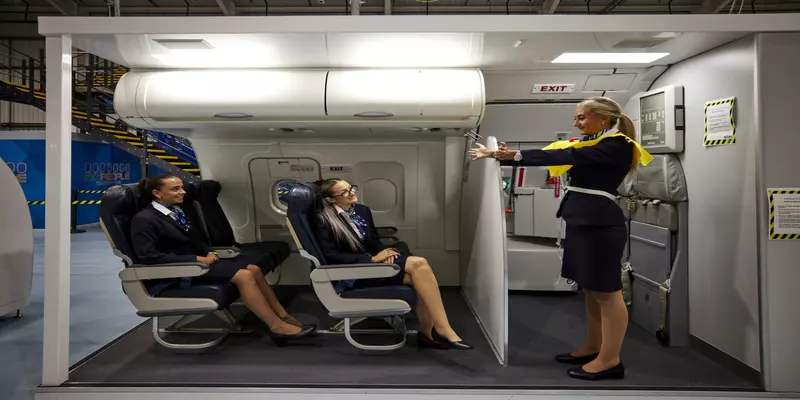
Cabin crew members play an essential role in passenger safety and customer service.
Their responsibilities go beyond welcoming passengers and serving refreshments. They are trained to manage emergency situations, assist passengers with special needs, conduct safety demonstrations and follow aircraft emergency procedures.
Beginner cabin crew training may cover:
- Passenger communication.
- Cabin safety procedures.
- Emergency equipment.
- First aid awareness.
- Fire safety.
- Passenger handling.
- Professional appearance and teamwork.
Career opportunities:
- Cabin crew member.
- Flight attendant.
- Airline customer service professional.
- Passenger experience specialist.
Who should consider this course?
People who enjoy communication, teamwork, customer service and working in an international environment.
Remember that airline recruitment and approved cabin crew training requirements vary. Completing a private training certificate does not guarantee airline employment.
3. Airport Management Courses

Airport management is an excellent area for students interested in the business and operational side of aviation.
Airports are complex environments where multiple departments must work together to maintain safe and efficient operations.
Airport management courses introduce learners to subjects such as:
- Airport administration.
- Terminal management.
- Airport planning.
- Passenger flow management.
- Airport safety.
- Customer experience.
- Resource management.
- Airport commercial operations.
Career opportunities:
- Airport operations assistant.
- Terminal operations coordinator.
- Airport administration officer.
- Airport customer service supervisor.
- Airport operations executive.
Who should consider this course?
Students interested in leadership, administration, coordination and managing airport services.
Airport management programs can be particularly useful for people who want to understand how different airport departments work together.
4. Aviation Management Courses

Aviation management focuses on the business and organizational aspects of the aviation industry.
While airport management concentrates primarily on airport facilities and services, aviation management may cover a wider range of subjects, including airline operations, aviation economics, strategic planning and business administration.
Typical subjects include:
- Airline management.
- Aviation business operations.
- Aviation economics.
- Human resource management.
- Airline marketing.
- Strategic planning.
- Aviation regulations.
- Financial management.
Career opportunities:
- Airline operations assistant.
- Aviation administration officer.
- Airline management trainee.
- Aviation business coordinator.
- Operations planning assistant.
Who should consider this course?
People interested in business management, airline administration, planning and organizational leadership.
Aviation management can also provide a useful academic foundation for people who eventually want to pursue management positions in airlines or airport organizations.
5. Ground Handling Training Courses

Ground handling is one of the most important areas of airport operations.
Before an aircraft departs, several teams must complete their responsibilities within a carefully coordinated turnaround process.
Ground handling professionals support airlines by managing activities on the ground, including passenger services, baggage handling, aircraft turnaround coordination and ramp operations.
Beginner ground handling courses may cover:
- Passenger check-in procedures.
- Boarding and gate operations.
- Baggage handling.
- Ramp safety.
- Aircraft turnaround.
- Ground support equipment awareness.
- Load control fundamentals.
- Airline and airport coordination.
Career opportunities:
- Passenger service agent.
- Check-in agent.
- Boarding gate agent.
- Ramp agent.
- Baggage services agent.
- Ground operations assistant.
Who should consider this course?
People interested in practical airport work, teamwork, operational coordination and airline ground services.
One important point is that ground handling involves safety-sensitive activities. Practical training, workplace supervision and employer-specific authorization are essential for many operational duties.
6. Airport Operations Courses

Airport operations courses introduce students to the daily activities involved in running an airport efficiently.
Airport operations professionals coordinate with different departments to maintain smooth passenger movement, operational continuity and compliance with applicable procedures.
Common training subjects include:
- Airport operational procedures.
- Terminal coordination.
- Airside safety awareness.
- Emergency response.
- Flight information systems.
- Airport communication.
- Operational reporting.
- Incident management.
Career opportunities:
- Airport operations assistant.
- Operations coordinator.
- Terminal operations officer.
- Airport duty operations assistant.
- Airport administration support.
Who should consider this course?
People interested in airport coordination, operational planning, safety and problem-solving.
Airport operations are particularly relevant for individuals who want to understand the relationship between airlines, ground handlers, airport authorities and other service providers.
7. Aircraft Maintenance Courses
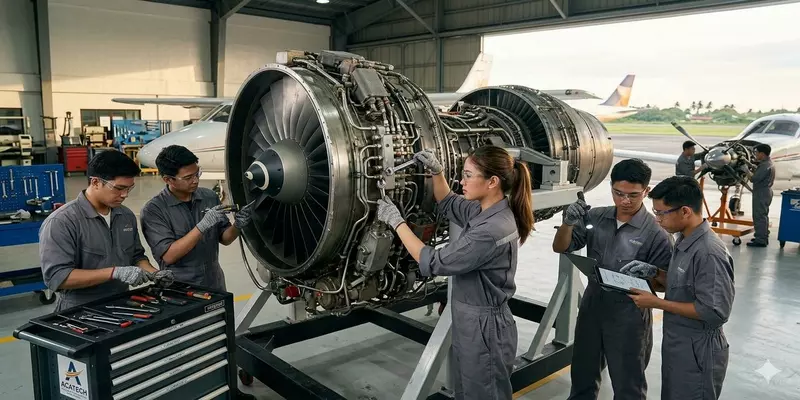
Aircraft maintenance is a specialized technical field focused on ensuring aircraft remain safe and serviceable.
Aircraft maintenance professionals inspect, maintain and repair aircraft components according to approved maintenance procedures and technical requirements.
Courses may introduce students to:
- Aircraft structures.
- Aircraft engines.
- Electrical systems.
- Aviation materials.
- Aircraft inspection.
- Maintenance documentation.
- Technical safety procedures.
Career opportunities:
- Aircraft maintenance trainee.
- Aviation engineering technician.
- Aircraft maintenance apprentice.
- Licensed aircraft maintenance professional after completing required training, experience and licensing requirements.
Who should consider this course?
Students interested in engineering, mechanical systems, electronics and technical problem-solving.
Aircraft maintenance is a regulated professional field in many countries. Students should check whether their chosen program is approved or recognized by the relevant aviation authority before enrolling.
8. Air Traffic Control Courses

Air traffic control is a specialized aviation profession responsible for helping aircraft move safely and efficiently through controlled airspace and airport environments.
Air traffic controllers communicate with pilots, provide instructions and maintain awareness of aircraft movements.
Introductory training may introduce students to:
- Aviation communication.
- Airspace fundamentals.
- Flight procedures.
- Navigation principles.
- Radar systems.
- Aviation meteorology.
- Air traffic control terminology.
Career opportunities:
- Air traffic control trainee.
- Air traffic services support roles.
- Air traffic controller after completing the required selection, training and authorization.
Who should consider this course?
People with strong communication, concentration, decision-making, and problem-solving abilities.
Air traffic control recruitment and licensing requirements are generally strict. An introductory online course alone is not sufficient to qualify someone as an air traffic controller.
9. Aviation Safety and Security Courses
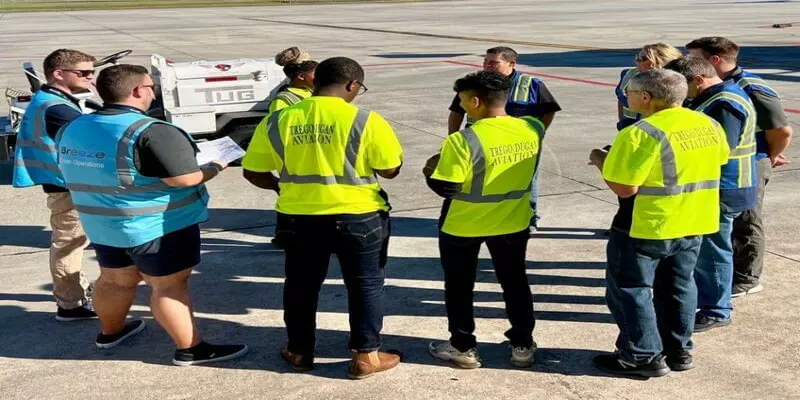
Safety and security are fundamental elements of aviation operations.
Airports and airlines rely on trained employees to identify hazards, follow security procedures, report incidents and maintain safe working environments.
Beginner training options may include:
- Aviation safety management fundamentals.
- Airport safety awareness.
- Workplace hazard identification.
- Emergency response awareness.
- Aviation security awareness.
- Safety reporting.
- Human factors.
- Risk management fundamentals.
Career opportunities:
- Airport safety assistant.
- Aviation security support staff.
- Safety administration assistant.
- Ground operations safety representative.
- Safety coordinator after acquiring the required experience and qualifications.
Who should consider this course?
People interested in safety, compliance, operational procedures and risk prevention.
For more specialized training, learners should investigate recognized programs and the applicable requirements in their country.
10. Airline Customer Service Courses

Customer service is a major part of airline and airport operations.
Passengers expect accurate information, professional assistance and timely support throughout their journey.
Airline customer service courses introduce learners to the communication and operational skills needed to support passengers effectively.
Common subjects include:
- Passenger handling.
- Check-in procedures.
- Boarding assistance.
- Complaint management.
- Special passenger assistance.
- Airline reservation fundamentals.
- Customer communication.
- Service recovery.
Career opportunities:
- Airline customer service agent.
- Airport information assistant.
- Passenger service agent.
- Reservation support agent.
- Customer service supervisor with suitable experience.
Who should consider this course?
People who enjoy helping others, solving problems and communicating with passengers from different backgrounds.
Good customer service professionals can make a significant difference to an airline’s reputation and passenger experience.
3. Aviation Courses After 12th: What Can You Study?
Completing secondary education can be an important starting point for students interested in aviation.
Many colleges, universities and aviation training institutions offer programs for students who want to enter the aviation industry after high school. However, admission requirements vary depending on the program and country.
Here are some popular options.
Diploma in Aviation Management
An aviation management diploma introduces students to the business and operational aspects of the aviation industry.
Subjects may include airport administration, airline operations, aviation safety, customer service and management principles.
This qualification may help students prepare for entry-level administrative and operational positions.
Diploma in Airport Management
Airport management programs focus on the activities involved in operating airport facilities and passenger services.
Students may learn about terminal operations, airport safety, passenger handling and coordination between airport departments.
Cabin Crew Training
Students interested in becoming flight attendants can explore cabin crew training programs.
These courses introduce passenger service, cabin safety, emergency procedures and professional communication.
However, airline-specific recruitment and training requirements must still be fulfilled.
Aviation Customer Service
Customer service programmes are suitable for students interested in passenger-facing airport and airline positions.
They can develop communication, complaint-handling and passenger assistance skills.
Aircraft Maintenance Engineering
Students interested in technical aviation careers may explore aircraft maintenance education.
Depending on the country, this may require admission to an approved technical programme, practical training, examinations and additional experience.
Important advice: Before paying admission fees, confirm the institution’s recognition, course curriculum, practical training arrangements and qualification requirements.
4. Can You Study Aviation Courses Without Experience?
Yes. Many introductory aviation courses are designed specifically for people without previous industry experience.
You do not need to have worked at an airport or airline before enrolling in a beginner-level program.
However, the requirements depend on the type of training you choose.
For example:
- Airport customer service courses may accept students without aviation experience.
- Introductory airport management programmes may be available to beginners.
- Ground handling courses can introduce newcomers to airport operational procedures.
- Pilot training requires medical fitness, eligibility and approved training.
- Aircraft maintenance and air traffic control require specific educational and professional pathways.
A useful approach is to begin with an introductory course that explains aviation terminology, airport departments, airline operations and safety principles.
Once you understand the industry, you can select a specialized training program based on your career interests.
5. Online vs. Classroom Aviation Training
Technology has made aviation education more accessible. Students can now learn basic aviation concepts through online courses without travelling to a training institute.
However, online education and practical aviation training serve different purposes.
| Feature | Online training | Classroom training |
| Learning flexibility | Usually high | Depends on schedule |
| Study location | Anywhere with internet | Training institution |
| Practical experience | Limited unless supplemented | May include practical sessions |
| Instructor interaction | Virtual | Face-to-face |
| Learning cost | Often lower | Can be higher |
| Suitable for beginners | Yes | Yes |
Benefits of Online Aviation Courses
Online learning can be a useful starting point for people who want to understand the aviation industry before investing in specialized education.
Some advantages include:
- Flexible study schedules.
- Access to international learning resources.
- Opportunity to explore different aviation subjects.
- Lower travel and accommodation expenses.
- Ability to study alongside employment.
Benefits of Classroom Aviation Training
Classroom education may offer opportunities for direct interaction, practical demonstrations and supervised learning.
Students can ask instructors questions, participate in group activities, and sometimes access training equipment or simulation facilities.
Which Option Should You Choose?
If you are completely new to aviation, online learning can help you understand the fundamentals.
However, if your chosen profession requires practical skills, approved training or licensing, classroom and supervised practical education may be essential.
For example, becoming a pilot or aircraft maintenance professional involves much more than watching online lessons.
The best learning method depends on your career objective and the professional requirements of your chosen field.
6. Essential Skills Needed to Start an Aviation Career
An aviation qualification can help you understand the industry, but professional success also depends on developing practical workplace skills.
Airports and airlines operate in demanding environments where employees must communicate clearly, follow procedures and work effectively with different teams.
Here are some important skills beginners should develop.
1. Communication Skills
Communication is essential in aviation.
Airport employees regularly interact with passengers, airline representatives, security personnel, airport authorities and operational teams.
Clear communication helps reduce misunderstandings and supports efficient operations.
English is widely used in international aviation, although additional languages can be valuable depending on the location and role.
2. Teamwork and Coordination
An aircraft turnaround involves several departments working together.
Passenger services, baggage handling, ramp operations, load control and flight crews must coordinate their responsibilities.
Strong teamwork helps maintain operational efficiency and avoid unnecessary delays.
3. Problem-Solving Skills
Unexpected situations are common in airport environments.
Examples include:
- Flight delays.
- Missing baggage.
- Passenger complaints.
- Gate changes.
- Equipment problems.
- Operational disruptions.
Employees must understand their responsibilities, follow established procedures and communicate problems to the appropriate supervisors.
4. Safety Awareness
Aviation is a safety-sensitive industry.
Employees must understand workplace hazards, follow safety procedures and report unsafe conditions.
Even seemingly small mistakes can create operational risks.
Safety awareness should therefore be part of every aviation professional’s daily routine.
5. Customer Service Skills
Airline and airport employees regularly assist passengers with different needs and expectations.
Professional behaviour, patience, empathy and effective complaint handling contribute to a positive passenger experience.
6. Time Management
Airports operate according to coordinated schedules.
Employees must complete assigned tasks efficiently while following operational and safety requirements.
Good time management supports punctuality, productivity and better teamwork.
7. Computer and Digital Skills
Modern aviation operations depend on digital systems.
Depending on the role, employees may use:
- Airline departure control systems.
- Passenger reservation systems.
- Airport operational databases.
- Baggage tracking systems.
- Microsoft Office applications.
- Reporting and communication tools.
Basic computer literacy is a useful starting point for beginners.
7. How to Choose the Right Aviation Course
Choosing an aviation course should involve more than selecting an attractive course title.
A program may sound impressive but offer limited practical value if it is not relevant to your intended career.
Consider the following factors before enrolling.
Step 1: Identify Your Career Interest
First, decide which part of aviation interests you most.
Do you want to fly aircraft, work in an airport terminal, manage airline operations or support passengers?
Your career interest will help narrow down the available courses.
Step 2: Check Educational Requirements
Different programmes have different admission criteria.
Some introductory courses accept beginners, while specialized programs may require science subjects, previous qualifications or specific academic results.
Always check the institution’s admission requirements.
Step 3: Verify Accreditation and Recognition
This is one of the most important steps.
Check whether the institution and program are recognized by the relevant aviation authority, educational regulator or professional body where recognition is required.
Do not assume that a certificate issued by an aviation-themed training institute is automatically recognized by airlines or aviation authorities.
Step 4: Review the Course Curriculum
Read the complete syllabus before enrolling.
A good program should clearly explain:
- What subjects are included?
- What practical training is offered?
- How long the program lasts.
- What qualifications do students receive?
- Whether examinations are required.
- What career pathways does the program support?
Step 5: Compare Course Fees
Aviation education can involve different costs depending on the program.
For example, pilot training usually requires a substantially greater financial commitment than a basic online aviation introduction.
Compare tuition fees, examination charges, training materials, accommodation and any additional costs.
Step 6: Ask About Practical Training
Practical experience is particularly important for operational and technical aviation roles.
Ask whether the institution provides supervised training, simulations, laboratory sessions or industry exposure.
Step 7: Understand Employment Opportunities
Some training institutions advertise job placement assistance or industry connections.
Ask what these services actually include.
Remember that completing an aviation course does not guarantee employment. Recruitment depends on vacancies, qualifications, experience, employer requirements and individual performance.
8. Aviation Career Opportunities After Completing Training
The aviation industry offers career opportunities across several professional areas.
The right qualification can help you prepare for an appropriate entry-level role or progress towards specialized training.
Here is an overview of common career paths.
| Aviation field | Possible entry-level position |
| Airport management | Airport administration assistant |
| Ground handling | Passenger service agent |
| Airline customer service | Customer service representative |
| Airport operations | Operations assistant |
| Cabin crew | Cabin crew trainee |
| Aircraft maintenance | Maintenance trainee |
| Aviation safety | Safety administration assistant |
| Airline operations | Operations support assistant |
| Aviation management | Management trainee |
| Air traffic services | Trainee, subject to recruitment requirements |
Working for an Airline
Airlines employ professionals across several departments, including passenger services, flight operations, reservations, customer experience, administration and ground operations.
Entry-level opportunities may be available depending on recruitment requirements.
Working at an Airport
Airports require employees to support terminal services, airport administration, operational coordination, safety and passenger assistance.
Airport authorities, airlines and ground handling companies may all provide employment opportunities.
Working for a Ground Handling Company
Ground handling companies provide services to airlines at airports.
Their employees support passenger handling, baggage operations, aircraft turnaround and other ground services.
This can be a practical entry point for individuals interested in airport operations.
Advancing Through Experience
Some aviation professionals begin in entry-level positions and gradually progress into supervisory and management roles.
For example, an employee working in passenger services may develop the experience required to become a team leader, supervisor or duty officer.
However, career progression depends on performance, organizational requirements, training and available opportunities.
9. How Much Do Aviation Courses Cost?
The cost of aviation education varies considerably.
Factors include the country, institution, course duration, equipment, practical training and qualification level.
A short online introductory program may cost very little, while professional pilot training can require a significant investment.
The following table provides a general comparison rather than fixed market prices.
| Course type | Typical cost level |
| Basic online aviation introduction | Low |
| Airport customer service | Low to medium |
| Ground handling fundamentals | Low to medium |
| Airport management diploma | Medium |
| Aviation management degree | Medium to high |
| Cabin crew training | Medium |
| Aircraft maintenance education | Medium to high |
| Professional pilot training | Very high |
Before enrolling, compare the complete program cost rather than looking only at the advertised admission fee.
Also check whether examination charges, uniforms, accommodation, practical training and licensing fees are included.
Money-saving tip: Start with an affordable introductory program if you are unsure about your career direction. You can explore the industry before committing to expensive specialized training.
10. Where Can Beginners Find Aviation Courses?
Several types of organizations provide aviation education and training.
It is important to choose a learning provider that matches your intended career pathway.
Here are some useful starting points.
International Civil Aviation Organization (ICAO)
International Civil Aviation Organization
International Civil Aviation Organization (ICAO)
ICAO provides international aviation standards, guidance and professional training resources.
ICAO is particularly useful for exploring aviation safety, airport operations, security and professional development.
International Air Transport Association (IATA)
File: IATA official logo.png – Wikimedia Commons
International Air Transport Association (IATA)
IATA offers professional training programmes covering airline operations, ground operations, safety and other aviation subjects.
Its training catalogue can be a useful resource for students and professionals seeking industry-related education.
Embry-Riddle Aeronautical University
Embry-Riddle Aeronautical University
This university specializes in aviation and aerospace education, offering academic programmes in several aviation-related disciplines.
Federal Aviation Administration (FAA)
Northwest Mountain Region | Federal Aviation Administration
Federal Aviation Administration (FAA)
The FAA provides regulatory information and resources related to pilot certification, aircraft maintenance and aviation safety in the United States.
National Aviation Authorities
Beginners should also explore their national aviation authority.
For example, students in Pakistan can consult the Pakistan Civil Aviation Authority (PCAA) for applicable aviation regulations and licensing information.
Visit Pakistan Civil Aviation Authority website
Always confirm the current status of training approvals and licensing requirements directly with the relevant authority.
11. Common Mistakes Beginners Should Avoid
Starting an aviation career can be exciting, but beginners sometimes make decisions without understanding the industry’s professional requirements.
Avoiding common mistakes can save time, money and unnecessary disappointment.
1. Choosing a Course Without Research
Do not enroll in a program simply because its name sounds impressive.
Investigate the institution, course content, qualification and industry recognition before paying fees.
2. Believing Every Aviation Certificate Guarantees a Job
A certificate can demonstrate that you have completed a particular training programme, but it does not guarantee employment.
Airlines and airport employers consider several factors, including education, communication skills, practical experience and job-specific requirements.
3. Ignoring Practical Experience
Aviation involves real operational responsibilities.
Understanding the theory is important, but practical exposure and supervised workplace learning are equally valuable for many positions.
4. Overlooking Communication Skills
Poor communication can create difficulties in passenger services, ground operations and team coordination.
Beginners should improve their spoken and written English while developing confidence in professional communication.
5. Selecting an Expensive Course Too Early
Some students invest heavily in aviation education before understanding which career path suits them.
Start by researching different aviation departments and exploring affordable introductory training.
Once you identify your interests, you can make a more informed investment.
6. Ignoring Safety and Professional Discipline
Aviation professionals must follow procedures, respect operational instructions and maintain a strong safety culture.
Developing these habits early can help you become a more responsible aviation employee.
12. A Practical Roadmap for Starting Your Aviation Career
If you are completely new to aviation, following a structured learning plan can make the process easier.
Here is a practical roadmap for beginners.
Your first 6 months in aviation
- Month 1: Understand the aviation industry
Learn about airlines, airports, ground handling, passenger services, airport operations and aviation safety. - Month 2: Explore different career options
Research pilot training, airport management, cabin crew, aircraft maintenance and ground operations. - Month 3: Select an introductory course
Choose a programme that matches your career interests and verify its credibility. - Month 4: Develop professional skills
Improve English communication, computer literacy, teamwork and customer service. - Month 5: Build your professional profile
Prepare a CV, highlight relevant qualifications and identify entry-level job opportunities. - Month 6: Apply and continue learning
Apply for suitable positions, seek practical experience and identify further training requirements.
This is a suggested learning roadmap, not a guaranteed employment timeline. Regulated professions may require substantially longer training.
Aviation is a continuous learning environment. Even experienced professionals regularly update their knowledge to keep pace with changing technology, regulations and operational practices.
13. Future Opportunities in the Aviation Industry
The aviation industry continues to evolve through technological development, changing passenger expectations and improvements in operational processes.
These developments create opportunities for people with relevant knowledge and professional skills.
Some important areas include:
Digital Airport Operations
Airports increasingly use digital systems to support passenger processing, operational coordination and information management.
Understanding airport technology can help beginners prepare for modern operational environments.
Passenger Experience Management
Airlines and airports increasingly focus on improving the passenger journey.
Employees with strong customer service, communication and problem-solving skills can contribute to better service delivery.
Aviation Safety Management
Safety remains fundamental to aviation operations.
Knowledge of hazard identification, safety reporting and risk management is valuable across multiple aviation departments.
Sustainable Aviation
Environmental responsibility is becoming an important consideration for airlines and airports.
Professionals with an understanding of sustainable aviation practices may find opportunities in environmental management, operational efficiency and sustainability-related roles.
Automation and Artificial Intelligence
Digital automation and artificial intelligence are influencing areas such as passenger processing, baggage systems, operational planning and customer support.
Future aviation professionals can benefit from developing digital literacy alongside their operational knowledge.
These developments do not mean that every new technology creates an immediate job opportunity. However, they demonstrate why continuous learning is important for anyone planning a long-term aviation career.
Conclusion: Start Your Aviation Journey with the Right Training
The aviation industry offers a wide range of opportunities for people interested in aircraft, airports, airlines and passenger services.
However, choosing the right educational pathway is an important first step.
Aviation courses for beginners can help newcomers understand industry operations, develop professional skills and identify suitable career opportunities.
Whether you are interested in pilot training, airport management, ground handling, aircraft maintenance or airline customer service, start by understanding the qualifications and practical experience required for your chosen profession.
Do not rush into expensive training or believe that a certificate alone guarantees employment. Research recognized institutions, compared course content and focused on developing skills that employers value.
Most importantly, remember that a successful aviation career is built through continuous learning, professional discipline, teamwork and a commitment to safety.
Your aviation journey does not have to begin in an aircraft cockpit. It can start at an airport terminal, an operations office, a ground handling department, or a training classroom. The important thing is to take the right first step.
14. Frequently Asked Questions About Aviation Courses for Beginners
1. Which aviation course is best for beginners?
The best aviation course depends on your interests and career goals. Airport management, ground handling, airline customer service and introductory aviation management are useful starting points for people interested in airport and airline operations. Students interested in flying or engineering should investigate the appropriate specialized training pathways.
2. Can I join aviation courses without experience?
Yes. Many introductory aviation programmes accept students without previous aviation experience. However, specialised programmes such as pilot training, aircraft maintenance and air traffic control have specific eligibility, education and professional requirements.
3. What qualifications are required for aviation courses?
Requirements vary by programme and institution. Some beginner courses accept secondary school graduates, while university degrees and specialized technical programmes may require additional academic qualifications.
4. Can I study aviation courses online?
Yes. Many introductory aviation subjects are available online, including aviation management, customer service, safety awareness and airport operations fundamentals. However, online learning cannot replace mandatory practical training, examinations or licensing requirements for regulated professions.
5. Which aviation course is best for airport jobs?
Airport management, airport operations, ground handling and airline customer service are relevant options for people interested in airport employment. The best choice depends on the particular job and employer requirements.
About the Author—Rehan Ghauri
Rehan Ghauri is an aviation and airport operations professional with nearly 19 years of industry experience, including work in airline ground operations, passenger services, airport coordination and operational supervision. Through ContentFlyers, he shares practical insights into aviation, airport management, customer service, safety and professional development to help readers understand the aviation industry and its career opportunities.
Facebook: https://www.facebook.com/rehan.ghauri
Instagram: https://www.instagram.com/contentflyers0/
Twitter: https://www.twitter.com/contentflyers0/
Pinterest: https://www.pinterest.com/contentflyers0/
