


The future of airport ground handling is entering an exciting period of transformation. As global air travel grows, airports and airlines are looking for smarter, safer, faster, and more sustainable ways to manage daily operations. Traditional ground handling processes are gradually evolving through artificial intelligence (AI), automation, autonomous ground support equipment (GSE), digital baggage tracking, and advanced operational management systems.
Future airport ground handling could look very different from what we see today. Ground handling teams may work alongside autonomous vehicles, AI-powered operational platforms, electric equipment, and intelligent baggage systems. These developments could improve aircraft turnaround times, reduce operational risks, enhance passenger satisfaction, and create more efficient airport environments.
For airlines and ground handling service providers, adapting to these changes will become increasingly important. Technology will play a major role, but trained employees, effective communication, operational coordination, and safety management will remain essential.
In this article, we explore seven important changes that could shape the future of airport ground handling by 2035 and explain how these developments may transform airport operations.
Table of Contents
Introduction: Why Is the Future of Airport Ground Handling Changing?

Future of airport ground handling is one of the most important parts of airline operations, even though passengers rarely see everything happening behind the scenes.
From aircraft arrival and parking to baggage unloading, passenger assistance, aircraft cleaning, refueling coordination, cargo loading, and final departure preparations, ground handling teams perform numerous activities to keep flights operating safely and on schedule.
However, the aviation industry faces several challenges, including increasing passenger demand, operational complexity, staff shortages, environmental concerns, equipment-related incidents, and pressure to reduce aircraft turnaround times.
These challenges are encouraging airlines, airports, and ground handling companies to invest in modern technologies and improved operational procedures.
According to the International Air Transport Association (IATA), the industry is already working towards more digital, sustainable, and automated ground operations. Its future ground operations roadmap identifies autonomous ground support vehicles and increasingly automated airport processes as important developments for the coming years.
The transformation will not happen overnight. Different airports will adopt new technologies at different speeds, depending on their budgets, infrastructure, regulations, and operational requirements.
Nevertheless, the future of airport ground handling will likely depend on seven major developments.
Autonomous Ground Support Equipment Will Transform Airport Operations
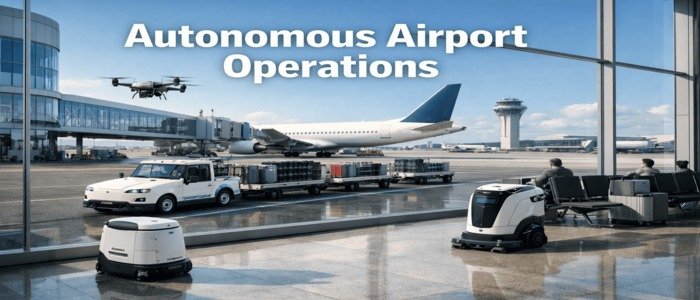
One of the biggest developments in the future of airport ground handling will be the introduction of autonomous ground support equipment.
Ground support equipment, commonly known as GSE, includes the vehicles and machinery used to service aircraft while they are parked at the airport.
Common examples include:
- Baggage tractors and dollies
- Passenger stairs
- Belt loaders
- Aircraft pushback tractors
- Ground power units
- Air conditioning units
- Catering trucks
- Cargo loaders
- Water and lavatory service vehicles
Traditionally, these vehicles require trained operators to move around aircraft parking stands and airport service roads. However, technological developments are making it possible for some equipment to perform specific tasks with limited human intervention.
Autonomous GSE can use sensors, cameras, positioning systems, and intelligent navigation software to move around designated airport areas.
For example, an autonomous baggage tractor could transport baggage carts between a terminal baggage area and an aircraft parking stand along an approved route.
Similarly, automated equipment may eventually support selected aircraft servicing activities under carefully controlled operating procedures.
How Autonomous GSE Could Improve future of airport ground handling
The adoption of autonomous ground support equipment could offer several operational advantages:
Improved operational efficiency: Automated vehicles could perform repetitive transportation activities and support more consistent equipment availability.
Reduced human error: Carefully designed automated systems may reduce certain errors associated with repetitive manual vehicle operations.
Better resource management: Airport operators could monitor vehicle locations and allocate equipment according to operational requirements.
Improved safety: Sensors, geofencing, collision avoidance systems, and controlled operating zones could help reduce certain vehicle-related risks.
However, autonomous equipment will require suitable infrastructure, reliable communication systems, cybersecurity protection, risk assessments, and clear emergency procedures.
Human supervision will remain important, especially around aircraft, passengers, and other moving vehicles.
By 2035, autonomous GSE may become more common at technologically advanced airports, although conventional equipment will continue operating in many locations.
Artificial Intelligence Will Improve Airport Ground Handling Management
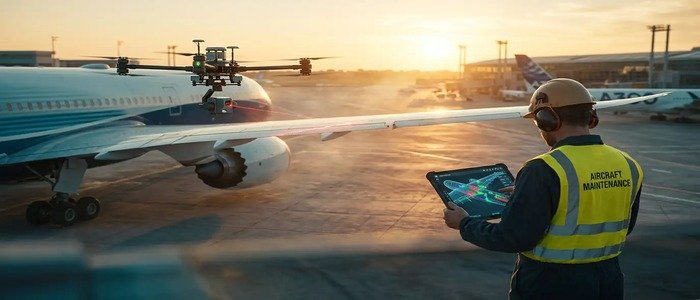
Artificial intelligence is expected to become an important part of the future of airport ground handling.
Modern airports manage enormous amounts of operational information every day. This includes flight schedules, aircraft arrival times, baggage volumes, staff availability, equipment status, weather conditions, and aircraft turnaround requirements.
Managing all this information manually can be challenging, particularly during peak operating periods or unexpected disruptions.
AI-powered systems could help ground handling companies analyze operational information and identify problems before they affect flight schedules.
AI-Powered Aircraft Turnaround Management
Aircraft turnaround is one of the most critical activities in ground handling.
It involves coordinating several services between aircraft arrival and departure. These may include:
- Aircraft parking and arrival guidance
- Passenger disembarkation
- Baggage unloading
- Cabin cleaning
- Catering services
- Refueling coordination
- Aircraft inspection
- Passenger boarding
- Baggage loading
- Final departure preparation
A delay in one activity can affect other services and potentially delay the aircraft departure.
In the future, AI-powered operational systems could analyze real-time information from different departments and identify potential delays.
For example, if an inbound flight arrives late and the baggage unloading process is taking longer than expected, an intelligent system could alert the operations control team.
The duty officer or turnaround coordinator could then review the situation and arrange additional manpower or equipment where appropriate.
Predictive Operational Planning
AI may also help ground handling managers predict operational requirements.
For example, predictive systems could analyze historical flight schedules, passenger volumes, seasonal demand, and previous staffing requirements to estimate how many employees and vehicles may be needed during a particular shift.
This could support:
- More effective manpower planning
- Better equipment allocation
- Reduced operational bottlenecks
- Improved turnaround coordination
- Faster disruption management
- Better resource utilization
However, AI recommendations must be based on reliable data and reviewed by qualified operational personnel.
Technology can support decisions, but responsibility for safe airport operations will remain with trained professionals.
Digital Baggage Tracking Will Improve Passenger Experience

Baggage handling is another area expected to experience significant transformation by 2035.
Every day, millions of passenger bags move through airport terminals, baggage sorting facilities, aircraft loading areas, and connecting airports.
Traditional baggage handling depends on accurate identification, proper loading procedures, communication between departments, and coordination between airlines and ground handling companies.
When information is incomplete or delayed, baggage can be misdirected, delayed, or temporarily lost.
Digital baggage tracking is helping the industry address these challenges.
Real-Time Baggage Visibility
Modern baggage tracking systems use barcode scanning, RFID technology, digital messaging, and integrated information platforms to monitor baggage movements.
IATA Resolution 753 requires participating member airlines to track baggage at four key points:
- When the passenger hands over the baggage.
- When baggage is loaded onto the aircraft.
- When baggage is delivered to the transfer area.
- When baggage is returned to the passenger.
These tracking points help airlines maintain a more reliable record of baggage custody.
By 2035, baggage systems could become more connected, providing passengers and airport employees with better visibility throughout the baggage journey.
For example, passengers may receive more detailed updates through airline mobile applications, while ground handling supervisors could monitor baggage movement through centralized operational dashboards.
How Smart Baggage Systems Could Help Airports
Digital baggage tracking could provide several benefits:
- Improved baggage identification and traceability.
- Faster identification of delayed or misdirected bags.
- Better coordination between airlines and ground handlers.
- Reduced manual data entry.
- Improved transfer baggage management.
- More accurate baggage reconciliation.
- Greater passenger confidence.
The future of airport ground handling will increasingly depend on accurate information sharing between airlines, airports, baggage systems, and ground handling service providers.
Digital baggage management will therefore become an important part of efficient airport operations.
Electric Ground Support Equipment Will Make Airport Operations Greener

Environmental sustainability is becoming an important priority for the global aviation industry.
Although aircraft emissions receive considerable attention, airport ground operations also contribute to local emissions, fuel consumption, and noise pollution.
Traditional diesel-powered ground support equipment operates around aircraft and airport terminals throughout the day.
Electric ground support equipment offers an alternative that could help reduce these environmental impacts.
The Growth of Electric GSE
Electric GSE uses battery-powered systems instead of conventional fuel-powered engines for selected ground handling activities.
Examples include:
- Electric baggage tractors
- Electric belt loaders
- Electric passenger stairs
- Electric airport buses
- Electric ground power units
- Electric aircraft pushback tractors
These vehicles can help reduce direct emissions during airport operations and may also produce less noise.
IATA has highlighted the transition to electric ground support equipment as an important part of improving the environmental performance of ground handling.
Its 2026 guidance also addresses practical considerations for airports and ground handling providers moving from fuel-powered to electric fleets.
Benefits of Electric Ground Handling Equipment
Lower operational emissions: Electric equipment can reduce direct emissions during ground operations.
Reduced noise: Electric motors generally produce less operating noise than comparable conventional engines.
Potential maintenance savings: Electric vehicles have fewer moving parts in certain systems, which may reduce some maintenance requirements.
Improved working conditions: Lower noise and reduced local exhaust emissions can contribute to a better working environment for airport employees.
Challenges of Electric GSE Adoption
Despite its advantages, replacing conventional GSE with electric equipment is not always simple.
Airports must consider:
- Charging infrastructure
- Battery charging time
- Equipment operating range
- Battery replacement costs
- Electricity availability
- Equipment utilization
- Maintenance training
- Emergency response procedures
Ground handling companies will need to develop realistic investment plans to ensure that electric equipment can support their operational requirements.
By 2035, more airports may operate mixed fleets of electric and conventional equipment, depending on the equipment type and local infrastructure.
Smart Sensors and Advanced Safety Systems Will Reduce Ground Handling Risks
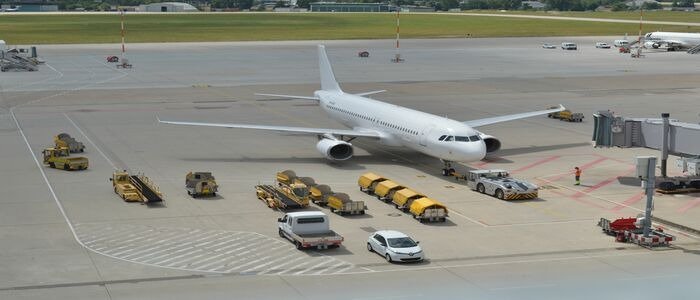
Airport ramps are busy working environments where aircraft, vehicles, equipment, and employees operate in close proximity.
Even a small operational mistake can result in aircraft damage, equipment damage, employee injuries, or flight delays.
For this reason, safety will remain one of the most important priorities in the future of airport ground handling.
Modern technology is creating new opportunities to identify hazards and reduce operational risks.
Smart Ground Support Equipment
Advanced ground support equipment can be fitted with safety features such as:
- Proximity sensors
- Anti-collision systems
- Cameras
- Automatic braking assistance
- Vehicle positioning systems
- Speed monitoring technology
- Obstacle detection systems
These technologies can help equipment operators identify nearby obstacles and reduce the risk of accidental contact with aircraft or other vehicles.
For example, an advanced baggage tractor operating near an aircraft could use proximity sensors to warn its operator when it approaches a restricted safety zone.
Similarly, an automated braking system may help reduce the consequences of certain vehicle-control errors.
Predictive Maintenance
Another important development will be the use of sensor-based equipment monitoring.
Instead of waiting for equipment to fail, maintenance teams may increasingly use data to identify early signs of mechanical problems.
For example, sensors could monitor:
- Engine or motor performance
- Battery condition
- Hydraulic system pressure
- Equipment temperature
- Operating hours
- Brake performance
This information could help maintenance departments schedule inspections before equipment failures disrupt operations.
Why Human Safety Will Still Matter
Technology cannot replace the importance of proper safety training and operational discipline.
Ramp employees must continue following approved procedures, maintaining situational awareness, using appropriate personal protective equipment, and reporting unsafe conditions.
A combination of modern equipment, effective supervision, and strong safety culture will be essential for achieving safer airport ground operations.
Robotics and Automated Baggage Handling Will Change Ground Operations
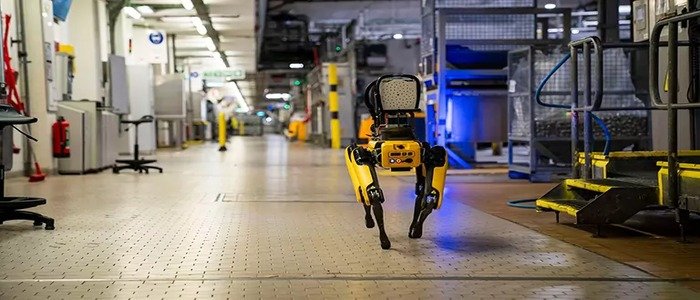
Robotics could become another important part of the future of airport ground handling.
Many airport activities involve repetitive physical work, including baggage transportation, cargo movement, warehouse sorting, and equipment positioning.
Robotic technology may help automate selected activities and reduce the physical workload associated with repetitive tasks.
Robotics in Baggage Handling
Future baggage handling facilities could use more advanced robotic systems to support:
- Automated baggage sorting
- Baggage transportation
- Container and ULD preparation
- Baggage identification
- Warehouse organization
- Automated storage and retrieval
For example, autonomous mobile robots could transport baggage containers within designated airport facilities.
Robotic systems could also assist employees in organizing baggage and cargo movements in warehouse environments.
Robotics in Aircraft Servicing
Robotics may eventually support selected aircraft servicing activities.
Possible applications include automated equipment positioning, inspection assistance, and specific repetitive maintenance-support tasks.
However, activities involving aircraft structures, sensitive equipment, passenger safety, and hazardous materials will require strict technical and regulatory controls.
The purpose of automation should not simply be to replace human employees. It should also be to improve working conditions, reduce unnecessary physical effort, and support more consistent operational performance.
Will Robots Replace Airport Ground Staff?
This is an important question for people working in aviation.
The more realistic expectation is that robots will change certain job responsibilities rather than completely eliminate airport ground handling employment.
Employees may increasingly supervise automated systems, monitor equipment performance, manage operational exceptions, and coordinate activities across different departments.
Human judgment, communication, teamwork, and safety awareness will remain valuable skills.
Digital Communication and Integrated Airport Operations Will Improve Coordination
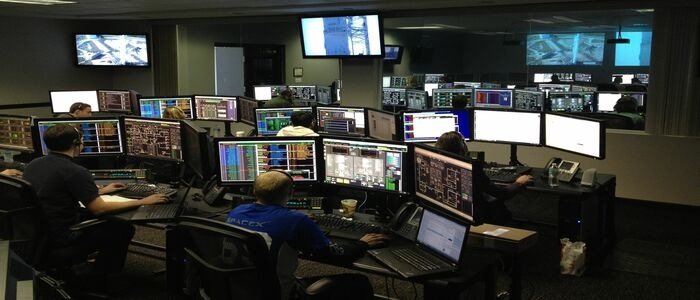
One of the biggest challenges in airport ground handling is communication between different operational departments.
Aircraft turnaround requires several teams to work together within a limited time.
These may include:
- Airport operations
- Airline station management
- Ground handling supervisors
- Passenger services
- Baggage handling teams
- Ramp services
- Load control
- Aircraft cleaning
- Catering
- Refueling providers
- Airport authorities
When communication is delayed or incomplete, operational problems can develop.
For example, baggage loading may be delayed because the ramp team has not received updated information. Similarly, a change in aircraft parking arrangements may affect equipment positioning and manpower allocation.
Integrated Operational Platforms
By 2035, airports may increasingly use integrated digital platforms to connect different operational departments.
These platforms could provide real-time information about:
- Aircraft arrival and departure times
- Aircraft turnaround progress
- Baggage loading status
- Equipment availability
- Staff deployment
- Operational delays
- Safety reports
- Weather-related disruptions
Such systems could help duty officers and operations control teams monitor activities through centralized dashboards.
The Importance of Airport Collaborative Decision-Making
Airport Collaborative Decision-Making, commonly known as A-CDM, encourages information sharing and coordination among airport stakeholders.
When airports, airlines, air traffic management, and ground handling providers work with more accurate and timely information, they can make better operational decisions.
In the future, more advanced digital coordination could help improve aircraft turnaround planning and reduce unnecessary waiting time.
The Changing Role of Airport Operations Supervisors
Technology will also change the responsibilities of airport supervisors and duty officers.
Instead of relying only on telephone calls, radio communication, and manual reports, operational managers may increasingly use digital dashboards and automated alerts.
However, their core responsibilities will remain important:
- Monitoring daily airport operations.
- Ensuring safety and service standards.
- Coordinating manpower and equipment.
- Managing operational disruptions.
- Communicating with airlines and airport authorities.
- Supporting employees.
- Making timely operational decisions.
The future of airport ground handling supervisor will need a combination of practical aviation knowledge, technology awareness, leadership, and problem-solving skills.
What Challenges Could Delay the Future of Airport Ground Handling?

Although these seven developments offer exciting possibilities, the transformation future of airport ground handling will not be easy.
Different airports have different financial resources, operational requirements, infrastructure, and regulatory environments.
Some may introduce advanced automation quickly, while others may continue using traditional processes for many years.
The major challenges include:
1. High Investment Costs
Autonomous vehicles, advanced baggage systems, electric equipment, and integrated software platforms require significant investment.
Smaller airports and ground handling providers may find it difficult to finance large-scale modernization projects.
2. Employee Training and Skill Development
New technology requires employees who understand digital systems, equipment monitoring, automation, and data-based decision-making.
Ground handling companies will need to invest in continuous training and professional development.
3. Cybersecurity and Data Protection
As airport operations become increasingly connected, protecting operational systems and sensitive information will become more important.
Cybersecurity incidents could affect baggage systems, operational communication, equipment control, and other airport services.
4. Infrastructure Limitations
Electric GSE requires charging facilities, while autonomous vehicles need suitable navigation infrastructure and controlled operating environments.
Existing airports may need significant modifications before adopting these technologies on a large scale.
5. Safety Regulations and Standardization
Airport operations involve strict safety requirements.
New technologies must be tested, approved, and integrated into operational procedures before they can be used in safety-critical environments.
How future of airport ground handling Employees Can Prepare
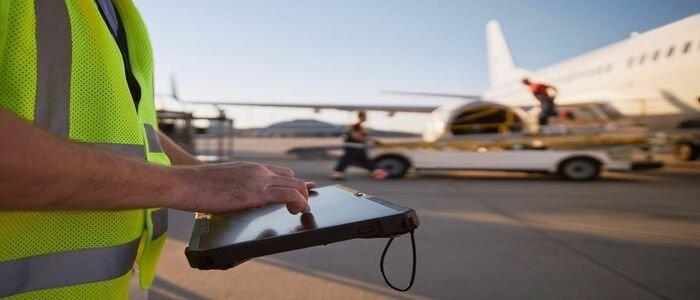
The future of airport ground handling will not depend on technology alone. Employees will remain an essential part of safe and efficient airport operations.
Future of airport ground handling professionals should prepare themselves for changing operational requirements.
Here are some important areas for professional development.
Digital skills: Learn to work with airport management systems, digital reporting tools, baggage tracking platforms, and operational dashboards.
Technology awareness: Understand the basic functions of AI, autonomous GSE, electric equipment, and automated baggage systems.
Safety management: Continue developing knowledge of ramp safety, risk assessment, aircraft protection, and incident reporting.
Communication skills: Improve coordination with airlines, airport authorities, operations control, and ground handling departments.
Leadership and decision-making: Develop the ability to manage operational disruptions, supervise teams, allocate resources, and make timely decisions.
Continuous learning: Follow industry developments, operational standards, and new technologies introduced by airlines and ground handling companies.
The employees who combine practical airport experience with modern technical knowledge will be better prepared for future opportunities.
What Will Airport Ground Handling Look Like in 2035?
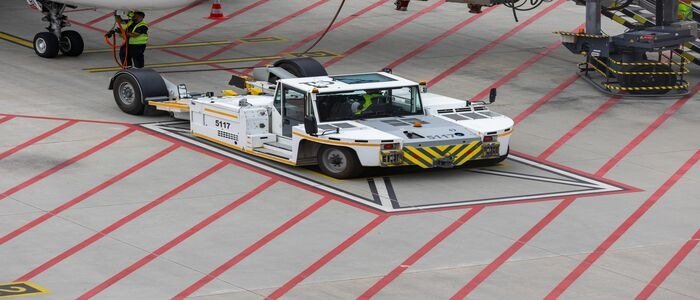
By 2035, future of airport ground handling may become more connected, automated, data-driven, and environmentally sustainable.
Imagine an aircraft arriving at an airport where its turnaround process is monitored through an integrated digital platform.
As soon as the aircraft reaches its parking position, the system updates its operational status. Ground handling supervisors receive information about required services, equipment availability, and manpower allocation.
Electric baggage tractors transport passenger luggage, while smart baggage systems provide real-time tracking information.
AI-powered platforms monitor turnaround progress and identify possible delays. Advanced safety systems assist equipment operators, while autonomous vehicles perform selected transportation tasks in approved airport areas.
Meanwhile, trained employees supervise equipment, coordinate operational activities, manage unexpected situations, and ensure that all safety procedures are followed.
This is not a guaranteed picture of every airport in 2035. It is a realistic illustration of how several technologies already being developed or introduced could work together in the coming years.
The future of airport ground handling transformation will be gradual, but the direction is clear: airports will increasingly depend on better information, smarter equipment, and stronger coordination.
Conclusion: The Future of Airport Ground Handling Will Be Technology-Driven but Human-Centered

The future of airport ground handling will be shaped by technological innovation, environmental responsibility, operational efficiency, and improved safety management.
Autonomous ground support equipment, artificial intelligence, digital baggage tracking, electric vehicles, advanced safety systems, robotics, and integrated operational platforms could transform how airports manage aircraft turnaround and daily ground operations by 2035.
However, technology alone cannot guarantee successful airport operations.
Experienced employees, trained supervisors, effective communication, strong leadership, and consistent safety standards will remain essential.
Airlines, airports, and ground handling service providers should begin preparing for these changes today through investment in technology, employee development, operational improvements, and industry collaboration.
The future of airport ground handling may look very different from today’s airport, but one principle will remain unchanged: safe, efficient, and reliable ground handling is essential to every successful flight.
Frequently Asked Questions (FAQs)

1. What is the future of airport ground handling?
The future of airport ground handling will involve greater automation, artificial intelligence, digital baggage tracking, electric ground support equipment, robotics, and improved operational coordination. These developments could make airport operations safer, faster, and more sustainable.
2. How will AI change airport ground handling?
AI could improve manpower planning, equipment allocation, aircraft turnaround monitoring, predictive maintenance, and operational decision-making. It may also help supervisors identify potential delays before they affect flight schedules.
3. What is autonomous ground support equipment?
Autonomous ground support equipment refers to airport vehicles and machinery capable of performing selected ground handling activities with limited or no direct human control. These systems may use sensors, cameras, navigation technology, and intelligent software.
4. Will robots replace airport ground handling staff?
Robots may automate selected repetitive and physically demanding tasks, but they are unlikely to eliminate the need for trained ground handling employees. Human supervision, safety management, communication, and operational decision-making will remain important.
5. How will electric GSE improve airport operations?
Electric ground support equipment can reduce direct emissions, lower operating noise, and potentially reduce certain maintenance requirements. Its successful adoption will depend on charging infrastructure, battery performance, equipment costs, and operational needs.
Facebook: https://www.facebook.com/rehan.ghauri
Instagram: https://www.instagram.com/contentflyers0/
Twitter: https://www.twitter.com/contentflyers0/
Pinterest: https://www.pinterest.com/contentflyers0/
