


Sustainable aviation is becoming one of the most important priorities in the global airline industry. As passenger demand increases and environmental concerns become more urgent, airlines, aircraft manufacturers, airports, and aviation authorities are exploring innovative ways to reduce the environmental impact of flying.
From Sustainable Aviation Fuel (SAF) and electric aircraft to hydrogen propulsion, lightweight materials, artificial intelligence, and greener airport operations, new technologies are reshaping the future of air transportation.
This article explores 10 powerful innovations transforming sustainable aviation, explains how they work, examines their benefits and challenges, and considers what the aviation industry must do to achieve its long-term environmental goals.
Table of Contents
Introduction: Can the Future of Flying Be Greener?

Flying has changed the world. It connects families, supports international trade, creates employment, strengthens tourism, and brings people closer together. A passenger can have breakfast in London and enjoy dinner in Dubai without spending several weeks travelling by ship or road.
However, this incredible convenience comes with an environmental responsibility.
Aircraft engines burn fuel, producing carbon dioxide (CO₂) and other emissions. Aircraft also create non-CO₂ climate effects, including nitrogen oxides and contrails under certain atmospheric conditions. Airports consume electricity, generate waste, operate ground vehicles, and require significant infrastructure.
As global air travel continues to expand, the aviation industry faces an important question: How can airlines continue connecting the world while reducing their environmental footprint?
The answer lies in sustainable aviation.
Sustainable aviation is not simply about painting aircraft green or adding a few trees around airport terminals. It requires fundamental improvements in aircraft technology, aviation fuels, airport infrastructure, flight planning, ground handling, and operational management.
The International Air Transport Association (IATA) and the International Civil Aviation Organization (ICAO) support the ambition of achieving net-zero carbon emissions from international aviation by 2050. Reaching this goal will require coordinated investment and action across the entire aviation ecosystem.
The good news? The transformation has already started. Let’s explore 10 powerful innovations that could make tomorrow’s aviation industry cleaner, smarter, and more efficient.
Sustainable Aviation Fuel (SAF): The Biggest Step Towards Cleaner Flying
One of the most promising developments in sustainable aviation is Sustainable Aviation Fuel (SAF). Often described as one of the industry’s most important tools for reducing aviation’s carbon footprint, SAF offers a practical alternative to conventional fossil-based jet fuel.
Traditional jet fuel is produced from crude oil. SAF, on the other hand, can be manufactured from renewable and waste-based resources, depending on the production technology.
These resources include:
- Used cooking oil from restaurants and food-processing facilities.
- Agricultural residues and forestry waste.
- Municipal solid waste, which is suitable and sustainably processed.
- Certain non-food biomass sources.
- Renewable electricity, green hydrogen, and captured carbon dioxide for synthetic fuels.
The major advantage of SAF is that approved fuels can be used as a drop-in replacement when blended within applicable technical limits. This means airlines can use SAF in compatible aircraft and engines without redesigning their entire fleets or replacing airport fuel infrastructure.
How Does Sustainable Aviation Fuel Work?
SAF is produced through different technological pathways. Each pathway converts suitable raw materials into fuel that meets aviation fuel specifications.
Some important production methods include:
- HEFA (Hydroprocessed Esters and Fatty Acids): Converts suitable oils and fats, including used cooking oil, into aviation fuel through refining processes.
- Alcohol-to-Jet (AtJ): Converts eligible alcohols into hydrocarbons suitable for aviation fuel.
- Fischer-Tropsch (FT): Uses synthesis gas produced from suitable biomass or waste resources to create liquid fuels.
- Power-to-Liquid (PtL): Uses renewable electricity, hydrogen, and a carbon source to produce synthetic aviation fuel.
According to IATA, SAF could contribute up to 65% of the emissions reductions required for aviation to achieve net-zero CO₂ emissions by 2050. However, this is a projected contribution, not an achieved result.
Why Is SAF Important for Airlines?
SAF offers several advantages:
- It can reduce lifecycle greenhouse gas emissions compared with conventional jet fuel.
- It can work with existing aircraft when produced and blended according to approved specifications.
- It provides an alternative for long-haul aviation, where battery-powered aircraft face major energy-storage limitations.
- It encourages investment in renewable energy and alternative fuel production.
- It helps airlines respond to sustainability requirements and customer expectations.
However, SAF is not a magic solution. Its availability remains limited, and its production costs are generally higher than those of conventional jet fuel.
IATA estimated that global SAF production would reach approximately 2.4 million tonnes in 2026, representing only around 0.8% of total aviation fuel consumption. This illustrates the enormous challenge of increasing production.
The future outlook: SAF will likely remain central to sustainable aviation, particularly for long-distance commercial flights. Its success will depend on reliable feedstock supplies, investment, certification, production capacity, and supportive government policies.
Electric Aircraft: Bringing Battery-Powered Flying Closer to Reality
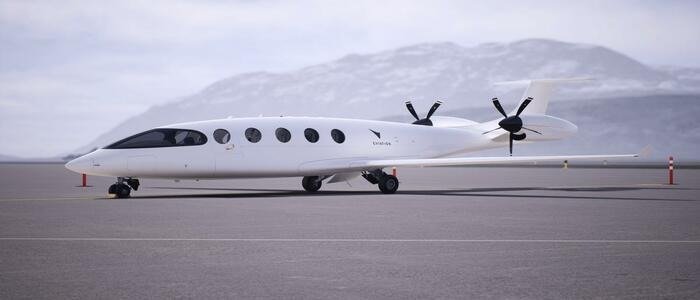
Imagine boarding an aircraft that operates using electric motors rather than conventional jet engines. There would be no traditional jet-fuel combustion in its electric propulsion system, and its direct operational emissions could be significantly reduced.
This is the promise of electric aviation.
Electric aircraft use batteries to supply energy to electric motors that turn propellers or other propulsion systems. They are attracting attention from aircraft manufacturers, research organizations, and aviation startups.
How Do Electric Aircraft Work?
Electric aircraft generally use three important components:
- Battery systems: Store electrical energy required for flight.
- Electric motors: Convert electrical energy into mechanical power.
- Power electronics: Control and distribute electricity to the propulsion system.
Unlike conventional aircraft engines, electric motors can have fewer moving components and may require different maintenance procedures.
Electric propulsion is particularly attractive for smaller aircraft and short-distance operations.
What Are the Benefits of Electric Aviation?
Electric aircraft could offer several environmental and operational benefits:
- Reduced direct CO₂ emissions during flight when powered by batteries.
- Lower noise levels in certain operating conditions.
- Potentially lower maintenance complexity for some propulsion components.
- Improved energy efficiency in suitable aircraft designs.
- Opportunities for cleaner regional and short-distance transportation.
However, there is one major challenge: battery weight.
Aircraft must carry enough energy to complete their journeys safely, including required reserves. Current battery technology has a much lower energy density than liquid aviation fuel. This makes it difficult to power large commercial aircraft over long distances using batteries alone.
Electric aircraft also require charging infrastructure, electrical grid capacity, battery-management systems, and appropriate certification.
Where Will Electric Aircraft Be Used First?
Electric aviation is more likely to develop initially in:
- Pilot training operations.
- Short regional flights.
- Small commuter aircraft.
- Specialized aviation services.
- Certain urban and regional air mobility applications.
NASA’s Electrified Aircraft Propulsion research program is investigating technologies that could improve aircraft efficiency and reduce fuel consumption. Its work also includes hybrid-electric propulsion concepts for larger aircraft.
The future outlook: Electric aircraft are unlikely to replace long-haul commercial jets immediately. However, they could become an important part of sustainable aviation by making selected short-distance operations cleaner and quieter.
Hydrogen-Powered Aircraft: An Alternative Energy Revolution

Hydrogen is another promising energy source that could transform sustainable aviation.
Unlike conventional jet fuel, hydrogen does not contain carbon. When used in a fuel cell, it produces electricity, with water and heat as the main reaction products. Hydrogen can also be burned directly in specially designed combustion engines.
Both approaches are being investigated for future aircraft.
How Does Hydrogen Aviation Work?
There are two major hydrogen propulsion approaches.
1. Hydrogen fuel cells
Fuel cells combine hydrogen and oxygen through an electrochemical process to produce electricity. The electricity then powers electric motors.
The main reaction produces water and heat rather than carbon dioxide at the aircraft.
2. Hydrogen combustion
Hydrogen can also be burned in modified or purpose-designed aircraft engines.
This approach avoids CO₂ emissions from burning fossil carbon in the fuel, although it can still produce nitrogen oxides under certain combustion conditions.
Why Is Hydrogen Important for Sustainable Aviation?
Hydrogen could provide several potential benefits:
- It contains no carbon, so its use does not produce CO₂ from fuel combustion.
- It could support new aircraft propulsion designs.
- It offers opportunities for reducing dependence on fossil fuels.
- Renewable hydrogen can be produced using electricity from renewable sources.
- It may become useful for selected regional and short-to-medium-range aircraft concepts.
However, producing hydrogen sustainably is essential. Hydrogen made using fossil fuels without effective emissions controls may offer limited climate benefits.
What Are the Main Challenges?
Hydrogen has a high energy content by mass but a low energy density by volume. This means aircraft generally need large, insulated storage tanks to carry liquid hydrogen.
Other challenges include:
- Cryogenic storage systems and extremely low temperatures.
- New aircraft designs and fuel systems.
- Airport hydrogen production, storage, and distribution infrastructure.
- Safety procedures and specialized ground-handling equipment.
- Certification and significant development costs.
Hydrogen aircraft will therefore require more than a simple engine replacement. They may need completely different aircraft architectures.
The future outlook: Hydrogen could become an important part of sustainable aviation, especially for aircraft designed around its storage and propulsion requirements. Nevertheless, widespread commercial adoption will depend on technological maturity, affordable renewable hydrogen, infrastructure, and regulatory approval.
Lightweight Aircraft Materials: Reducing Fuel Consumption Through Better Design
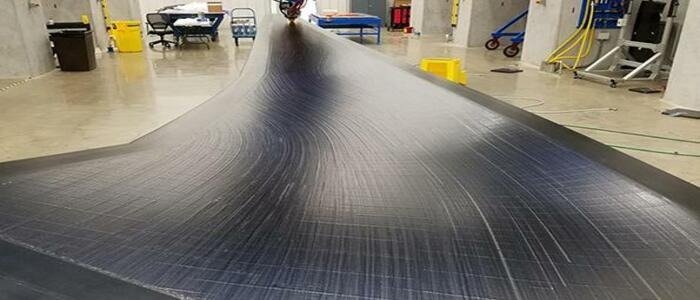
Sometimes, the most effective way to make an aircraft more sustainable is to reduce the amount of energy it needs to fly.
This is where lightweight aircraft materials play an important role.
Aircraft manufacturers are increasingly using advanced materials to improve structural strength while reducing weight.
Traditional aircraft structures have relied heavily on aluminum alloys. Modern aircraft designs increasingly incorporate carbon-fiber-reinforced polymers and other advanced composite materials.
What Are Lightweight Aircraft Materials?
These materials are designed to provide strength, durability, and performance while weighing less than some conventional alternatives.
Examples include:
- Carbon-fiber-reinforced polymers.
- Advanced aluminum alloys.
- Titanium alloys in selected applications.
- Lightweight thermoplastic composites.
- Advanced sandwich structures and honeycomb panels.
Carbon-fiber composites are particularly useful because they offer a high strength-to-weight ratio and can be engineered into complex shapes.
How Do Lightweight Materials Support Sustainable Aviation?
Reducing aircraft weight can help improve fuel efficiency.
A lighter aircraft generally requires less energy to carry its structure and payload, although the actual savings depend on aircraft design, mission length, operating conditions, and other factors.
Benefits include:
- Reduced fuel consumption in suitable aircraft designs.
- Lower operating costs through improved efficiency.
- Potentially increased payload or range within aircraft performance limits.
- Improved corrosion resistance in certain composite structures.
- Opportunities to optimize wings, fuselages, and other components.
Are There Any Disadvantages?
Yes. Advanced materials can be expensive to manufacture and repair. Composite structures may also require specialized inspection techniques, repair facilities, and trained technicians.
Recycling is another important concern. Recovering valuable fibers from composite materials can be technically challenging, and the environmental impact of production must also be considered.
The future outlook: Lightweight materials will remain an important innovation in sustainable aviation. Aircraft manufacturers will continue balancing strength, safety, durability, affordability, and environmental performance.
Artificial Intelligence and Smart Flight Operations: Making Every Flight More Efficient

Artificial intelligence (AI) is changing how airlines manage their operations.
From flight planning and aircraft maintenance to passenger services and airport coordination, intelligent systems are helping aviation organizations make faster, more informed decisions.
But how does AI contribute to sustainable aviation?
The answer is simple: better decisions can reduce unnecessary fuel consumption, operational delays, and resource waste.
How Does AI Improve Flight Efficiency?
AI-powered systems can analyze large amounts of operational data, including:
- Weather conditions.
- Wind direction and speed.
- Aircraft performance.
- Air traffic congestion.
- Flight schedules.
- Fuel consumption.
- Airport operating conditions.
Using this information, systems can help flight dispatchers and operations control centres identify more efficient flight plans.
For example, a flight planning system may recommend an alternative route that takes advantage of favorable winds while respecting air traffic control requirements and safety constraints.
AI can also support predictive maintenance by identifying patterns that indicate possible equipment problems before they lead to unexpected failures.
Five Ways AI Supports Sustainable Aviation
1. Intelligent flight planning
AI-assisted systems can help identify efficient routes and reduce unnecessary flying time.
2. Predictive aircraft maintenance
Aircraft components can be monitored to identify potential maintenance requirements earlier, helping reduce operational disruption and inefficient aircraft use.
3. Better turnaround management
AI can help coordinate ground operations, aircraft servicing, baggage handling, and departure preparation.
4. Improved fuel management
Data analytics can help airlines identify unusual fuel-consumption patterns and opportunities for operational improvements.
5. Smarter passenger management
Digital tools can help airlines improve passenger processing, boarding coordination, and resource allocation.
The Importance of Airport Operations
From a ground-handling perspective, sustainable aviation is not limited to aircraft engines.
A poorly coordinated turnaround can create delays, unnecessary auxiliary power unit (APU) use, additional ground equipment activity, and inefficient resource deployment.
For example, better coordination between ramp supervisors, load control, baggage teams, passenger services, and flight dispatch can help aircraft depart on schedule.
An aircraft waiting unnecessarily at a stand is not exactly enjoying a fuel-saving holiday!
The future outlook: AI will increasingly support sustainable aviation through better planning, predictive maintenance, and operational coordination. However, these systems must be reliable, secure, transparent, and supervised by qualified aviation professionals.
Sustainable Airport Infrastructure: Building Greener Airports

Airports are essential to the aviation industry, but their environmental impact extends far beyond aircraft movements.
Large airports operate around the clock. They require electricity, heating, cooling, water, transportation systems, lighting, security equipment, and ground-support facilities.
As passenger numbers increase, airports must find ways to manage these resources more efficiently.
Sustainable airport infrastructure is therefore a major part of the sustainable aviation movement.
What Makes an Airport Sustainable?
A sustainable airport uses technology, efficient infrastructure, and responsible resource management to reduce its environmental footprint.
Important developments include:
1. Solar energy installations
Airports can install solar panels on suitable rooftops, parking facilities, and designated land areas to generate renewable electricity.
2. Energy-efficient terminal buildings
Modern terminals can use LED lighting, intelligent heating and cooling systems, energy-efficient glass, and automated building-management systems.
3. Water conservation
Rainwater harvesting, wastewater treatment, and efficient plumbing can reduce freshwater consumption.
4. Waste management and recycling
Airports can improve recycling programs, reduce single-use plastics, and encourage responsible waste disposal among passengers, airlines, and airport businesses.
5. Green building design
New airport buildings can incorporate sustainable construction materials, natural lighting, efficient ventilation, and environmentally responsible landscaping.
How Can Airports Reduce Their Carbon Footprint?
Airports should monitor their energy consumption and greenhouse gas emissions, identify major sources of waste, and establish measurable improvement targets.
They can also introduce environmental management systems and independent assessments to monitor progress.
Airport operators must consider emissions from their own facilities as well as the wider airport ecosystem. Aircraft movements, airline operations, passenger transport, and third-party service providers can contribute to the overall environmental footprint.
The future outlook: Sustainable airport infrastructure will become increasingly important as airports expand. Renewable energy, efficient terminal design, water conservation, and responsible waste management can help create cleaner and more resilient aviation facilities.
Electric Ground Support Equipment: Greener Ramp and Ground Handling Operations

When passengers think about sustainable aviation, they usually imagine modern aircraft, cleaner fuels, or futuristic engines.
However, there is another important area that deserves attention: airport ground handling.
Every departing aircraft requires a coordinated team of ground-service professionals and equipment. This includes baggage tractors, belt loaders, passenger buses, ground power units, catering vehicles, and other specialized equipment.
Traditionally, many of these vehicles have operated using diesel fuel or other conventional energy sources.
Electric ground support equipment (eGSE) offers an opportunity to reduce emissions from airport operations.
What Is Electric Ground Support Equipment?
Electric GSE refers to airport vehicles and equipment powered by rechargeable batteries or other electric systems instead of conventional combustion engines.
Examples include:
- Electric baggage tractors.
- Electric belt loaders.
- Electric passenger buses.
- Electric cargo tractors.
- Electric ground power units.
- Electric catering vehicles.
- Electric aircraft pushback tractors.
These vehicles can perform many of the same tasks as traditional equipment while reducing local exhaust emissions during operation.
Five Benefits of Electric Ground Handling Equipment
1. Reduced local air pollution
Battery-powered equipment produces no tailpipe emissions during operation, helping improve local air quality around airport ramps.
2. Lower noise levels
Electric vehicles can operate more quietly than comparable combustion-powered equipment, improving the working environment for airport personnel.
3. Reduced fuel expenses
Electricity can offer operating-cost advantages compared with conventional fuels, depending on electricity prices, charging infrastructure, and equipment utilization.
4. Improved maintenance opportunities
Electric powertrains have fewer moving parts than many conventional engines, potentially reducing certain maintenance requirements.
5. Better environmental performance
When charged using renewable electricity, electric equipment can offer additional lifecycle emissions benefits.
What Does This Mean for Ground Handling Companies?
Ground handling organizations can introduce electric equipment through a planned fleet modernization program.
However, successful implementation requires:
- Adequate charging infrastructure.
- Equipment availability and reliability.
- Battery charging schedules.
- Trained maintenance personnel.
- Operational contingency arrangements.
- Sufficient electrical supply.
- Coordination with airport authorities and airlines.
Consider a busy airport during the morning departure rush. Several aircraft may require baggage loading, passenger boarding, aircraft towing, and ground power simultaneously.
If electric equipment is not properly charged or allocated, operations could face unnecessary delays.
Therefore, equipment planning is just as important as purchasing modern vehicles.
The future outlook: Electric ground support equipment will be an important component of sustainable aviation, particularly at airports with high ground-vehicle activity and access to suitable charging infrastructure.
Advanced Aerodynamics and Next-Generation Aircraft Engines

Aircraft manufacturers are continuously improving aerodynamic performance and engine efficiency.
Even small improvements in aircraft design can become significant when multiplied across thousands of flights.
Advanced aerodynamics focuses on reducing drag, improving airflow, and helping aircraft use energy more efficiently.
What Is Aircraft Aerodynamics?
Aerodynamics is the study of how air moves around an aircraft.
During flight, aircraft experience four primary aerodynamic forces:
- Lift.
- Weight.
- Thrust.
- Drag.
Drag is the resistance an aircraft experiences as it moves through the air.
When aircraft designers reduce unnecessary drag, the aircraft may require less thrust to maintain its flight profile.
This can contribute to lower fuel consumption.
Five Innovations Improving Aircraft Efficiency
1. Advanced winglets
Winglets are structures installed at the ends of aircraft wings. Properly designed winglets help reduce induced drag and improve aerodynamic efficiency.
2. Improved wing designs
Modern wings are designed using advanced computational modelling and aerodynamic testing to improve lift and reduce drag.
3. Geared turbofan engines
Geared turbofan technology allows the fan and low-pressure turbine to operate at different optimal speeds, improving engine efficiency in suitable designs.
4. Advanced engine materials
Modern engines use advanced alloys and ceramic-matrix composites in selected components to withstand demanding temperatures and operating conditions.
5. Improved engine architecture
Manufacturers continue developing higher-efficiency engines with optimized airflow, combustion, and propulsion systems.
Why Are These Improvements Important?
Aircraft operate for many years and perform thousands of flights.
Consequently, improvements in fuel efficiency can deliver substantial cumulative benefits over an aircraft’s operational lifetime.
For airlines, better efficiency can also mean lower fuel costs, improved operational economics, and reduced emissions per passenger-kilometer.
The future outlook: Continued improvements in aircraft engines and aerodynamic design will remain essential to sustainable aviation, particularly for long-haul commercial aircraft that cannot easily transition to battery-powered propulsion.
Contrail Management and Climate-Smart Flight Planning

Carbon dioxide is not the only environmental concern associated with aviation.
Aircraft can also produce contrails, which are visible condensation trails formed when water vapor in engine exhaust interacts with cold atmospheric conditions.
These trails may disappear quickly or develop into persistent contrail cirrus clouds.
Under certain atmospheric conditions, persistent contrails can contribute to aviation’s warming impact.
This makes contrail management an important area of sustainable aviation research.
What Are Contrails?
Contrails are ice-crystal clouds that form behind aircraft flying through sufficiently cold and humid atmospheric conditions.
They are created when water vapor from aircraft exhaust mixes with surrounding air and freezes into tiny ice crystals.
Not all contrails have the same climate effect.
Their impact depends on factors such as:
- Atmospheric temperature.
- Relative humidity.
- Flight altitude.
- Time of day.
- Existing cloud conditions.
- Duration and development of the contrail.
Some contrails disappear quickly, while others persist and spread.
How Can Airlines Reduce Contrail-Related Climate Effects?
Researchers and aviation organizations are exploring ways to identify atmospheric regions where persistent contrails are more likely to form.
Potential approaches include:
1. Weather-based flight planning
Flight planning systems can use atmospheric forecasts to identify conditions associated with persistent contrails.
2. Selective altitude adjustments
Where operationally safe and permitted, aircraft may adjust their altitude to avoid certain atmospheric conditions.
3. Advanced atmospheric monitoring
Improved weather models and satellite observations can help researchers understand where persistent contrails develop.
4. AI-assisted route optimization
Machine-learning systems may help identify alternative routes that balance contrail avoidance, fuel consumption, flight time, and safety.
What Are the Challenges?
Contrail avoidance is not automatically environmentally beneficial.
Changing an aircraft’s altitude or route may increase fuel consumption. This could produce additional CO₂ emissions that partly or completely offset the climate benefit.
Airlines must therefore evaluate the overall climate impact rather than focusing on contrail reduction alone.
Safety, air traffic control instructions, passenger comfort, and aircraft performance must always take priority.
The future outlook: Better atmospheric forecasting and climate-aware flight planning could help airlines reduce some non-CO₂ climate effects. However, operational implementation requires further research, reliable data, and careful measurement.
Circular Aviation and Sustainable Aircraft Manufacturing
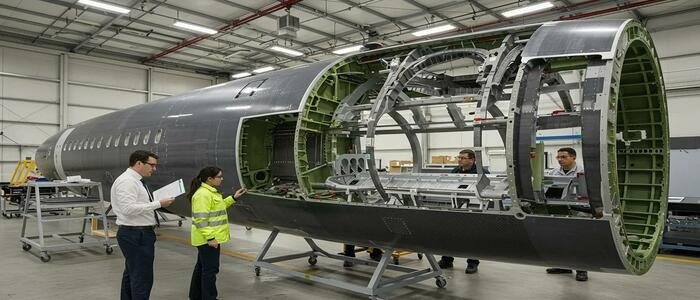
Sustainable aviation is not only about what happens when an aircraft takes off.
It also involves how aircraft are manufactured, maintained, repaired, and eventually retired.
The aviation industry uses enormous quantities of materials, including aluminum, titanium, steel, composites, plastics, and electronic components.
Producing these materials requires energy and natural resources. Aircraft manufacturing and maintenance can also generate waste.
Circular aviation aims to reduce this impact by keeping materials and components in productive use for as long as safely possible.
What Is Circular Aviation?
Circular aviation applies the principles of the circular economy to aircraft manufacturing and operations.
Instead of following a simple take-make-dispose model, organizations seek to:
- Reduce material consumption.
- Reuse suitable components.
- Repair equipment where possible.
- Recycle recoverable materials.
- Improve product durability.
- Reduce manufacturing waste.
Five Ways Circular Aviation Can Transform the Industry
1. Aircraft component recycling
Suitable aircraft components and materials can be recovered and processed for reuse or recycling.
2. Sustainable manufacturing
Manufacturers can improve production efficiency, reduce waste, and use lower-impact materials where technically appropriate.
3. Aircraft lifecycle management
Airlines can improve maintenance planning and extend aircraft service life when continued operation remains safe and economically practical.
4. Responsible aircraft dismantling
Retired aircraft can be dismantled so that valuable components and materials are recovered rather than unnecessarily discarded.
5. Digital maintenance records
Digital records can improve traceability, maintenance planning, component management, and the efficient use of spare parts.
Why Is Circular Aviation Important?
Aircraft manufacturing is resource-intensive, and many aircraft components have significant economic value.
Recovering usable components can reduce waste and improve material efficiency.
However, aviation safety is non-negotiable. Any reused or repaired aircraft component must meet applicable airworthiness, traceability, maintenance, and certification requirements.
The future outlook: Circular aviation could help manufacturers, airlines, maintenance organizations, and aircraft recycling companies reduce resource consumption while creating a more responsible aircraft lifecycle.
The Major Challenges Facing Sustainable Aviation
The innovations discussed above offer exciting possibilities, but transforming the global aviation industry is not a simple task.
Aircraft operate in a highly regulated environment where safety, reliability, performance, and financial sustainability are essential.
The industry must therefore overcome several major barriers.
1. High Costs of Sustainable Technologies
New aircraft, alternative fuels, electric ground equipment, and airport infrastructure require substantial investment.
SAF, for example, remains more expensive than conventional aviation fuel in many markets.
Smaller airlines and airport operators may struggle to finance major sustainability programs without government support or access to affordable investment.
2. Limited Sustainable Aviation Fuel Production
SAF production remains a small proportion of total aviation fuel consumption.
The industry needs more commercial production facilities, reliable feedstock supplies, distribution networks, and investment.
IATA’s 2026 estimate of approximately 0.8% SAF penetration demonstrates how much work remains.
3. Airport Infrastructure Limitations
Electric aircraft, hydrogen aircraft, and large-scale electric ground equipment may require substantial infrastructure improvements.
Airports need to evaluate:
- Electricity supply and charging capacity.
- Hydrogen storage and distribution.
- Fuel storage and handling systems.
- Fire protection and emergency response.
- Equipment maintenance facilities.
- Staff training and operational procedures.
These developments require long-term planning and coordination.
4. Aircraft Certification and Safety Requirements
Aviation is one of the most safety-sensitive industries in the world.
Any new aircraft technology, propulsion system, fuel, or operational procedure must meet applicable safety and regulatory requirements.
Innovation cannot come at the expense of safety.
5. Lack of Global Coordination
Airlines operate across international borders, while environmental regulations and infrastructure capabilities differ between countries.
International cooperation is necessary to develop consistent sustainability standards, certification frameworks, fuel accounting systems, and investment policies.
ICAO’s global framework emphasizes policy, regulatory frameworks, implementation support, and financing as interconnected requirements for cleaner aviation energy.
Conclusion: Sustainable Aviation Is the Future of Flying
Sustainable aviation is no longer just an environmental discussion. It is becoming a major strategic priority for airlines, airports, aircraft manufacturers, governments, and aviation professionals worldwide.
The 10 innovations discussed in this article demonstrate how the industry is working towards a cleaner future.
From Sustainable Aviation Fuel and electric aircraft to hydrogen propulsion, lightweight materials, artificial intelligence, and electric ground support equipment, each development offers opportunities to reduce environmental impacts and improve operational efficiency.
However, there is no single solution capable of transforming aviation overnight.
The industry needs investment, technological research, international cooperation, practical policies, and well-trained aviation professionals.
Airlines must improve fuel efficiency. Airports must modernize infrastructure. Ground-handling companies must adopt cleaner equipment. Manufacturers must develop more efficient aircraft. Governments must support credible environmental innovation.
Most importantly, the industry must measure actual environmental improvements rather than simply making ambitious promises.
The future of flying should not be about stopping people from travelling. It should be about finding smarter and more responsible ways to connect the world.
Sustainable aviation is not just about changing how aircraft fly; it is about transforming the entire aviation ecosystem for future generations.
And perhaps one day, when passengers look out of their aircraft windows, they will see not only the beauty of the clouds but also the results of an aviation industry that has taken its environmental responsibilities seriously.
Frequently Asked Questions About Sustainable Aviation
1. What Is Sustainable Aviation?
Sustainable aviation refers to the development and operation of air transportation in ways that reduce environmental impacts while maintaining safety, economic viability, and connectivity.
It includes cleaner aviation fuels, fuel-efficient aircraft, electric and hydrogen propulsion research, sustainable airport infrastructure, efficient flight operations, and responsible resource management.
2. What Is Sustainable Aviation Fuel (SAF)?
Sustainable Aviation Fuel (SAF) is an alternative aviation fuel produced from eligible renewable or waste-based resources or through synthetic fuel production pathways.
Depending on the production method and feedstock, SAF can significantly reduce lifecycle greenhouse gas emissions compared with conventional jet fuel.
Approved SAF can be blended with conventional aviation fuel and used in compatible aircraft and engines within applicable specifications.
3. Can Electric Aircraft Replace Traditional Passenger Aircraft?
Electric aircraft have the potential to support certain short-distance and regional aviation operations.
However, current battery energy-density limitations make it difficult to use battery-only propulsion for large, long-distance commercial passenger aircraft.
Electric aviation is more likely to complement conventional aircraft initially rather than replace the entire commercial fleet.
4. How Can Airports Become More Environmentally Friendly?
Airports can improve environmental performance through renewable electricity, energy-efficient terminal buildings, electric ground support equipment, water conservation, waste recycling, and improved resource management.
They can also collaborate with airlines and ground-handling companies to reduce unnecessary equipment usage and improve operational efficiency.
5. Will Sustainable Aviation Make Air Travel More Expensive?
Some sustainable technologies, particularly SAF and new aircraft development, currently involve higher costs.
Airlines may face additional expenses when purchasing alternative fuels, upgrading fleets, or investing in airport infrastructure.
However, technological improvements, larger production volumes, better infrastructure, and supportive policies could reduce costs over time.
The final impact on ticket prices will depend on airline economics, fuel markets, government policies, and the pace of technological development.
Facebook: https://www.facebook.com/rehan.ghauri
Instagram: https://www.instagram.com/contentflyers0/
Twitter: https://www.twitter.com/contentflyers0/
Pinterest: https://www.pinterest.com/contentflyers0/
