

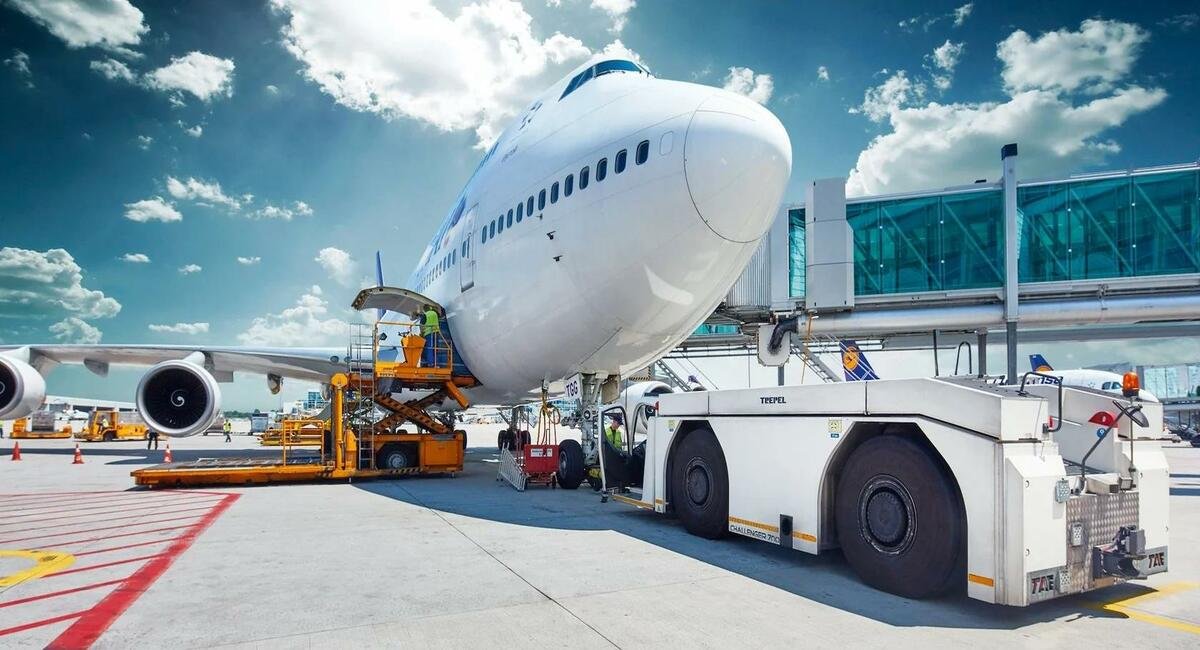
Airport logistics is the backbone of modern airport operations. Every successful flight depends on the smooth coordination of multiple activities, including passenger processing, baggage handling, cargo transportation, aircraft servicing, ground handling, and communication between different airport departments.
Behind every aircraft departure is a carefully organized operational process involving airlines, airport authorities, ground-handling companies, security teams, cargo operators, and other service providers.
This comprehensive guide explores how airport logistics works, why it matters, the challenges faced by airport professionals, and how modern technology and effective management strategies can improve operational efficiency. Whether you are an aviation professional, airport manager, airline employee, logistics specialist, or student, this guide will help you understand the essential elements of efficient airport logistics.
Table of Contents
Introduction: Why Is Airport Logistics So Important?
Imagine arriving at an international airport just 45 minutes before your flight.
You check in, drop your baggage, pass through security, and reach the boarding gate. Everything seems simple, doesn’t it?
Now imagine what is happening behind the scenes.
Your baggage must be identified, tagged, screened, sorted, transported, and loaded into the correct aircraft. Meanwhile, the aircraft needs cleaning, refuelling, catering, technical inspections, and other ground services. The flight crew must receive operational information, passengers must be boarded, and ground staff must complete their assigned responsibilities before departure.
All these activities must happen within a limited turnaround period.
This is where airport logistics becomes essential.
Airport logistics refers to the planning, coordination, movement, storage, and management of passengers, baggage, cargo, equipment, supplies, and operational resources within an airport environment.
It connects different departments and service providers to ensure that airport activities operate safely, efficiently, and according to established schedules.
An airport is not simply a place where aircraft arrive and depart. It is a complex transportation hub where hundreds of operational activities may take place simultaneously.
Without effective airport logistics, even a well-equipped international airport can experience baggage delays, aircraft turnaround problems, passenger dissatisfaction, cargo disruptions, and unnecessary operational expenses.
In simple terms, airport logistics makes sure that the right resources reach the right place at the right time.
And in aviation, timing is not just important. Sometimes, a few minutes can make a significant operational difference!
1. What Is Airport Logistics?
Airport logistics is the integrated management of resources, services, information, and transportation processes required to support airport operations.
It involves coordinating activities across the airport’s landside and airside environments.
The landside includes areas accessible to passengers, visitors, and service providers before entering restricted operational areas. Examples include terminal entrances, check-in counters, public areas, parking facilities, and passenger transportation facilities.
The airside includes controlled areas such as aircraft parking stands, taxiways, runways, baggage handling areas, and other operational zones.
Effective airport logistics connects these environments through coordinated processes.
Main components of airport logistics
The major components include:
- Passenger logistics: Managing passenger movement from airport arrival to departure and from aircraft arrival to terminal exit.
- Baggage logistics: Handling, screening, sorting, transporting, loading, and delivering passenger baggage.
- Cargo logistics: Managing the acceptance, storage, transportation, documentation, and delivery of air freight.
- Ground handling: Supporting aircraft turnaround through ramp services, passenger handling, baggage operations, and other ground services.
- Aircraft logistics: Coordinating the services, equipment, and resources required to prepare aircraft for their next flight.
- Equipment management: Ensuring that ground support equipment is available, maintained, and properly allocated.
- Supply chain management: Coordinating the delivery of aviation fuel, catering supplies, spare parts, cleaning materials, and other essential resources.
- Information management: Sharing accurate operational information between airlines, airport authorities, handlers, and other stakeholders.
All these activities are interconnected. A problem in one department can quickly affect several others.
For example, if baggage sorting is delayed, loading may be interrupted. This can affect aircraft departure readiness and create additional coordination requirements for the airline and ground-handling team.
That is why airport logistics requires proper planning, continuous monitoring, and effective communication.
2. How Airport Logistics Works: Understanding the Complete Process
Airport logistics follows a sequence of interconnected operational activities. Although procedures vary depending on airport size, airline requirements, aircraft type, and local regulations, the general process involves several important stages.
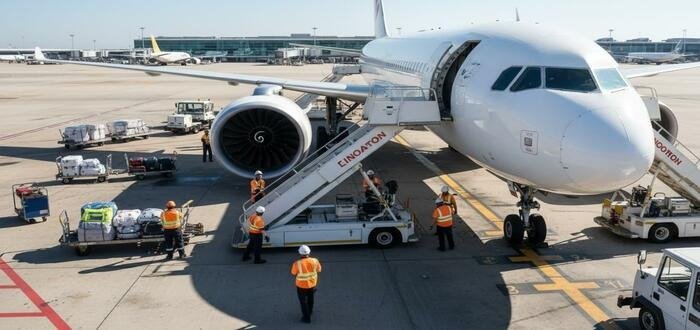
Step 1: Passenger arrival and processing
Passenger logistics begins when travelers arrive at the airport.
Airport and airline teams work together to manage passenger movement through different processing points.
These activities include:
- Passenger information and flight status updates.
- Check-in and travel document verification.
- Boarding pass issuance.
- Baggage acceptance and tagging.
- Special assistance for passengers requiring additional support.
- Security screening and immigration procedures where applicable.
- Boarding coordination.
Efficient passenger processing helps reduce queues, improve terminal circulation, and minimize unnecessary delays.
Airlines must also ensure that passenger information is correctly recorded and communicated to relevant operational departments.
For example, passengers requiring wheelchair assistance, unaccompanied minors, and passengers with special service requests may need additional coordination.
A smooth passenger experience is not created by smiling staff alone. It also depends on efficient airport logistics behind the counter.
Step 2: Baggage acceptance and handling
Baggage handling is one of the most important elements of airport logistics.
Once passengers check in their baggage, the bags enter a controlled operational process.
The process generally includes:
- Baggage acceptance and tagging.
- Initial screening and security checks.
- Transportation through conveyor systems.
- Automated or manual sorting.
- Identification according to flight destination.
- Transportation to the aircraft.
- Loading into the aircraft hold.
- Unloading and delivery at the destination airport.
Modern airports use baggage handling systems to improve accuracy and processing speed.
However, technology alone cannot guarantee successful baggage operations. Proper supervision, equipment availability, staff training, and communication remain essential.
A baggage tag may look like a small printed label, but it carries important information that helps the system route the bag correctly.
Step 3: Aircraft ground handling
Aircraft ground handling involves the services required to prepare an aircraft for departure and support it after arrival.
These services are usually performed by airline ground staff or contracted ground-handling companies.
Major activities include:
- Aircraft marshalling and parking guidance.
- Passenger disembarkation.
- Baggage and cargo unloading.
- Aircraft cleaning.
- Cabin servicing.
- Catering services.
- Refuelling coordination.
- Potable water and lavatory servicing.
- Passenger boarding.
- Baggage and cargo loading.
- Final departure preparation.
Ground handling must follow approved procedures, safety requirements, and airline instructions.
Every activity must be coordinated with the relevant departments to avoid unnecessary delays and operational conflicts.
Step 4: Cargo acceptance and transportation
Air cargo logistics involves the movement of commercial goods, documents, medical supplies, industrial equipment, perishable products, and other shipments.
Cargo operations generally include:
- Shipment booking and acceptance.
- Documentation verification.
- Security screening.
- Weight and dimension checks.
- Cargo storage.
- Special cargo handling.
- Aircraft loading.
- Arrival processing and delivery.
Certain shipments require additional attention.
For example, temperature-sensitive pharmaceutical products may require controlled storage conditions throughout their journey.
Similarly, dangerous goods must be classified, documented, packed, handled, and transported according to applicable regulations.
Step 5: Aircraft departure coordination
Aircraft departure requires coordination between several operational departments.
Before departure, the airline and ground-handling team must ensure that their respective tasks are completed.
These may include:
- Passenger boarding completion.
- Baggage and cargo loading confirmation.
- Aircraft door closure.
- Ground support equipment removal.
- Completion of required safety checks.
- Communication with flight crew.
- Operational documentation and load information.
- Departure clearance and pushback coordination.
The exact responsibilities depend on airline procedures, airport arrangements, and applicable aviation regulations.
A departure is successful when all required operational and safety conditions have been satisfied, not simply when the aircraft starts moving.
3. The Role of Ground Handling in Airport Logistics
Ground handling is one of the most critical elements of airport logistics because it directly supports aircraft turnaround and daily flight operations.
Ground-handling companies provide essential services to airlines, helping them manage aircraft, passengers, baggage, cargo, and operational requirements while aircraft are on the ground.
At busy international airports, several aircraft may arrive and depart within a short period. Managing these movements requires careful coordination, trained personnel, and sufficient ground support equipment.
Important ground-handling services
1. Passenger handling
Passenger handling includes check-in, boarding, arrival assistance, transfer services, and special passenger support.
Customer service representatives must communicate clearly, follow airline procedures, and resolve passenger concerns professionally.
2. Ramp handling
Ramp operations involve activities performed around aircraft parking stands.
These include:
- Aircraft marshalling.
- Ground support equipment positioning.
- Baggage and cargo loading.
- Aircraft unloading.
- Pushback coordination.
- Ramp safety monitoring.
- Communication with relevant operational teams.
Ramp personnel must maintain situational awareness because aircraft aprons are busy working environments involving moving vehicles, aircraft engines, equipment, and personnel.
3. Baggage handling
Baggage teams ensure that passenger luggage is transported between terminal facilities and aircraft.
Correct flight identification, baggage reconciliation, loading instructions, and timely transportation are essential.
4. Load control coordination
Load control involves preparing and verifying aircraft weight-and-balance information.
Accurate passenger, baggage, cargo, and other load information is essential for preparing the aircraft load sheet and ensuring compliance with aircraft operating limitations.
Ground-handling teams must provide accurate loading information to the responsible load control personnel.
5. Aircraft turnaround services
Aircraft turnaround includes the coordinated services required between an aircraft’s arrival and its next departure.
Depending on the flight and airline requirements, these services may include cleaning, catering, refuelling, water servicing, baggage operations, and passenger boarding.
Why ground-handling coordination matters
Consider a situation where an aircraft arrives at a busy international airport with only 50 minutes scheduled for its ground turnaround.
During this period, the operational team must coordinate passenger disembarkation, baggage unloading, cabin cleaning, catering, refuelling, boarding preparation, and departure requirements.
If one department experiences an unexpected delay, other activities may also be affected.
A competent airport operations supervisor should therefore:
- Monitor the overall turnaround process.
- Assign responsibilities to available personnel.
- Maintain communication with airline representatives.
- Coordinate with ramp, baggage, and passenger service teams.
- Identify operational risks before they become major problems.
- Escalate delays through the appropriate channels.
- Ensure safety procedures are never compromised to save time.
The objective is not simply to make an aircraft depart quickly. It is to achieve a safe, compliant, and efficient turnaround.
4. Baggage Management: Keeping Every Bag on the Right Journey
Baggage management is a major part of airport logistics and has a direct impact on passenger satisfaction.
For travellers, baggage is personal property. Losing it, delaying it, or sending it to the wrong destination can turn an otherwise pleasant journey into a frustrating experience.
For airports and airlines, baggage management is a complex operational responsibility involving technology, security, identification, transportation, and coordination.

How modern baggage systems operate
Modern airports use a combination of conveyor belts, barcode readers, automated sorting equipment, screening systems, and baggage tracking technology.
A typical baggage journey involves the following stages:
- Baggage check-in: The passenger hands over luggage, and the airline or its handling agent attaches a baggage tag.
- Identification: The baggage tag provides information used to identify the passenger’s flight and destination.
- Security screening: Baggage passes through the required security screening process.
- Sorting: The baggage handling system directs luggage toward the appropriate flight or handling area.
- Transportation: Baggage is transferred to the aircraft loading area.
- Aircraft loading: Ground staff load baggage according to approved loading instructions.
- Arrival handling: Baggage is unloaded and transported to the appropriate arrival carousel or transfer facility.
Common baggage-handling problems
Airport logistics teams may encounter several baggage-related challenges.
Mishandled baggage: Bags may be incorrectly routed, delayed, damaged, or sent to the wrong destination.
Late-arriving baggage: Passengers checking in close to departure may create additional processing pressure.
Transfer baggage delays: Connecting passengers require their baggage to be transferred between flights within the available connection time.
Equipment breakdown: Conveyor failures, scanner problems, or transportation vehicle issues can interrupt baggage movement.
Incorrect baggage loading: Inaccurate loading information can create operational and reconciliation problems.
How airports can improve baggage logistics
Airports and airlines can strengthen baggage operations by:
- Introducing reliable baggage tracking systems.
- Maintaining conveyor and sorting equipment.
- Providing regular staff training.
- Improving communication between check-in, baggage, and ramp teams.
- Monitoring baggage delivery performance.
- Establishing procedures for identifying and recovering mishandled baggage.
- Using appropriate contingency arrangements during equipment failures.
The International Air Transport Association (IATA) provides industry baggage standards and recommended practices that help support consistency across airline baggage operations.
5. Air Cargo Logistics: Managing Goods Through Airport Operations
Air cargo is another essential component of airport logistics.
Air transportation allows businesses to move goods quickly between countries and markets. It supports international trade, e-commerce, manufacturing, healthcare, and emergency supply chains.
Unlike passenger baggage, commercial cargo may involve complex documentation, customs requirements, security controls, special handling procedures, and storage arrangements.
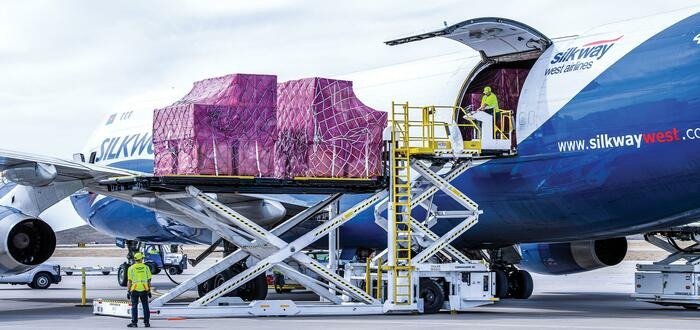
Main categories of air cargo
Air cargo includes several types of shipments.
General cargo
This includes ordinary commercial goods that do not require specialized handling beyond standard cargo procedures.
Examples include clothing, electronics, household products, and manufactured items.
Perishable cargo
Perishable shipments include products that may deteriorate if exposed to unsuitable temperatures or excessive delays.
Examples include fresh vegetables, seafood, flowers, and certain food products.
Pharmaceutical cargo
Medicines, vaccines, and other temperature-sensitive healthcare products may require controlled temperature environments and specialized handling.
Dangerous goods
Certain materials may present risks during transportation.
Examples include specific chemicals, batteries, gases, and flammable materials. Their transport is subject to strict classification, packaging, documentation, acceptance, and handling requirements.
Live animal shipments
Live animals require suitable transportation arrangements, appropriate containers, and care in accordance with applicable animal welfare and aviation requirements.
Important stages of airport cargo logistics
Cargo logistics generally involves:
- Booking and shipment preparation.
- Cargo acceptance and documentation.
- Security screening.
- Storage and inventory management.
- Customs and regulatory processing.
- Cargo build-up and aircraft loading.
- Arrival handling and breakdown.
- Customs clearance and final delivery.
Why cargo coordination is important
Cargo operations require communication between airlines, freight forwarders, cargo terminal operators, customs authorities, ground handlers, and transportation companies.
For example, a shipment of temperature-sensitive pharmaceutical products may arrive at an airport warehouse before being loaded onto an international flight.
If the shipment remains outside the required temperature-controlled environment for too long, product quality could be affected.
Efficient airport logistics therefore requires appropriate facilities, trained staff, accurate documentation, and timely coordination.
6. Aircraft Turnaround Management: The Race Against Time
Aircraft turnaround management is one of the most visible examples of airport logistics in action.
An aircraft does not simply arrive, park, and leave again. It requires a series of carefully coordinated activities before it can safely operate its next flight.
An efficient turnaround supports airline punctuality, aircraft utilization, passenger satisfaction, and operational cost control.
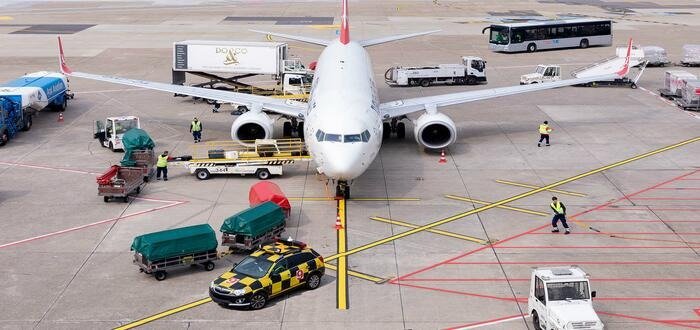
What happens during aircraft turnaround?
A typical turnaround may include:
| Activity | Operational responsibility |
| Aircraft arrival | Arrival coordination and stand positioning |
| Passenger disembarkation | Passenger service team |
| Baggage unloading | Baggage and ramp teams |
| Aircraft cleaning | Cabin service team |
| Catering | Catering service provider |
| Refuelling | Authorized fuel service provider |
| Cabin preparation | Cabin cleaning and service teams |
| Baggage loading | Ramp and baggage teams |
| Passenger boarding | Passenger handling team |
| Departure preparation | Airline and ground operations teams |
The precise sequence depends on the aircraft type, airline procedures, airport infrastructure, and operational requirements. Some activities can take place simultaneously when appropriate safety arrangements are in place.
How to improve aircraft turnaround efficiency
Airports and airlines can improve turnaround performance through several measures.
Advance planning: Operational teams should receive relevant flight information before aircraft arrival.
Resource allocation: Sufficient staff, equipment, and vehicles should be available for scheduled operations.
Real-time communication: Teams should immediately report delays, equipment problems, and operational changes.
Turnaround monitoring: Supervisors should monitor task completion against the operational schedule.
Contingency planning: Alternative arrangements should be available when equipment failures, weather conditions, or unexpected operational events occur.
A practical airport operations example
Imagine an aircraft arriving at a busy airport with a scheduled departure 60 minutes later.
The baggage team discovers that one belt loader is not functioning properly.
A poorly coordinated team may wait until the problem becomes a major delay.
A well-managed team, however, will immediately inform the supervisor, arrange an available replacement where possible, adjust resource allocation, and communicate with the relevant departments.
This is the value of effective airport logistics: identifying problems early and coordinating practical solutions without compromising safety.
7. Airport Logistics Management: The Importance of People and Coordination
Technology, equipment, and airport infrastructure are important, but airport logistics ultimately depends on people.
Behind every successful airport operation are employees who coordinate activities, follow procedures, communicate information, and solve problems.
Airport logistics management involves planning, organizing, supervising, and controlling operational resources to achieve safe and efficient airport services.
Key responsibilities of airport logistics managers
Airport logistics managers may be responsible for:
- Planning daily operational activities.
- Monitoring aircraft turnaround performance.
- Coordinating with airlines and ground-handling companies.
- Supervising manpower allocation.
- Monitoring equipment availability.
- Managing operational disruptions.
- Ensuring compliance with applicable procedures.
- Reviewing performance indicators.
- Identifying opportunities for improvement.
- Supporting safety and quality management systems.
Why communication is essential
Airport operations involve multiple stakeholders with different responsibilities.
For example, the airline station team may coordinate with the airport operations control center, ramp supervisor, passenger handling team, baggage services, security personnel, and aircraft crew.
If information is inaccurate or delayed, operational decisions may also be affected.
Effective communication should be:
- Clear and concise.
- Accurate and timely.
- Shared with the appropriate personnel.
- Recorded where required.
- Escalated through established channels.
A good operations supervisor does not assume that everyone already knows what is happening. They confirm, communicate, and follow up.
Manpower planning and resource allocation
Airport logistics managers must ensure that sufficient personnel are available for scheduled flights.
Manpower planning should consider:
- Number of scheduled arrivals and departures.
- Aircraft types.
- Expected passenger volumes.
- Baggage and cargo requirements.
- Operational peak periods.
- Staff qualifications and authorization.
- Break schedules and shift arrangements.
- Unexpected operational requirements.
For example, assigning too few employees to a busy departure can increase workload pressure and create service delays.
On the other hand, allocating excessive manpower without considering actual demand may increase operational costs.
The objective is to achieve the right balance between service requirements, safety, employee workload, and financial efficiency.
8. Technology Transforming Modern Airport Logistics
Technology is changing how airports manage passengers, baggage, cargo, equipment, and operational information.
Modern airport logistics increasingly depends on integrated systems that provide accurate information and support faster operational decisions.

1. Artificial intelligence and predictive analytics
Artificial intelligence can help airport operators analyze operational information and identify patterns.
Potential applications include:
- Predicting passenger traffic.
- Forecasting baggage volumes.
- Identifying potential congestion.
- Supporting equipment maintenance planning.
- Improving manpower scheduling.
- Analyzing flight turnaround performance.
For example, predictive analytics may identify periods when passenger processing demand is likely to increase.
Airport managers can use this information to adjust staffing and resource allocation.
However, AI-generated recommendations should be monitored by qualified personnel and should not replace required safety decisions or regulatory procedures.
2. Internet of Things (IoT)
Internet of Things technology connects physical devices and equipment to digital systems.
In airport logistics, IoT applications may include:
- Equipment location monitoring.
- Temperature monitoring for sensitive cargo.
- Vehicle tracking.
- Asset utilization monitoring.
- Environmental monitoring.
- Maintenance alerts.
This technology helps airport teams understand where operational resources are located and whether they are being used efficiently.
3. Automated baggage handling systems
Automated baggage systems improve baggage identification, sorting, and transportation.
Advanced systems may use barcode scanning, automated guided vehicles, and radio-frequency identification technology.
These technologies can improve baggage visibility and reduce certain manual processes.
Nevertheless, airports must maintain reliable backup procedures because equipment failures can interrupt normal baggage operations.
4. Airport operations control systems
Airport operations systems help coordinate activities across different airport departments.
Depending on the platform, they may provide information about:
- Aircraft parking stands.
- Flight schedules.
- Gate assignments.
- Resource allocation.
- Baggage operations.
- Operational disruptions.
- Airport performance.
Integrated information allows relevant departments to make more informed decisions.
5. Self-service passenger technology
Self-service check-in kiosks, automated bag drops, biometric systems, and digital boarding solutions can improve passenger processing.
These technologies may reduce queues and allow employees to focus on passengers who require additional assistance.
However, airports must also consider accessibility, passenger privacy, cybersecurity, and alternative arrangements for travelers who cannot use automated services.
9. Major Challenges Facing Airport Logistics
Airport logistics is a demanding operational environment.
Even well-organized airports face challenges that can affect passenger services, baggage movement, cargo operations, and flight schedules.
Understanding these challenges is essential for improving operational performance.
1. Flight delays and schedule disruptions
Flight delays can result from weather conditions, technical issues, air traffic restrictions, late aircraft arrivals, security events, or operational problems.
A delayed arrival can also affect the aircraft’s next scheduled departure.
Airport logistics teams must coordinate with airlines, ground handlers, airport authorities, and other stakeholders to minimize disruption.
2. Equipment breakdowns
Ground support equipment is essential for daily airport operations.
Equipment such as belt loaders, baggage tractors, passenger stairs, ground power units, and pushback tractors must remain serviceable.
Unexpected breakdowns can interrupt operations and increase turnaround time.
Preventive maintenance, regular inspections, proper equipment allocation, and contingency arrangements help reduce these risks.
3. Baggage mishandling
Incorrect baggage routing, delayed transfers, damaged luggage, and loading errors can negatively affect passengers and airline performance.
Airports can address these issues through better tracking, training, operational supervision, and baggage reconciliation processes.
4. Passenger congestion
Busy travel periods can place pressure on terminal facilities and passenger processing services.
Long queues may develop at check-in counters, security screening, immigration, and boarding gates.
Passenger-flow planning, effective staffing, and appropriate terminal management can help reduce congestion.
5. Communication gaps
Miscommunication between departments can create confusion and operational delays.
For instance, if the ramp team does not receive accurate information about a last-minute aircraft change, the required equipment or manpower may not be available at the correct stand.
Standard communication procedures and reliable information-sharing systems are essential.
6. Weather-related disruptions
Fog, heavy rain, strong winds, snow, and other adverse weather conditions may affect aircraft movements and ground operations.
Airport teams must follow approved weather-related procedures and coordinate with relevant authorities.
Operational efficiency should never take priority over safety.
7. Increasing operational costs
Airports and ground-handling companies must manage labour, fuel, equipment, maintenance, technology, and infrastructure expenses.
Poor planning can increase overtime, equipment utilization costs, and operational waste.
Effective resource management helps organizations control costs without reducing service quality or compromising safety.
10. Safety and Regulatory Compliance in Airport Logistics
Safety is a fundamental requirement of airport logistics.
Airports are complex operational environments where aircraft, vehicles, baggage equipment, personnel, and passengers interact.
Even a small procedural mistake can create serious consequences.
Airport logistics must therefore operate within applicable national regulations, international aviation standards, airport rules, and airline procedures.
Important areas of airport operational safety
Ramp safety
Ramp personnel must follow designated vehicle routes, speed limits, equipment operating instructions, aircraft safety zones, and personal protective equipment requirements.
Aircraft protection
Ground staff must use approved procedures when positioning equipment near aircraft and must avoid damage to aircraft structures, engines, sensors, and other components.
Baggage and cargo safety
Baggage and cargo must be handled according to established procedures, including weight limits, loading instructions, dangerous goods requirements, and security controls.
Personnel training
Employees should receive appropriate initial and recurrent training for their assigned responsibilities.
Emergency preparedness
Airport organizations need established procedures for responding to emergencies, accidents, fires, security incidents, and other operational disruptions.
The importance of Safety Management Systems
A Safety Management System (SMS) provides a structured approach to identifying hazards, assessing risks, implementing controls, and monitoring safety performance.
Its main purpose is to manage safety proactively rather than relying only on investigations after incidents occur.
Key SMS elements include:
- Safety policy and objectives.
- Safety risk management.
- Safety assurance.
- Safety promotion.
Airport logistics organizations should encourage employees to report hazards and operational concerns through established reporting systems.
A positive safety culture allows employees to raise concerns without unnecessary fear and helps management identify problems before they become serious incidents.
Important aviation organizations and standards
Airport professionals should understand the roles of relevant aviation organizations and industry frameworks.
- International Civil Aviation Organization (ICAO): Develops international Standards and Recommended Practices for civil aviation.
- International Air Transport Association (IATA): Provides airline industry standards, guidance, and operational resources.
- International Air Cargo Association (TIACA): Represents and supports the air cargo industry.
- National aviation authorities: Establish and oversee applicable aviation regulations within their jurisdictions.
- Airport authorities: Manage airport facilities, operations, and local operational requirements.
For accurate operational implementation, organizations should consult current regulations, approved manuals, and applicable standards rather than relying solely on general online guidance.
11. Strategies to Improve Airport Logistics Efficiency
Improving airport logistics requires a combination of operational planning, trained employees, effective supervision, technology, and continuous performance monitoring.
There is no single solution that works for every airport. Each organization must consider its traffic volume, infrastructure, operational model, and service requirements.
Here are some practical strategies.
1. Improve operational planning
Effective planning helps ensure that resources are available when required.
Airport managers should review flight schedules, expected passenger demand, aircraft types, equipment requirements, and staffing arrangements.
Advance planning reduces unnecessary last-minute adjustments.
2. Strengthen coordination between departments
Airport logistics depends on teamwork.
Regular operational briefings and clear communication channels can help departments understand their responsibilities.
Managers should encourage employees to report problems immediately rather than waiting until a delay becomes unavoidable.
3. Invest in employee training
Employees must understand their responsibilities and the procedures relevant to their jobs.
Training should cover:
- Customer service.
- Operational procedures.
- Ramp safety.
- Baggage handling.
- Equipment operation.
- Security awareness.
- Emergency response.
- Communication and teamwork.
Well-trained employees are better prepared to manage unexpected situations.
4. Maintain ground support equipment
Equipment availability has a direct impact on airport operations.
Organizations should introduce preventive maintenance schedules, equipment inspections, fault reporting, and replacement arrangements.
Maintenance records should be reviewed to identify recurring failures.
5. Use real-time operational monitoring
Digital monitoring systems can help managers identify operational problems quickly.
For example, flight monitoring systems may highlight schedule changes, while equipment tracking can help supervisors identify available resources.
However, technology is only valuable when operational teams understand how to interpret and act on the information.
6. Improve baggage tracking
Better baggage visibility can help reduce mishandling and improve passenger confidence.
Airlines and airports should evaluate suitable tracking systems, baggage reconciliation procedures, and staff training.
7. Establish measurable performance targets
Airport logistics managers need reliable performance indicators to understand whether operations are improving.
Examples include:
- Aircraft turnaround performance.
- On-time departure performance.
- Baggage mishandling rates.
- Equipment availability.
- Passenger service performance.
- Cargo processing times.
- Operational incident reporting.
- Staff productivity.
Targets should be realistic, measurable, and consistent with safety and service requirements.
8. Develop contingency plans
Disruptions are unavoidable in aviation.
Organizations should prepare for equipment failures, severe weather, staffing shortages, flight schedule changes, baggage system interruptions, and other operational challenges.
Contingency plans should clearly identify responsibilities, communication channels, escalation procedures, and alternative arrangements.
9. Encourage continuous improvement
Airport logistics should be reviewed regularly.
Operational teams can identify improvement opportunities through performance reports, employee feedback, incident investigations, passenger complaints, and management reviews.
Small improvements introduced consistently can produce meaningful operational benefits over time.
12. The Future of Airport Logistics: Trends to Watch
The aviation industry continues to evolve, and airport logistics must adapt to changing passenger expectations, technological developments, environmental requirements, and increasing air traffic demand.
Future airport operations are likely to become more connected, data-driven, automated, and environmentally conscious.

1. Greater automation
Automation is expected to play an increasingly important role in baggage transportation, passenger processing, cargo handling, and equipment management.
Automated systems can reduce repetitive manual activities and support more consistent operational processes.
However, trained employees will remain essential for supervision, decision-making, safety monitoring, and handling unusual situations.
2. Smart airports and connected systems
Smart airports use integrated digital systems to improve operational visibility and resource management.
For example, connected systems can provide information about passenger flows, aircraft parking stands, equipment availability, and baggage processing.
Better information sharing can help airport managers identify operational problems and make decisions more quickly.
3. Robotics in airport logistics
Robotic systems may increasingly support activities such as baggage transportation, warehouse operations, cleaning, and selected inspection tasks.
Their use depends on airport infrastructure, safety requirements, investment costs, and operational suitability.
4. Sustainable airport logistics
Environmental sustainability is becoming an important consideration for airport operators.
Airports can explore:
- Electric ground support equipment.
- More energy-efficient terminal facilities.
- Better waste management.
- Reduced unnecessary vehicle movements.
- Efficient equipment utilization.
- Sustainable procurement practices.
- Improved energy management.
For example, replacing suitable diesel-powered ground vehicles with electric alternatives may help reduce local emissions and noise.
However, successful implementation requires appropriate charging infrastructure, operational planning, and lifecycle cost assessments.
5. Advanced cargo tracking
Digital shipment tracking and improved data exchange can provide greater visibility throughout the air cargo supply chain.
This is particularly important for pharmaceutical products, perishables, and time-sensitive shipments.
6. Predictive maintenance
Predictive maintenance uses equipment performance information and condition monitoring to identify possible failures before they cause operational disruption.
Airport operators may use these systems for selected vehicles, baggage equipment, and other operational assets.
7. Data-driven decision-making
Airport managers increasingly need accurate performance information to understand operational trends.
Data analytics can help organizations identify recurring delays, resource shortages, baggage problems, and inefficient processes.
The future of airport logistics will not depend on technology alone. Successful airports will combine digital innovation with experienced personnel, effective leadership, and strong safety management.
13. Measuring Airport Logistics Performance: Important KPIs
How can an airport determine whether its logistics operations are actually improving?
The answer is through Key Performance Indicators (KPIs).
KPIs provide measurable information about operational performance and help managers identify areas requiring improvement.
Here are some important indicators used in airport logistics management.
| KPI | What it measures |
| On-time departure rate | Flights departing on schedule |
| Aircraft turnaround time | Time required between aircraft arrival and departure |
| Baggage mishandling rate | Frequency of baggage handling problems |
| Equipment availability | Percentage of operational equipment available for use |
| Cargo processing time | Time required for defined cargo processing activities |
| Passenger waiting time | Time passengers spend waiting at selected service points |
| Staff productivity | Output relative to available workforce resources |
| Safety performance | Reported incidents, hazards, and relevant safety indicators |
Why KPIs matter
Imagine an airport experiencing repeated delays during evening departures.
Without reliable performance data, managers may assume that the problem is caused by insufficient manpower.
However, a closer review may reveal that the actual issue is equipment availability or late baggage delivery.
KPIs help managers move beyond assumptions and investigate the causes of operational problems.
How to use KPIs effectively
Airport managers should:
- Select indicators that match operational objectives.
- Establish reliable data collection procedures.
- Set realistic performance targets.
- Monitor performance regularly.
- Investigate recurring problems.
- Introduce corrective actions.
- Review whether those actions have produced improvements.
Performance targets should never encourage employees to ignore safety requirements or rush essential procedures.
The purpose of measuring airport logistics performance is to improve the entire operation, not simply to make the numbers look attractive.
14. The Relationship Between Airport Logistics and Passenger Experience
Airport logistics is often associated with aircraft, baggage, cargo, and equipment. However, its success is also reflected in something passengers notice immediately: their overall travel experience.
Passengers may never see the baggage sorting area or aircraft turnaround process, but they experience the results of these operations.
A well-organized airport can provide:
- Shorter and more predictable waiting times.
- Better baggage delivery.
- Clearer flight information.
- More organized boarding.
- Improved assistance for passengers with special requirements.
- Fewer avoidable operational disruptions.
- More reliable connections between flights.
How logistics problems affect passengers
Consider a passenger travelling internationally with a connecting flight.
If the arriving aircraft is delayed, the passenger may have limited time to reach the next departure gate.
If transfer baggage is also delayed, the problem becomes more complicated.
Airline and airport teams may need to coordinate passenger assistance, baggage tracing, transfer arrangements, and updated flight information.
This example demonstrates how different parts of airport logistics directly influence passenger satisfaction.
Why customer service should remain a priority
Efficient airport logistics should not focus exclusively on speed.
Passengers also expect accurate information, respectful communication, and assistance when something goes wrong.
Airport employees should be trained to explain delays clearly, manage complaints professionally, and provide practical assistance within their authority.
A passenger may forgive an unavoidable delay more easily than poor communication.
In aviation, good customer service and efficient airport logistics should work together.
15. Career Opportunities in Airport Logistics
Airport logistics also offers a wide range of career opportunities for people interested in aviation, transportation, operations management, and supply chain services.
The industry requires employees with different levels of education, technical knowledge, operational experience, and management capabilities.
Popular airport logistics jobs
1. Airport Operations Officer
Responsible for monitoring airport activities, coordinating operational information, and supporting daily airport operations.
2. Ground Operations Supervisor
Supervises ground-handling activities, staff performance, equipment allocation, and operational coordination.
3. Ramp Supervisor
Oversees ramp activities, including aircraft servicing coordination, baggage loading, equipment positioning, and operational safety.
4. Baggage Operations Supervisor
Monitors baggage processing, transportation, loading, and delivery activities.
5. Cargo Operations Officer
Supports cargo acceptance, documentation, warehouse activities, and shipment coordination.
6. Airport Duty Manager
Coordinates airport operational activities, monitors disruptions, communicates with stakeholders, and supports operational decision-making within the assigned authority.
7. Load Control Officer
Supports aircraft weight-and-balance calculations and the preparation of required loading documentation, subject to appropriate training and authorization.
8. Airport Logistics Manager
Oversees logistics planning, resources, service providers, operational performance, and improvement initiatives.
Skills required for airport logistics professionals
People interested in airport logistics should develop the following skills:
- Airport operations knowledge.
- Ground-handling experience.
- Communication and coordination.
- Team leadership.
- Problem-solving.
- Customer service.
- Safety awareness.
- Time management.
- Computer and operational system skills.
- Decision-making under pressure.
Educational and professional development
Relevant educational backgrounds may include aviation management, airport management, logistics, supply chain management, business administration, and transportation management.
Depending on the role, employers may also require specific operational training, safety qualifications, security awareness, equipment authorizations, and relevant work experience.
Practical airport experience can be particularly valuable because employees must understand how different operational departments interact.
For example, a person who has worked in passenger handling, baggage operations, ramp services, or station operations may have useful experience when moving into broader airport logistics management.
The best career development approach combines relevant education, practical experience, continuous training, and a strong understanding of aviation safety.
16. Practical Airport Logistics Checklist for Better Operations
Airport logistics managers and operational supervisors can use a structured checklist to review daily activities.
The following checklist provides a general operational framework. It should be adapted to the airport’s approved procedures and the responsibilities of each organization.
Daily Airport Logistics Operations Checklist
- Review the daily flight schedule and operational changes.
- Confirm manpower availability and staff allocation.
- Check ground support equipment availability and serviceability.
- Review baggage and cargo operational requirements.
- Confirm aircraft stand and resource coordination.
- Conduct relevant staff briefings.
- Verify communication channels between operational departments.
- Monitor aircraft turnaround activities.
- Report hazards, incidents, and equipment defects.
- Review delays and operational disruptions.
- Check passenger service and baggage performance.
- Record operational issues and improvement actions.
A checklist helps operational teams maintain consistency and avoid overlooking routine responsibilities.
However, it is not a replacement for official airline manuals, airport operating procedures, safety checklists, or regulatory requirements.
17. Real-World Lessons: What Makes Airport Logistics Successful?
Understanding airport logistics theoretically is useful, but its real value becomes clear during daily airport operations.
Experienced airport professionals understand that successful operations depend on preparation, teamwork, situational awareness, and timely decision-making.
Consider three practical situations.
Scenario 1: Late-arriving aircraft
An incoming aircraft arrives later than scheduled, leaving less time for its next departure.
The operations supervisor should:
- Review the revised flight schedule.
- Inform relevant operational departments.
- Confirm manpower and equipment availability.
- Coordinate turnaround activities.
- Monitor task completion.
- Escalate any significant operational concerns.
The goal is to recover time wherever operationally possible without bypassing safety requirements.
Scenario 2: Missing baggage during departure preparation
A passenger’s checked baggage cannot be located during the departure process.
The baggage team should investigate through the established baggage tracing and reconciliation procedures.
The responsible operational personnel must coordinate with load control and airline representatives.
If the baggage cannot be accounted for, the applicable security, loading, and departure procedures must be followed.
No employee should make an assumption about baggage status simply to avoid delaying a flight.
Scenario 3: Ground support equipment failure
A baggage tractor becomes unserviceable during a busy operational period.
The team should report the defect, arrange replacement equipment where available, and inform the supervisor.
The equipment should not return to service until it has been appropriately inspected and cleared under the applicable maintenance and operational procedures.
These situations highlight an important lesson: airport logistics is not simply about completing tasks. It is about completing them correctly, safely, and through effective coordination.
Conclusion: Building More Efficient Airport Operations Through Better Logistics
Airport logistics is the foundation of successful airport operations. From passenger processing and baggage handling to cargo transportation, ground handling, aircraft turnaround, and equipment management, every activity contributes to the overall performance of an airport.
As aviation continues to grow, airports must manage increasing operational demands while maintaining safety, service quality, and cost efficiency.
Effective airport logistics requires more than modern infrastructure and advanced technology. It also depends on trained employees, experienced supervisors, reliable communication, proper resource allocation, and continuous operational improvement.
Airports that invest in these areas can strengthen their operational performance, improve passenger satisfaction, and support more reliable airline services.
Whether you are an airport manager, airline professional, ground-handling supervisor, logistics specialist, or aviation student, understanding airport logistics provides valuable insight into how the aviation industry works behind the scenes.
Ultimately, efficient airport logistics is not about making individual departments work faster. It is about making the entire airport work better together.
Because when every department performs its responsibilities effectively, passengers enjoy smoother journeys, airlines benefit from more reliable operations, and airports become better prepared for the future.
Frequently Asked Questions (FAQs) About Airport Logistics
1. What is airport logistics?
Airport logistics refers to the planning, coordination, transportation, and management of passengers, baggage, cargo, equipment, and other resources required for efficient airport operations. It connects different airport departments and service providers to support safe and timely flight operations.
2. What are the main components of airport logistics?
The main components include passenger handling, baggage management, cargo operations, aircraft ground handling, aircraft turnaround, equipment management, supply chain coordination, and operational information management.
3. Why is airport logistics important for airlines?
Airport logistics helps airlines maintain efficient flight operations, improve aircraft turnaround performance, reduce avoidable delays, manage operational costs, and provide better passenger services. Effective logistics also supports baggage accuracy, cargo movement, and coordination between operational departments.
4. How does technology improve airport logistics?
Technology improves airport logistics through automated baggage systems, cargo tracking, artificial intelligence, predictive maintenance, digital flight monitoring, and integrated airport operations systems. These solutions help improve operational visibility, resource allocation, and decision-making.
5. What qualifications are required for a career in airport logistics?
Qualifications depend on the position. Relevant educational backgrounds include aviation management, airport management, logistics, supply chain management, and business administration. Employers may also require practical airport experience, safety training, operational knowledge, and specific professional certifications or authorizations.
Facebook: https://www.facebook.com/rehan.ghauri
