

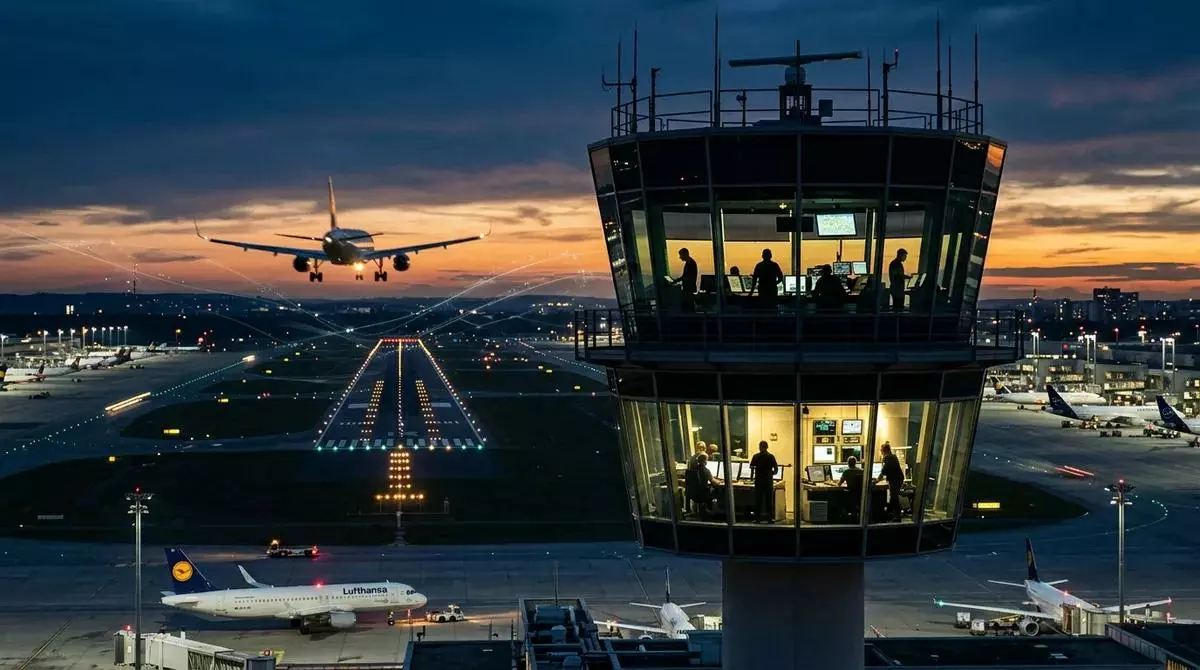
Runway safety is one of the most important responsibilities in modern airport operations. Every aircraft takeoff and landing depends on a carefully coordinated system involving pilots, air traffic controllers, airport authorities, ground-handling teams, maintenance personnel, and safety management professionals.
This practical guide explores essential runway safety measures that help airports prevent runway incursions, foreign object debris (FOD), aircraft collisions, wildlife hazards, and other operational risks. It explains how runway inspections, safety markings, lighting systems, communication procedures, staff training, modern technology, and emergency response planning contribute to safer airport environments.
Whether you are an airport operations professional, aviation student, pilot, or ground-handling supervisor, understanding these runway safety measures will help you appreciate how airports maintain safe and efficient aircraft movements.
Table of Contents
Introduction: Why Are Runway Safety Measures So Important?
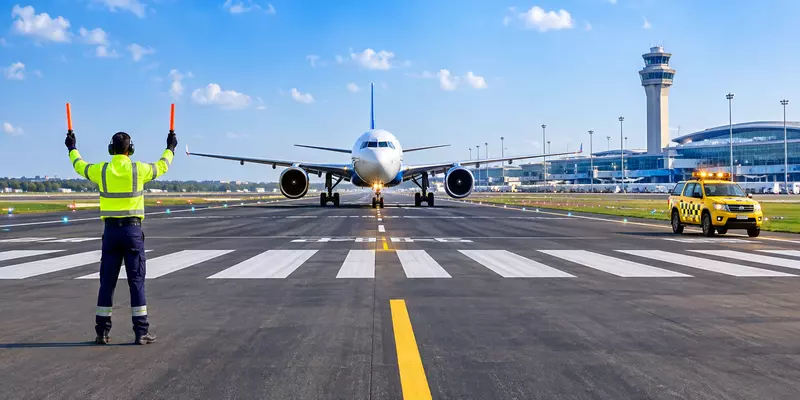
Imagine an aircraft carrying 250 passengers approaching an airport runway. The pilots are preparing for landing, air traffic controllers are monitoring aircraft movements, and ground personnel are completing their operational duties. Everything appears normal.
Suddenly, an airport maintenance vehicle enters the runway without proper authorization.
Within seconds, a routine landing could become a serious aviation emergency.
This example highlights why runway safety measures are not simply administrative procedures or items on an airport checklist. They are essential safeguards that protect passengers, aircraft, airport employees, and airport infrastructure.
An airport runway is one of the busiest and most sensitive operational areas of an airport. Aircraft accelerate, land, decelerate, and sometimes vacate the runway within relatively short periods. At the same time, authorized vehicles, inspection teams, and maintenance personnel may need access to controlled movement areas.
Managing all these activities requires precise communication, proper authorization, continuous monitoring, and strict adherence to established safety procedures.
The aviation industry has developed extensive runway safety practices to reduce operational risks. Organizations such as the International Civil Aviation Organization (ICAO) and national aviation authorities establish standards, guidance, and procedures that help airports maintain safe runway environments.
For airport operators, safety is not achieved through one inspection or one piece of technology. It comes from combining effective procedures, competent personnel, reliable equipment, and a strong safety culture.
In this guide, we will explore the most important runway safety measures and explain how airports can apply them in everyday operations.
1. Understanding Runway Safety Measures in Airport Operations
Before discussing individual procedures, it is important to understand what runway safety actually means.
Runway safety refers to the systems, procedures, infrastructure, and operational practices designed to prevent accidents and incidents during aircraft takeoffs, landings, and ground movements around runways.
Effective runway safety measures address several categories of operational hazards.
What Are the Main Runway Safety Risks?
Airports face different types of runway-related risks, including:
1. Runway incursions
A runway incursion occurs when an aircraft, vehicle, or person is incorrectly present within the protected area of a runway designated for aircraft takeoff and landing.
For example, a ground-handling vehicle entering an active runway without authorization can create a dangerous conflict with an approaching aircraft.
2. Runway excursions
A runway excursion happens when an aircraft fails to remain within the intended runway surface during takeoff, landing, or ground movement.
Two common types are:
- Overrun: An aircraft travels beyond the runway end.
- Veer-off: An aircraft leaves the runway laterally.
3. Foreign Object Debris (FOD)
Foreign object debris includes loose materials such as metal fragments, stones, plastic, tools, packaging, and other objects that can damage aircraft engines, tires, or structures.
Even a small object can create a significant operational problem when it enters an aircraft’s path.
4. Wildlife hazards
Birds and other animals can enter runway areas and create collision risks. Bird strikes are particularly concerning during takeoff and landing.
5. Poor runway conditions
Water accumulation, standing water, rubber deposits, snow, ice, and deteriorating pavement can reduce aircraft braking performance and affect directional control.
6. Communication failures
Misunderstood instructions, incorrect read backs, unclear vehicle movements, and coordination failures between airport departments can contribute to runway incidents.
Understanding these hazards helps airport operators select the right runway safety measures instead of relying on general safety instructions.
2. Conduct Regular Runway Inspections and Maintenance
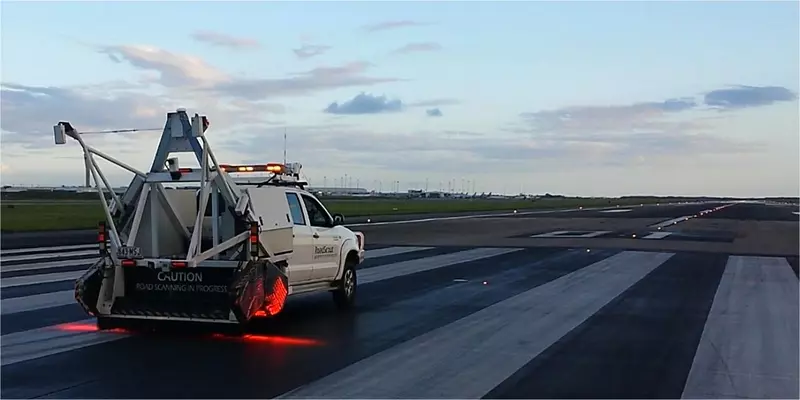
Regular runway inspections are among the most important runway safety measures because they help identify hazards before they affect aircraft operations.
An airport runway experiences continuous operational pressure. Aircraft landing gear, braking systems, weather conditions, and environmental factors gradually affect the pavement surface.
Without proper inspections, small defects can develop into serious safety concerns.
What Should Airport Staff Check During Runway Inspections?
Airport operations and maintenance teams should follow approved inspection procedures and examine relevant runway conditions.
Important inspection areas include:
- Pavement condition: Look for cracks, loose asphalt, surface deterioration, potholes, and damaged concrete.
- Foreign object debris: Identify and remove stones, metal pieces, plastic materials, tools, and other loose objects.
- Runway markings: Check whether centerlines, threshold markings, touchdown zones, and other markings remain visible.
- Lighting systems: Verify the condition and operation of runway edge lights, threshold lights, centerline lights where installed, and other applicable lighting systems.
- Drainage systems: Identify standing water, blocked drains, and drainage problems.
- Wildlife activity: Observe birds, animals, nests, and other wildlife-related hazards.
- Construction areas: Check temporary barriers, equipment, signs, and work-zone protection.
How Often Should Runway Inspections Be Conducted?
Inspection frequency depends on airport traffic, operating conditions, applicable regulations, weather, and the airport’s approved safety procedures.
High-traffic airports may require more frequent inspections than smaller facilities.
Additional inspections may be necessary:
- After heavy rainfall or severe weather.
- Following maintenance or construction activities.
- When pilots report runway contamination or debris.
- After an aircraft incident or abnormal event.
- When wildlife activity increases around the airfield.
Airport teams should record inspection findings, report hazards, and ensure corrective action is completed.
A runway inspection should never become a routine driving exercise. Personnel must remain alert, follow ATC instructions, maintain authorized access, and leave the runway as required by local procedures.
Practical example: If an inspection vehicle identifies a damaged runway light, the operations team should report its location, notify the appropriate maintenance department, assess the operational implications, and coordinate any necessary restrictions or repairs.
The objective is simple: identify problems before aircraft encounter them.
3. Prevent Runway Incursions Through Strict Access Control
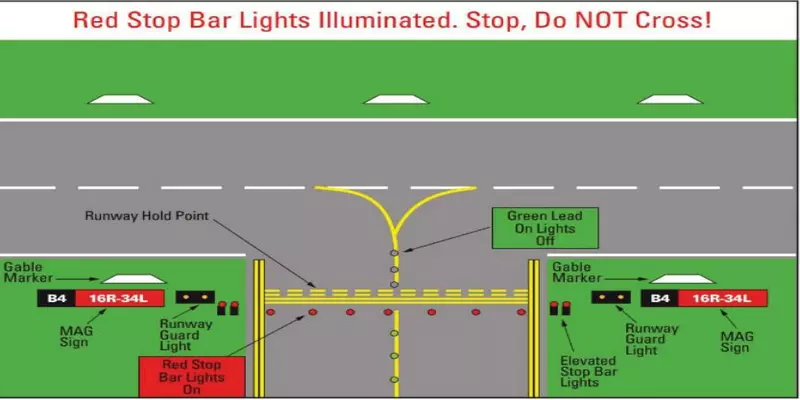
Runway incursions are among the most significant hazards in airport ground operations.
They can involve aircraft, airport vehicles, maintenance equipment, or pedestrians entering protected runway areas without the required authorization.
Preventing these incidents requires coordination between air traffic control, pilots, airport operations, and every organization operating within the airside environment.
Establish Clear Runway Entry Procedures
Every airport should maintain well-defined procedures for runway access.
These procedures should explain:
- Who is authorized to enter runway areas?
- Which ATC clearance or authorization is required?
- How should vehicle operators communicate with ATC?
- Where are runway holding positions located?
- What actions should personnel take if communication is lost?
- How should runway entry and exit movements be coordinated?
All personnel requiring access to movement areas should understand their responsibilities before receiving authorization.
Introduce Effective Airside Vehicle Control
Airport vehicles can create serious risks when operators do not understand runway access restrictions.
Airside vehicle drivers should:
- Hold the appropriate airport driving authorization.
- Complete required airside driving and communications training.
- Understand airport maps, taxiway layouts, and runway holding positions.
- Use the designated radio frequency and communication procedures.
- Obtain the required clearance before entering protected areas.
- Stop and seek clarification whenever an instruction is unclear.
- Report any accidental runway entry immediately.
A vehicle driver should never assume that a runway is available simply because no aircraft is visible.
Aircraft may be approaching, accelerating for departure, or moving in an area outside the driver’s immediate field of vision.
Maintain Proper Runway Holding Positions
Runway holding position markings and signs help identify where aircraft and vehicles must stop before entering a runway.
These markings are essential visual safeguards.
Airport management should ensure that holding position markings remain visible and that associated signs and lighting are maintained according to applicable standards.
The FAA and ICAO provide guidance on runway incursion prevention, including airport infrastructure, vehicle-driver training, and communication practices.
4. Implement Effective Foreign Object Debris (FOD) Prevention
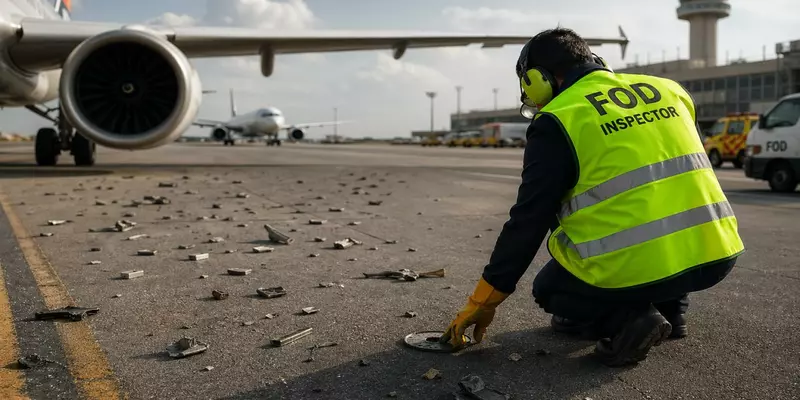
Foreign Object Debris (FOD) prevention is another essential part of runway safety measures.
FOD refers to objects found in inappropriate locations that could damage aircraft, injure personnel, or interfere with airport operations.
A small metal object may appear harmless on the ground, but when an aircraft engine encounters it, the consequences can be expensive and potentially dangerous.
Common Sources of FOD at Airports
FOD can originate from several airport activities:
- Loose baggage tags and packaging materials.
- Aircraft maintenance tools and equipment.
- Damaged pavement and loose stones.
- Cargo-loading materials.
- Broken aircraft components.
- Vehicle parts and tire fragments.
- Construction waste.
- Plastic sheets and unsecured materials.
Ground-handling companies should pay particular attention to baggage areas, aircraft parking stands, service roads, and equipment staging locations.
Five Practical FOD Prevention Measures
1. Conduct regular FOD inspections
Airport operations teams should inspect runways, taxiways, aprons, and other relevant movement areas according to established procedures.
2. Introduce designated FOD collection points
Clearly marked FOD bins should be available in appropriate airside locations.
3. Maintain ground support equipment
Loose vehicle components, damaged tires, unsecured panels, and leaking equipment should be identified and corrected.
4. Control construction activities
Construction contractors must follow approved procedures for debris management, equipment storage, and work-area inspections.
5. Develop a reporting culture
Employees should immediately report FOD discoveries rather than assuming another department will handle the problem.
Why Are FOD Walks Important?
Many airports organize FOD walks involving airport operations, airlines, ground handlers, maintenance personnel, and other airside partners.
These activities improve awareness and encourage employees to take responsibility for maintaining a clean operational environment.
The FAA’s Advisory Circular AC 150/5210-24A, concerning airport FOD management, provides guidance on inspections, detection, prevention, and coordination with airport stakeholders.
Federal Aviation Administration
5. Maintain Proper Runway Markings, Signs, and Lighting

Runway markings, signs, and lighting systems provide essential visual guidance to pilots and authorized ground personnel.
They are particularly important during nighttime operations, poor visibility, and adverse weather.
A runway may be physically clear, but if its markings are faded or its lighting system is malfunctioning, operational risks can increase significantly.
Essential Runway Markings
Airport runways use different markings to communicate operational information.
Important examples include:
- Runway designation markings: Identify the runway number and direction.
- Centerline markings: Help pilots maintain alignment.
- Threshold markings: Identify the beginning of the runway available for landing.
- Touchdown zone markings: Provide visual reference points for landing.
- Runway edge markings: Identify runway boundaries.
- Holding position markings: Indicate where aircraft and vehicles must stop before entering a runway.
Importance of Runway Lighting Systems
Runway lighting helps pilots identify runway boundaries, thresholds, centerlines, and other important visual references.
Depending on the airport’s design and operational requirements, lighting systems may include:
| Lighting system | Main purpose |
| Runway edge lights | Identify runway edges |
| Threshold lights | Identify runway threshold |
| Runway centerline lights | Provide centerline guidance |
| Touchdown zone lights | Identify touchdown zone |
| Approach lighting | Assist visual approach alignment |
| Stop bars | Indicate runway holding positions |
Not every airport has every lighting system. Installation and operational requirements depend on runway configuration, instrument approach facilities, and applicable standards.
Why Is Lighting Maintenance Important?
Lighting failures can reduce visibility and create confusion during critical aircraft movements.
Airport maintenance teams should:
- Conduct scheduled lighting inspections.
- Replace defective lights.
- Check electrical circuits and power supplies.
- Verify backup power arrangements where required.
- Monitor lighting control systems.
- Record maintenance activities and outstanding defects.
Runway markings and lighting should always be maintained according to the applicable aerodrome standards and approved maintenance program.
6. Improve Communication Between Pilots, ATC, and Ground Teams
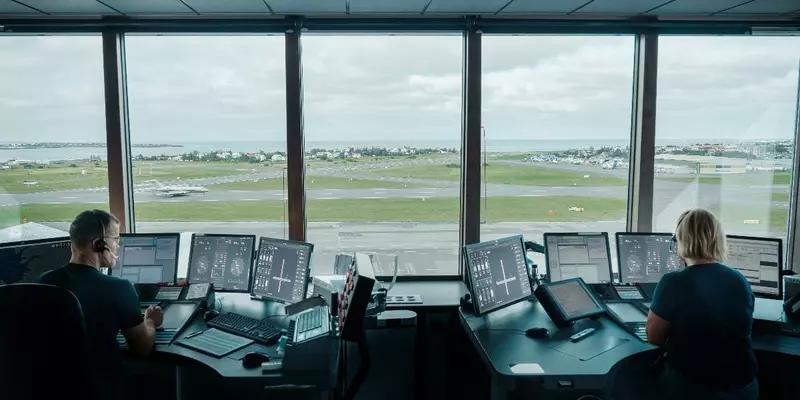
Communication is one of the strongest defenses against runway-related incidents.
An airport involves multiple departments working simultaneously. Pilots communicate with air traffic control, ground-handling teams coordinate aircraft servicing, airport operations supervise airside activities, and maintenance teams manage infrastructure.
When communication breaks down, even a well-designed airport can experience operational problems.
Establish Standard Communication Procedures
Effective runway safety measures require standardized communication practices.
These include:
Clear radio communication: Personnel should use approved phraseology and avoid unnecessary conversations on operational frequencies.
Correct readbacks: Pilots and vehicle drivers should accurately read back applicable ATC instructions, particularly runway-related clearances and holding instructions.
Positive confirmation: Critical instructions should be acknowledged and understood before action is taken.
Immediate clarification: If an instruction is unclear, personnel should request clarification rather than guessing.
Communication discipline: Staff should remain attentive to radio traffic and avoid distractions.
Coordination Between Airport Departments
Communication should not be limited to pilots and air traffic controllers.
Airport operations should maintain effective coordination with:
- Airline station managers.
- Ground-handling supervisors.
- Ramp operations teams.
- Airport maintenance departments.
- Airside safety officers.
- Security personnel.
- Aircraft rescue and firefighting services.
For example, if a maintenance team needs to inspect a runway, the work must be coordinated through the airport’s approved authorization and ATC procedures.
The team should understand the work location, access arrangements, applicable restrictions, and conditions for returning the runway to service.
What Happens When Radio Communication Fails?
Communication failure must be managed according to established contingency procedures.
Personnel should not invent alternative instructions or continue an operation based on assumptions.
Aircraft and vehicle operators must follow their applicable emergency or communication-failure procedures and maintain a safe position whenever possible.
The most important principle is that uncertainty should never be treated as permission to proceed.
7. Manage Wildlife Hazards Around Airport Runways

Wildlife hazards are an important consideration in airport runway safety measures.
Birds and other animals can enter runway environments and create risks during aircraft takeoff, landing, and ground movements.
Bird strikes can damage engines, windscreens, aircraft structures, and other components.
The risk may be particularly concerning when birds gather near runway approaches, grass areas, drainage systems, or nearby water bodies.
Common Wildlife Hazards at Airports
Airport wildlife management programmes may address:
- Birds gathering near runways.
- Animals entering perimeter areas.
- Rodents attracting larger birds.
- Insects attracting birds.
- Water bodies attracting migratory species.
- Grassland providing shelter for wildlife.
Effective Wildlife Management Strategies
1. Conduct wildlife inspections
Trained airport personnel should monitor wildlife activity and identify areas attracting animals.
2. Manage airport vegetation
Grass height and vegetation management should follow an approved wildlife hazard management plan.
3. Control waste and food sources
Poor waste management can attract birds and animals. Proper waste disposal helps reduce these attractions.
4. Monitor water accumulation
Standing water may attract wildlife, making effective drainage management important.
5. Use approved wildlife deterrents
Airports may use trained wildlife control personnel, acoustic devices, habitat modification, and other approved deterrent methods.
6. Maintain wildlife strike reporting
Wildlife-related incidents and observations should be documented and analyzed to identify recurring patterns.
Why Is Wildlife Risk Assessment Important?
Wildlife management should be based on actual local conditions rather than occasional observations.
Airport operators should evaluate species, seasonal patterns, habitat conditions, aircraft exposure, and previous wildlife incidents.
The goal is to prevent wildlife from becoming a threat before aircraft encounter it.
8. Monitor Weather Conditions and Runway Surface Performance
Weather conditions can significantly affect runway safety.
Rain, snow, ice, strong winds, fog, and extreme temperatures can influence aircraft performance and airport operations.
A runway that was safe and dry in the morning may become contaminated or unsuitable for certain operations after a sudden weather change.
How Weather Affects Runway Operations
Heavy rainfall: Standing water can reduce tire contact with the runway surface and increase the risk of hydroplaning.
Snow and ice: These conditions can reduce braking effectiveness and directional control.
Fog: Poor visibility affects visual references and may require low-visibility procedures.
Strong crosswinds: Crosswinds can make aircraft handling during takeoff and landing more challenging.
High temperatures: Extreme heat can affect aircraft performance and pavement conditions.
Essential Runway Safety Measures During Adverse Weather
Airport operations teams should:
- Monitor official weather information continuously.
- Conduct runway surface inspections when required.
- Identify standing water, snow, ice, or other contamination.
- Assess runway condition using approved reporting procedures.
- Communicate relevant information to ATC and aircraft operators.
- Coordinate runway treatment or maintenance when necessary.
- Follow applicable low-visibility and adverse-weather procedures.
Understanding Runway Condition Reporting
Airports operating under applicable ICAO requirements use the Global Reporting Format (GRF) for reporting runway surface conditions.
The Runway Condition Report (RCR) communicates runway surface information, including runway condition codes where applicable.
These reports help flight crews assess runway conditions and aircraft performance considerations.
Airport personnel must use the prescribed assessment and reporting methods rather than estimating runway conditions informally.
Important: Decisions about aircraft takeoff and landing performance remain subject to aircraft-specific procedures, operator requirements, and applicable regulations.
9. Establish Effective Runway Safety Training for Airport Personnel
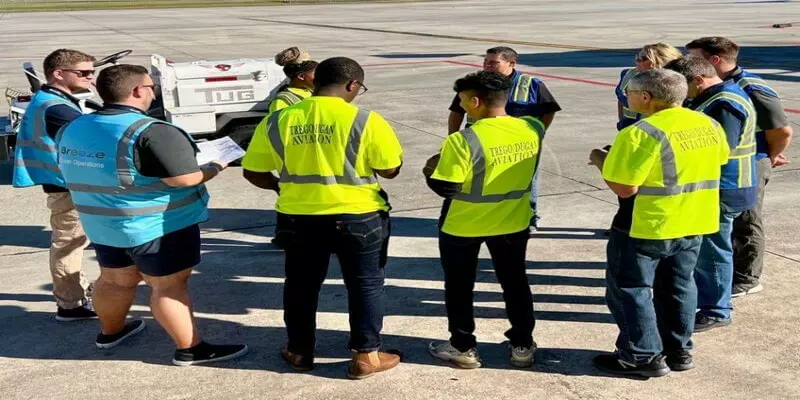
Technology and infrastructure are important, but people remain at the center of airport runway safety.
An employee who understands airport procedures, recognizes hazards, and communicates effectively can help prevent incidents.
On the other hand, an inadequately trained employee may unintentionally create operational risks.
This is why regular safety training is one of the most valuable runway safety measures.
Who Requires Runway Safety Training?
Training should be appropriate to the responsibilities of personnel working in or around runway environments.
Relevant groups include:
- Air traffic controllers.
- Pilots and flight crew.
- Airport operations officers.
- Airside vehicle drivers.
- Ground-handling personnel.
- Aircraft maintenance teams.
- Airport security staff.
- Construction and maintenance contractors.
Important Areas of Runway Safety Training
Airside driving training
Vehicle operators should understand airside routes, signs, markings, holding positions, radio communication, and runway access restrictions.
Runway incursion awareness
Personnel should recognize common causes of runway incursions and understand how their actions can contribute to risk.
FOD awareness
Employees should learn how to identify, report, and prevent foreign object debris.
Emergency response training
Relevant personnel should understand their assigned responsibilities during runway incidents and emergencies.
Human factors training
Training should address fatigue, distraction, workload, situational awareness, communication, and decision-making.
Low-visibility operations
Personnel whose duties involve reduced-visibility conditions should receive training appropriate to their assigned tasks and airport procedures.
Conduct Practical Safety Exercises
Classroom training is useful, but practical exercises help employees apply knowledge in real operational situations.
For example, an airport can organize exercises involving:
- A simulated unauthorized vehicle approach to a runway.
- A suspected FOD discovery.
- A runway inspection following heavy rain.
- A radio communication failure.
- A wildlife hazard near the runway.
- A runway closure and reopening coordination scenario.
Training should be documented, assessed, and refreshed according to applicable regulatory and organizational requirements.
A strong airport safety culture does not develop from signing attendance sheets. It develops when employees understand why procedures matter and consistently apply them.
10. Use Modern Technology to Strengthen Runway Safety Measures
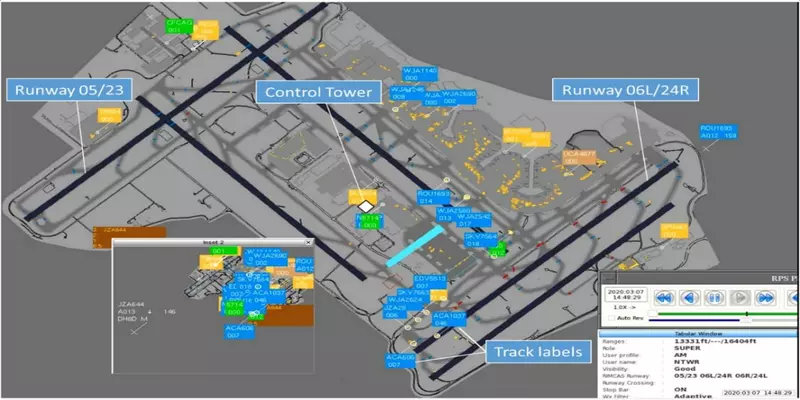
Modern airports increasingly use technology to improve situational awareness and support safer aircraft movements.
Although technology cannot eliminate every operational risk, it can provide additional information to pilots, controllers, and airport management.
Important Technologies Used in Runway Safety
1. Advanced Surface Movement Guidance and Control Systems (A-SMGCS)
A-SMGCS helps support surveillance, routing, guidance, and control of aircraft and vehicles on airport movement areas.
Depending on the system configuration, it can improve surface movement awareness and assist controllers in managing complex airport traffic.
2. Surface Movement Radar
Surface movement radar helps air traffic controllers monitor aircraft and vehicle movements on airport surfaces, particularly when visual observation is limited.
3. Runway Status Lights
Runway status lights are automated visual warning systems used at equipped airports.
They provide pilots and vehicle operators with additional indications about potential runway conflicts. They do not replace ATC clearances or operational procedures.
4. Runway Incursion Detection Systems
Some airports use surveillance data and automated alerts to identify potentially conflicting runway movements.
These systems can support early identification of developing hazards.
5. Automated FOD Detection
Advanced FOD detection systems may use radar, cameras, and other technologies to identify suspicious objects on runways and taxiways.
Their effectiveness depends on installation, environmental conditions, system capabilities, and operational integration.
6. Airport Surveillance Cameras
CCTV systems can support airside monitoring, incident reviews, security activities, and operational investigations.
Can Artificial Intelligence Improve Runway Safety?
Artificial intelligence and machine learning are creating new opportunities for airport safety management.
Potential applications include:
- Identifying unusual aircraft and vehicle movement patterns.
- Supporting analysis of runway safety reports.
- Detecting possible FOD through image processing.
- Monitoring wildlife activity.
- Identifying recurring operational risk patterns.
- Supporting predictive maintenance.
However, AI-based systems must be properly validated, monitored, and integrated into approved operational procedures.
Technology should support qualified personnel rather than replace essential human judgment and regulatory responsibilities.
11. Maintain Runway Safety Areas and Protective Infrastructure
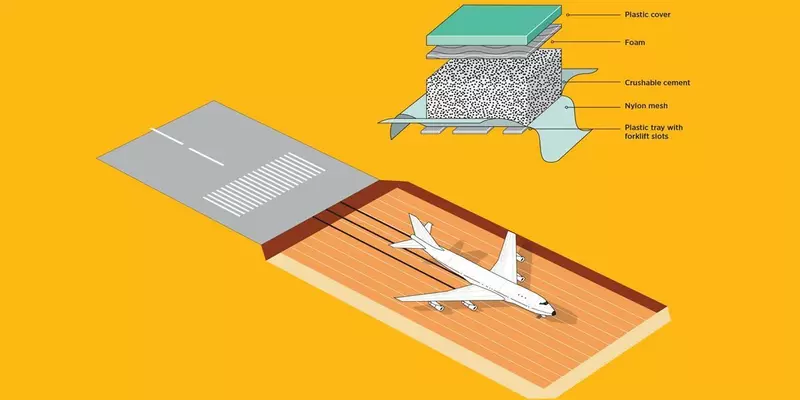
Runway safety areas are an important physical defense against the consequences of runway excursions.
An aircraft may leave the runway during landing or takeoff because of several factors, including rejected takeoffs, adverse weather, mechanical problems, or operational errors.
A properly maintained runway safety area can help reduce aircraft damage and the risk of injury when an excursion occurs.
What Is a Runway Safety Area?
A runway safety area (RSA) is an area surrounding the runway that is prepared or maintained to reduce the consequences of an aircraft undershooting, overrunning, or veering off the runway.
Its characteristics depend on applicable design standards and airport requirements.
Important considerations include:
- Appropriate grading.
- Adequate drainage.
- Suitable load-bearing characteristics.
- Removal of unnecessary obstacles.
- Protection against hazardous fixed objects.
- Proper maintenance of the surrounding area.
What Is an Engineered Materials Arresting System?
An Engineered Materials Arresting System (EMAS) is a specially designed surface installed beyond a runway end at certain airports.
It is designed to help decelerate an aircraft that overruns the runway by allowing its landing gear to crush specially engineered materials.
EMAS can provide additional protection where conventional runway safety area dimensions cannot be achieved because of physical limitations.
However, it is not a replacement for proper runway design, aircraft performance planning, or operational safety procedures.
The FAA identifies runway safety areas and EMAS as important measures for reducing the consequences of runway excursions.
12. Strengthen Airport Safety Management Systems (SMS)
An effective Safety Management System (SMS) provides a structured approach to identifying hazards, assessing risks, and improving operational safety.
Rather than waiting for an accident to reveal a weakness, SMS encourages airport organizations to identify potential problems before they become serious incidents.
Four Important Elements of an Effective SMS
1. Safety policy and objectives
Airport management should establish clear safety responsibilities, objectives, and organizational commitments.
Employees should understand that safety takes priority over operational convenience.
2. Safety risk management
This involves identifying hazards, assessing their potential consequences, and implementing appropriate risk controls.
For example, if an airport identifies repeated unauthorized vehicle movements near a runway holding point, it should investigate the contributing factors and introduce effective corrective measures.
3. Safety assurance
Airport management should monitor whether safety procedures are working as intended.
Activities may include:
- Internal safety audits.
- Operational inspections.
- Incident trend analysis.
- Safety performance monitoring.
- Corrective action tracking.
4. Safety promotion
Safety promotion involves communication, training, awareness campaigns, and encouraging employees to participate in safety improvement activities.
Why Is Safety Reporting Important?
An effective reporting culture helps airports identify hazards that might otherwise remain unnoticed.
Employees should be encouraged to report:
- Unsafe vehicle movements.
- Communication problems.
- Damaged runway markings.
- FOD discoveries.
- Wildlife hazards.
- Near misses.
- Procedure-related weaknesses.
A fair and supportive reporting culture encourages learning rather than hiding mistakes.
This does not mean ignoring deliberate violations or negligence. It means evaluating events fairly and distinguishing between human error, system weaknesses, and unacceptable behavior.
13. Establish a Local Runway Safety Team
Runway safety is a shared responsibility. No single department has complete control over every activity that can affect runway operations.
A Local Runway Safety Team (LRST) brings together the organizations involved in airport runway activities to identify risks and recommend improvements.
ICAO’s runway incursion prevention guidance highlights the importance of multidisciplinary runway safety teams.
Who Should Be Part of a Runway Safety Team?
Depending on airport operations, the team may include representatives from:
- Airport operations management.
- Air traffic services.
- Airlines and aircraft operators.
- Ground-handling companies.
- Airport maintenance.
- Safety and compliance departments.
- Pilot and air traffic controller associations.
- Airside vehicle operators.
What Are the Responsibilities of a Runway Safety Team?
The team should:
- Review runway incursion and excursion trends.
- Identify recurring operational hazards.
- Examine runway and taxiway hotspots.
- Evaluate communication and coordination problems.
- Review safety reports and investigation findings.
- Recommend improvements to procedures and infrastructure.
- Promote runway safety awareness campaigns.
- Monitor the effectiveness of implemented safety actions.
How Often Should the Team Meet?
Meeting frequency should reflect local risks, airport activity, regulatory requirements, and organizational arrangements.
High-risk or complex airports may require more frequent reviews.
The important point is that runway safety discussions should result in measurable actions, assigned responsibilities, and follow-up.
A meeting without corrective action is simply another calendar event.
14. Prepare Effective Runway Emergency Response Procedures
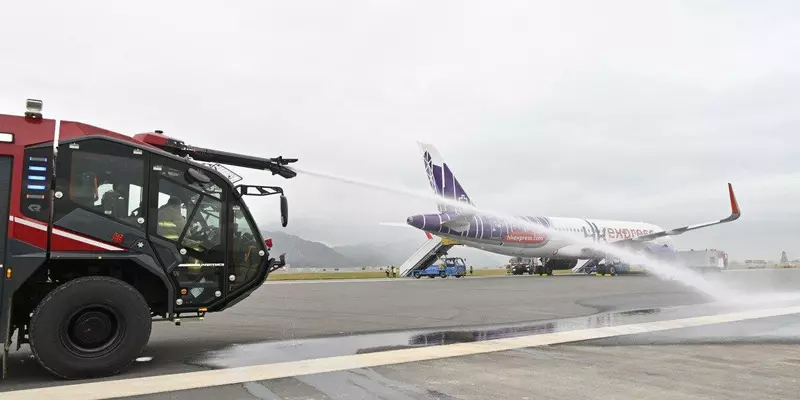
Even with strong preventive procedures, airports must be prepared for emergencies.
Runway-related emergencies can involve aircraft accidents, rejected takeoffs, engine failures, fires, landing gear problems, runway excursions, and other abnormal events.
An effective emergency response plan helps airport personnel coordinate their actions and reduce the consequences of an incident.
Common Runway Emergency Scenarios
Aircraft engine failure: An aircraft may experience an engine malfunction during takeoff or landing.
Rejected takeoff: A flight crew may discontinue takeoff because of a technical problem, warning, or other safety concern.
Runway excursion: An aircraft may overrun or veer off the runway.
Aircraft fire: Fire may develop during aircraft movement, landing, or after an accident.
Disabled aircraft: An aircraft may become immobilized on a runway, requiring coordinated emergency and recovery arrangements.
Medical emergency: A medical event involving passengers or crew may require emergency medical services.
Important Elements of Runway Emergency Preparedness
1. Airport emergency plan
The airport should maintain an approved emergency plan covering relevant runway-related scenarios.
2. Aircraft Rescue and Firefighting (ARFF)
ARFF services must meet applicable requirements for the airport’s operational category and provide the required emergency response capability.
3. Emergency communication
Airport departments and external emergency services should understand their communication responsibilities.
4. Access coordination
Emergency vehicles must be able to reach incident locations through established access routes and authorization procedures.
5. Regular emergency exercises
Exercises help identify weaknesses in response coordination, communication, equipment readiness, and personnel responsibilities.
6. Post-incident review
After an emergency, the airport should review the response, identify lessons learned, and implement corrective actions.
Emergency preparedness is not about expecting an accident. It is about ensuring that everyone knows what to do if one occurs.
15. Common Runway Safety Challenges Faced by Airports
Despite improvements in aviation technology and safety procedures, airports continue to face operational challenges.
Understanding these problems helps airport managers develop more practical runway safety measures.
1. Increasing Aircraft Traffic
Busy airports manage large numbers of aircraft movements every day.
As traffic increases, coordination becomes more demanding and the opportunity for operational conflicts may also increase.
Possible solution: Improve traffic management, optimize taxiway layouts, strengthen communication, and monitor runway safety performance.
2. Complex Taxiway and Runway Layouts
Complicated airport layouts can create confusion for pilots and vehicle operators, particularly at unfamiliar airports.
Possible solution: Improve signage, markings, lighting, airport diagrams, and route familiarization training.
3. Human Factors and Operational Pressure
Fatigue, distraction, time pressure, workload, and misunderstandings can influence decision-making.
Possible solution: Introduce human factors training, appropriate staffing, fatigue management, and effective safety reporting.
4. Poor Weather Conditions
Fog, rain, snow, and strong winds can complicate runway operations.
Possible solution: Apply approved adverse-weather procedures, maintain reliable weather information, and assess runway conditions.
5. Inadequate Safety Training
Personnel who lack sufficient training may misunderstand runway access procedures or fail to recognize hazards.
Possible solution: Provide role-specific training, competency assessments, recurrent training, and practical exercises.
6. Infrastructure Limitations
Older airports may have outdated lighting, complex layouts, or limited runway safety areas.
Possible solution: Prioritize infrastructure improvements through formal safety risk assessments and investment planning.
7. Poor Interdepartmental Coordination
Different airport organizations may operate independently, making it difficult to share information.
Possible solution: Establish regular operational coordination meetings and an effective Local Runway Safety Team.
16. Practical Runway Safety Checklist for Airport Operations Teams
A structured checklist can help airport operations personnel maintain consistent safety practices.
The following is a general awareness checklist, not a substitute for an airport’s approved inspection forms or regulatory requirements.
Airport runway safety checklist
0/19 completed
Runway condition
- Check pavement condition and identify visible damage.
- Inspect for FOD and other surface hazards.
- Monitor standing water and runway contamination.
- Check relevant runway markings and lighting.
Access and movement control
- Verify airside vehicle authorization and driver competency.
- Confirm runway entry authorization through approved procedures.
- Check holding position markings and signage.
- Monitor vehicle and aircraft movements in assigned areas.
Communication and coordination
- Maintain effective communication with ATC.
- Confirm and correctly acknowledge applicable instructions.
- Coordinate maintenance and inspection activities.
- Share relevant safety information with operational departments.
Environmental hazards
- Monitor wildlife activity around runway areas.
- Review weather and runway condition information.
- Check drainage and surrounding areas for hazards.
Safety management
- Record inspection findings and safety reports.
- Report hazards and near misses promptly.
- Track corrective actions to completion.
- Review training and emergency preparedness.
This checklist can be adapted by airport management according to local operational requirements, responsibilities, and applicable regulations.
17. How Can Airports Build a Stronger Runway Safety Culture?
The effectiveness of runway safety measures depends heavily on the behavior and commitment of everyone working at an airport.
Safety cannot be the responsibility of the safety department alone.
A ground-handling employee who notices a loose equipment component, a driver who reports an unclear instruction, or a supervisor who identifies a recurring procedural weakness can all contribute to safer operations.
Encourage Employees to Report Hazards
Employees should feel comfortable reporting safety concerns without unnecessary fear of punishment for genuine mistakes.
A good reporting system should be:
- Easy to access.
- Confidential where appropriate.
- Fair and transparent.
- Focused on learning and improvement.
- Supported by management.
Make Safety Part of Daily Briefings
Supervisors should include relevant safety information in operational briefings.
For example, a ground operations briefing may cover:
- Active runway restrictions.
- Construction activities.
- Weather-related concerns.
- Wildlife observations.
- FOD prevention.
- Airside vehicle routes.
- Recent safety occurrences.
These briefings help employees understand the operational environment before starting their duties.
Recognize Positive Safety Behavior
Airport management should recognize employees who identify hazards, report unsafe conditions, and suggest practical improvements.
Positive reinforcement encourages people to take ownership of safety rather than viewing procedures as management instructions.
Measure Safety Performance
Airports should establish appropriate safety performance indicators.
Examples include:
- Number and severity of runway incursions.
- Runway excursion occurrences.
- FOD reports.
- Runway inspection findings.
- Corrective action completion rates.
- Relevant training completion and competency results.
- Repeat safety observations.
These indicators should be interpreted carefully. An increase in voluntary reports, for example, may reflect a healthier reporting culture rather than deteriorating safety.
The purpose of measurement is to understand risks and improve controls, not simply to produce attractive monthly reports.
Conclusion: Making Runway Safety a Daily Operational Priority
Runway safety is the foundation of reliable airport operations. Every successful takeoff and landing depends on coordinated efforts, effective procedures, properly maintained infrastructure, and people who understand their safety responsibilities.
Implementing effective runway safety measures requires much more than installing advanced technology or conducting occasional inspections. Airports must develop a comprehensive safety approach that addresses runway incursions, foreign object debris, wildlife hazards, adverse weather, communication failures, and emergency preparedness.
Regular inspections, proper runway markings, effective airside access control, staff training, and strong Safety Management Systems all contribute to reducing operational risks.
Airport managers should also encourage collaboration through Local Runway Safety Teams, ensuring that pilots, air traffic controllers, ground-handling companies, and airport operations personnel work toward common safety objectives.
Most importantly, safety should never become a secondary consideration when operational pressure increases.
A delayed departure may inconvenience passengers, but an unsafe runway movement can have far more serious consequences.
The aviation industry’s long-term safety depends on continuous improvement, responsible decision-making, and a workplace culture where everyone takes ownership of their actions.
Remember: Every safe takeoff and landing begins with effective runway safety measures.
Frequently Asked Questions About Runway Safety Measures
1. What Are the Most Important Runway Safety Measures?
The most important runway safety measures include regular runway inspections, FOD prevention, runway incursion prevention, effective communication, wildlife management, proper runway markings and lighting, staff training, and emergency preparedness.
These measures work together to reduce operational risks and protect aircraft, passengers, and airport personnel.
2. What Is a Runway Incursion in Aviation?
A runway incursion is the incorrect presence of an aircraft, vehicle, or person within the protected area of a runway designated for aircraft takeoff and landing.
It can result from communication failures, unauthorized vehicle access, pilot confusion, or operational misunderstandings.
Airports reduce runway incursion risks through proper access control, clear signage, holding position markings, driver training, and effective coordination with ATC.
3. Why Is FOD Prevention Important for Runway Safety?
Foreign Object Debris (FOD) can damage aircraft engines, tires, landing gear, and other components.
Objects such as stones, metal fragments, loose tools, and packaging materials can create serious hazards when they enter aircraft movement areas.
Regular inspections, proper equipment maintenance, designated FOD collection points, and employee awareness help reduce these risks.
4. How Does Technology Improve Runway Safety Measures?
Technology supports runway safety through surveillance radar, A-SMGCS, runway status lights, automated FOD detection, CCTV monitoring, and other airport safety systems.
These technologies help improve situational awareness, identify potential hazards, and support decision-making.
However, technology does not replace ATC clearances, trained personnel, or established safety procedures.
5. Who Is Responsible for Maintaining Runway Safety at an Airport?
Runway safety is a shared responsibility involving airport management, air traffic controllers, pilots, airlines, ground-handling companies, maintenance teams, and authorized airside personnel.
Each organization has specific responsibilities under applicable regulations and airport procedures.
Effective coordination between these stakeholders is essential for maintaining safe and efficient runway operations.
Facebook: https://www.facebook.com/rehan.ghauri
