
Problem solving in aviation is more than finding quick answers when something goes wrong. It is about empowering employees, developing effective communication, making informed decisions, and creating a workplace where everyone contributes to operational excellence.
This article explores how empowered teams help airlines manage flight disruptions, baggage problems, passenger complaints, ground handling challenges, and unexpected operational situations. It also explains how leadership, training, teamwork, technology, and safety management systems contribute to better decisions.
From frontline airport employees to senior airline managers, every team member has a role in building a stronger problem-solving culture. When employees have the right knowledge, authority, resources, and support, airlines can improve efficiency, customer satisfaction, safety awareness, and overall performance.
Table of Contents
Introduction: Why Problem Solving in Aviation Matters More Than Ever
Imagine a busy international airport during the evening rush. Several flights are preparing for departure, passengers are waiting at check-in counters, baggage teams are working against tight turnaround schedules, and the operations control center is monitoring multiple aircraft movements. Suddenly, an unexpected technical issue delays an aircraft. Passengers become frustrated, connecting flights are at risk, and the departure schedule begins to change.
What happens next?
Does everyone wait for a senior manager to provide instructions, or does the team take appropriate action, communicate effectively, and work together to find a solution?
This is where problem solving in aviation becomes essential.
The aviation industry operates in a fast-moving environment where even a small operational issue can affect hundreds of passengers, multiple departments, and an entire flight schedule. Airlines must deal with changing weather conditions, technical disruptions, baggage mishandling, staffing shortages, passenger complaints, security requirements, and unexpected airport restrictions.
Although technology plays an important role in modern aviation, people remain at the heart of successful airline operations. Employees who understand their responsibilities, communicate clearly, and have appropriate decision-making authority can make a significant difference when challenges arise.
Empowered teams do not simply wait for problems to disappear. They identify issues, assess available information, follow established procedures, coordinate with relevant departments, and take action within their authority.
However, empowerment does not mean allowing employees to ignore company policies or make independent safety-critical decisions without proper authorization. In aviation, effective problem solving must always operate within approved procedures, regulatory requirements, and established safety management systems.
This article explores how problem solving in aviation helps airlines build stronger teams, improve customer experiences, strengthen operational performance, and develop a culture of continuous improvement.
Whether you work in airline management, airport operations, ground handling, passenger services, or aviation administration, understanding this approach can help you contribute to a more efficient and resilient aviation industry.
1. Understanding Problem Solving in Aviation
Problem solving in aviation refers to the structured process of identifying operational challenges, understanding their causes, evaluating possible solutions, and implementing appropriate corrective actions.
Unlike many other industries, aviation operates through interconnected systems. An issue affecting one department can quickly influence several others.
For example, a delayed aircraft may affect:
- Passenger check-in and boarding schedules.
- Baggage loading and unloading arrangements.
- Aircraft turnaround activities.
- Crew duty and scheduling requirements.
- Connecting passenger arrangements.
- Airport gate and parking availability.
- Customer service and passenger communication.
This interconnected environment makes effective problem solving particularly important.
Why Is Problem Solving Different in the Aviation Industry?
Aviation professionals work under strict safety, security, regulatory, and operational requirements. Decisions must often be made quickly, but speed should never come at the expense of safety.
Consider a situation in which a ground handling employee notices a damaged baggage container during aircraft loading.
A poor approach would be to ignore the damage simply to avoid delaying departure.
A responsible approach would involve stopping or withholding the affected activity when necessary, reporting the issue, informing the appropriate supervisor, and following approved procedures to assess and resolve the situation.
The objective is not simply to keep the flight on schedule. It is to ensure that operations continue safely and efficiently.
Effective problem solving in aviation therefore combines three essential elements:
- Operational awareness: Understanding what is happening and how it affects other departments.
- Decision-making: Evaluating available information and choosing an appropriate action within one’s authority.
- Team coordination: Ensuring that everyone involved understands their responsibilities and communicates effectively.
When these elements work together, airlines become better equipped to handle everyday challenges and unexpected disruptions.
2. How Empowered Teams Improve Problem Solving in Aviation

Employee empowerment is one of the most valuable ingredients in successful airline operations.
An empowered employee has the necessary knowledge, training, resources, and clearly defined authority to perform assigned responsibilities and make appropriate decisions.
In practical terms, empowerment means allowing employees to take ownership of problems rather than automatically transferring every minor issue to senior management.
Faster Operational Decisions
Airports are time-sensitive environments. A small delay in one activity can create a chain reaction across the departure schedule.
Suppose a passenger arrives at the boarding gate shortly before boarding closes and discovers that an important travel document needs further verification.
An appropriately trained and authorized employee can immediately contact the relevant team, explain the situation, and coordinate the next steps.
Instead of wasting valuable time searching for someone to make the initial call, the employee takes responsibility for moving the issue through the correct process.
This improves response time and reduces unnecessary communication delays.
Greater Employee Accountability
Empowered employees are more likely to take ownership of their responsibilities.
When people understand that their observations and decisions matter, they become more attentive to operational details.
For example, a baggage supervisor who notices repeated delays in transferring connecting baggage should not simply report that the team is working slowly.
The supervisor can investigate possible causes, such as:
- Insufficient manpower during peak arrival periods.
- Poor coordination between baggage handling and ramp teams.
- Delays in receiving baggage information.
- Equipment availability problems.
- Inefficient communication between arrival and transfer departments.
The supervisor can then present findings and recommend improvements through the appropriate management channels.
This approach transforms employees from passive task performers into active contributors to operational improvement.
Better Communication Across Departments
Airline operations depend on cooperation between multiple departments.
Frontline employees often notice problems before they become visible to senior management.
When employees feel comfortable reporting concerns, managers receive valuable operational information that supports better decisions.
A healthy problem-solving culture encourages staff to communicate openly, share observations, and raise concerns without unnecessary fear of blame.
The International Civil Aviation Organization (ICAO) emphasizes the importance of safety culture, employee participation, and trust in effective safety management.
This makes employee empowerment an important part of building a stronger aviation organization.
3. Seven Common Challenges That Require Problem Solving in Aviation
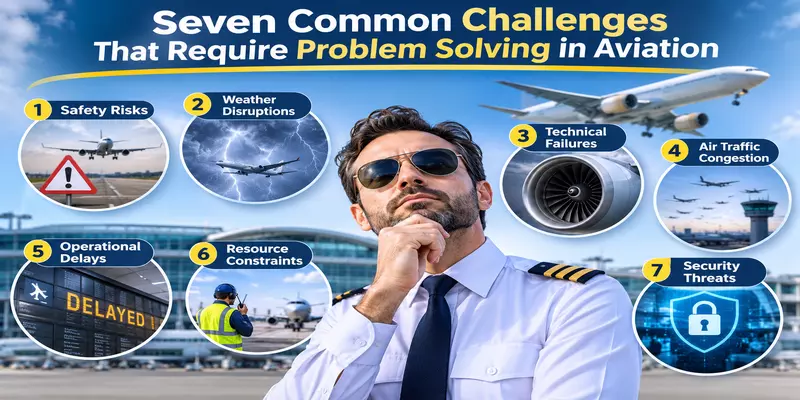
Airlines face numerous challenges every day. Some are predictable, while others appear without warning.
Understanding these situations helps employees prepare appropriate responses instead of relying entirely on last-minute decisions.
1. Flight Delays and Schedule Disruptions
Flight delays are among the most visible operational challenges in aviation.
They may result from technical issues, weather conditions, air traffic restrictions, late-arriving aircraft, crew availability, or airport operational limitations.
For example, when an inbound aircraft arrives late, the departure team may have limited time to prepare the next flight.
An effective response requires coordination between:
- Airport operations.
- Flight operations and dispatch.
- Ground handling teams.
- Passenger services.
- Crew scheduling.
- Airport authorities, where necessary.
Teams should establish the reason for the disruption, assess its operational impact, and communicate realistic updates to affected passengers.
Employees must never compromise aircraft safety or bypass required checks to recover lost time.
2. Baggage Handling Problems
Baggage mishandling can create serious passenger dissatisfaction and operational complications.
Common issues include delayed baggage, missing luggage, incorrect baggage transfers, damaged items, and loading discrepancies.
Consider a flight departing for an international destination when the baggage reconciliation process identifies a discrepancy.
The team must follow applicable baggage reconciliation, security, and airline procedures before departure.
Effective problem solving may involve coordination between baggage services, ramp supervisors, load control, security, and the airline operations team.
The priority is to establish the facts and resolve the discrepancy correctly rather than simply rushing the baggage process.
3. Passenger Complaints and Service Failures
Passengers may become frustrated because of long queues, missed connections, delayed baggage, incorrect information, or unexpected changes to their travel arrangements.
A customer service employee must listen carefully, understand the concern, and explain available solutions.
A practical approach includes:
- Allow the passenger to explain the problem.
- Acknowledge the inconvenience.
- Verify the relevant booking or operational information.
- Explain the available options under airline policy.
- Coordinate with the appropriate department.
- Follow up when further action is required.
A simple apology and a clear explanation can sometimes prevent a small inconvenience from becoming a major complaint.
However, employees should never promise compensation, upgrades, or alternative arrangements unless they are authorized to do so.
4. Ground Handling and Aircraft Turnaround Challenges
Aircraft turnaround is a coordinated process involving several activities that must be completed before departure.
These activities may include passenger disembarkation, baggage unloading, cabin cleaning, catering, refueling, aircraft servicing, baggage loading, boarding, and final departure preparations.
A delay in one activity can affect the entire turnaround.
For example, if baggage loading falls behind schedule because of insufficient equipment, the ramp supervisor should identify the bottleneck and coordinate with the relevant team.
The supervisor must also ensure that all loading, safety, communication, and load-control requirements are satisfied.
A faster turnaround is valuable, but a safe and properly coordinated turnaround is essential.
5. Staff Shortages and Workload Management
Staff shortages can become particularly challenging during peak travel periods, seasonal operations, and unexpected flight disruptions.
Supervisors must assess available manpower and allocate resources according to operational priorities, employee competency, and workload.
Effective actions may include:
- Reviewing the operational schedule.
- Identifying departments experiencing pressure.
- Reallocating appropriately trained staff.
- Requesting additional manpower through authorized channels.
- Monitoring employee fatigue and workload.
- Maintaining adequate supervision.
A good supervisor does not simply ask employees to work faster. They identify whether the workload, staffing arrangement, equipment, or planning process needs improvement.
6. Check-In System and Technology Failures
Modern airlines depend heavily on digital systems for reservations, check-in, boarding, baggage processing, and operational communication.
When a system becomes unavailable, airport teams may face long queues and passenger frustration.
An effective response involves following the airline’s approved contingency procedures.
Depending on the situation, this may include contacting IT support, informing the duty manager, coordinating with airport stakeholders, and implementing authorized backup processes.
Employees must protect passenger information and avoid using unapproved devices or systems to process sensitive travel data.
7. Weather and Airport Operational Restrictions
Fog, heavy rain, thunderstorms, strong winds, and other adverse weather conditions can affect airport operations.
These situations may require flight schedule adjustments, changes to ground handling arrangements, or temporary operational restrictions.
Effective problem solving requires coordination with airport authorities, air traffic services, flight operations, and relevant ground teams.
Most importantly, employees must respect operational restrictions and never attempt to maintain schedules through unsafe practices.
4. The Role of Frontline Employees in Problem Solving in Aviation
Frontline employees are often the first people to identify operational problems.
They work directly with passengers, aircraft, baggage, equipment, and airport processes. Their observations can provide valuable information that management may not receive through routine reports alone.
Passenger Service Agents
Passenger service agents deal with passengers throughout the airport journey.
Their responsibilities may include:
- Check-in and boarding assistance.
- Travel document verification within their authorization.
- Handling passenger inquiries.
- Managing service complaints.
- Supporting passengers with special requirements.
- Coordinating with supervisors during disruptions.
An experienced passenger service agent can often identify potential problems early, such as unusual queue growth or passengers at risk of missing connections.
Early reporting allows supervisors to respond before the situation becomes more difficult to manage.
Ground Handling and Ramp Staff
Ramp employees perform essential aircraft turnaround activities.
They are responsible for working around aircraft, baggage, equipment, and other airside operations.
Their role in problem solving includes identifying unsafe conditions, reporting equipment defects, communicating operational delays, and following approved loading and unloading procedures.
A ramp employee who identifies a potential hazard should use the appropriate reporting and escalation process rather than assuming someone else will notice it.
Operations Supervisors and Duty Officers
Operations supervisors connect frontline employees with management and other operational departments.
They monitor daily activities, coordinate resources, resolve service issues within their authority, and escalate matters requiring higher-level decisions.
An effective supervisor must understand that problem solving is not about giving orders every few minutes.
It is about identifying priorities, communicating expectations, supporting employees, and ensuring that the correct people are involved in resolving operational challenges.
Airline Managers
Managers provide the structure within which employees operate.
They establish procedures, allocate resources, define decision-making authority, monitor performance, and encourage continuous improvement.
When management listens to frontline employees, operational decisions are more likely to reflect actual working conditions.
This creates a stronger connection between planning and execution.
5. How Problem Solving in Aviation Improves Customer Experience
Passenger satisfaction is influenced by much more than the flight itself.
The airport experience begins when passengers arrive at the terminal and continues through check-in, security, boarding, baggage collection, and onward connections.
Problems can arise at any stage.
What separates a well-managed airline from a poorly managed one is often how effectively its employees respond.
Faster Complaint Resolution
Passengers do not expect every journey to be perfect. However, they do expect clear communication and reasonable assistance when something goes wrong.
Empowered customer service employees can resolve routine problems more efficiently when they have clearly defined authority.
For example, a passenger who has missed a connection because of an airline disruption may need assistance with rebooking or other arrangements.
A trained employee can verify the passenger’s circumstances and coordinate with the relevant team to identify available options under the airline’s policies.
This reduces unnecessary waiting and improves confidence in the airline.
Clear and Honest Communication
Uncertainty often creates more frustration than the original problem.
Imagine passengers waiting at a boarding gate without receiving any information about a delay.
They may approach different employees, receive conflicting answers, and become increasingly dissatisfied.
A better approach is to provide accurate and timely updates, even when a final departure time is not yet available.
Employees should communicate verified information and avoid making promises that operational teams cannot guarantee.
Personalized Passenger Assistance
Not every passenger has the same needs.
Families travelling with children, elderly passengers, passengers with disabilities, and individuals requiring special assistance may need additional support.
Employees should understand the relevant procedures and coordinate with appropriate service teams.
Empowerment helps staff identify passenger needs and take appropriate action without unnecessary administrative delays.
Building Long-Term Passenger Trust
A single operational problem does not necessarily destroy passenger loyalty.
However, poor communication, inconsistent service, and an unwillingness to help can damage an airline’s reputation.
When passengers experience professional and helpful responses, they are more likely to retain confidence in the airline.
This is why problem solving in aviation is also an important part of customer relationship management.
6. Leadership’s Role in Building a Problem-Solving Culture

Employee empowerment cannot succeed without supportive leadership.
Managers must create an environment where employees understand their responsibilities, feel comfortable raising concerns, and have access to the resources needed to perform their duties.
Establish Clear Decision-Making Authority
Employees need to understand which decisions they can make independently and which require approval.
For example, a passenger service supervisor may have authority to reorganize counter assignments during a busy period.
However, decisions involving security requirements, aircraft release, technical maintenance, or operational safety must remain with the appropriately authorized personnel.
Clear responsibility prevents confusion and unnecessary delays.
Encourage Open Communication
Managers should encourage employees to report operational difficulties and suggest improvements.
A workplace where employees fear criticism for raising legitimate concerns can discourage reporting.
ICAO’s safety culture guidance highlights the importance of trust and employee participation in safety management.
An effective leader listens to employees, investigates reported concerns, and communicates what action has been taken.
Recognize Good Problem Solving
Recognition can encourage employees to take greater responsibility for their work.
Managers should acknowledge employees who identify recurring problems, communicate risks, assist colleagues, or suggest practical improvements.
Recognition does not always require financial rewards.
Professional appreciation, development opportunities, and constructive feedback can also strengthen employee motivation.
Avoid Blame-Based Management
When something goes wrong, managers should investigate what happened rather than immediately searching for someone to blame.
This does not mean ignoring negligence or unacceptable behavior.
It means distinguishing between honest mistakes, system weaknesses, inadequate training, procedural failures, and deliberate violations.
A fair and consistent approach encourages employees to report problems early and supports organizational learning.
7. Practical Problem-Solving Methods for Airline Teams
Problem solving becomes more effective when employees use a consistent method rather than relying entirely on instinct.
The following approaches can support everyday operational decisions.
The Five-Step Problem-Solving Method
Step 1: Identify the Problem
Establish exactly what has happened.
Avoid assumptions and distinguish between confirmed information and unverified reports.
For example, if a flight is delayed, determine whether the issue relates to aircraft availability, baggage handling, weather, technical requirements, or another factor.
Step 2: Assess the Impact
Understand how the problem affects passengers, employees, aircraft operations, schedules, and other departments.
Where safety may be involved, follow the applicable escalation and risk-management procedures immediately.
Step 3: Identify Possible Solutions
Consider available options within established procedures.
Consult the relevant departments and ensure that proposed actions are practical, safe, and authorized.
Step 4: Implement the Appropriate Action
Assign clear responsibilities and communicate the action to everyone involved.
Avoid giving conflicting instructions through multiple communication channels.
Step 5: Monitor and Review
Check whether the action has resolved the issue.
Record relevant information, report the outcome, and identify whether further corrective or preventive measures are needed.
This simple approach creates accountability and improves consistency.
Using the 5 Whys Technique
The 5 Whys technique helps teams investigate the underlying cause of recurring problems.
Consider an example:
Problem: Passengers frequently complain about long check-in queues.
- Why are queues becoming long? Because fewer counters are operating during peak periods.
- Why are fewer counters operating? Because staff allocation does not match passenger demand.
- Why is staffing not matching demand? Because schedules are based on outdated passenger forecasts.
- Why are forecasts outdated? Because operational data is not reviewed regularly.
- Why is data not reviewed? Because there is no clearly assigned responsibility for reviewing staffing performance.
The investigation suggests that the problem may not simply be employee performance. It may involve workforce planning and management processes.
The 5 Whys technique is a starting point, not a substitute for a proper investigation. Complex safety events require appropriate investigation methods and qualified personnel.
8. How Technology Supports Problem Solving in Aviation
Technology has transformed airline operations by improving information sharing, operational visibility, and decision-making.
However, technology should support trained employees rather than replace professional judgment or approved procedures.
Real-Time Operational Information
Airline operations control centers use operational information to monitor flight movements, delays, aircraft availability, and schedule changes.
When relevant information is shared accurately, teams can identify potential disruptions earlier and coordinate their response.
For example, if an inbound aircraft is expected to arrive late, the airline may begin reviewing connecting passengers, gate availability, and turnaround arrangements.
Early awareness creates more time for appropriate planning.
Artificial Intelligence and Predictive Analytics
Artificial intelligence and predictive analytics are increasingly being explored across aviation.
Potential applications include:
- Predicting passenger demand.
- Identifying recurring baggage delays.
- Forecasting maintenance requirements.
- Supporting workforce planning.
- Analyzing operational performance.
- Identifying patterns in customer complaints.
For example, historical passenger data may help an airline forecast busy check-in periods and allocate appropriate staffing resources.
However, AI-generated recommendations must be assessed carefully. Data quality, cybersecurity, privacy, human oversight, and operational authorization remain important considerations.
An AI system may suggest a solution, but it does not automatically have the authority to make a safety-critical aviation decision.
Digital Communication and Collaboration
Digital communication platforms help departments exchange operational information.
They can support shift handovers, disruption management, task allocation, and performance monitoring.
However, airlines must use approved systems and ensure that important operational instructions are documented and communicated through authorized channels.
Good technology is useful. Good communication makes it effective.
9. Training Employees to Develop Better Problem-Solving Skills
Employee empowerment is only effective when people have the knowledge and skills to use it responsibly.
Airlines should provide regular training that reflects employees’ actual responsibilities and operational environments.
Operational Training
Employees should understand the procedures relevant to their assigned duties.
For ground operations, this may include passenger handling, baggage processes, aircraft turnaround, ramp safety, load control awareness, and emergency procedures.
The International Air Transport Association (IATA) publishes industry guidance and standardized operational references, including the Airport Handling Manual (AHM) and Ground Operations Manual (IGOM).
These publications address areas such as passenger handling, baggage operations, aircraft turnaround, load control, and ground safety.
Airlines and ground handling providers should use the applicable approved procedures and training requirements for their operations.
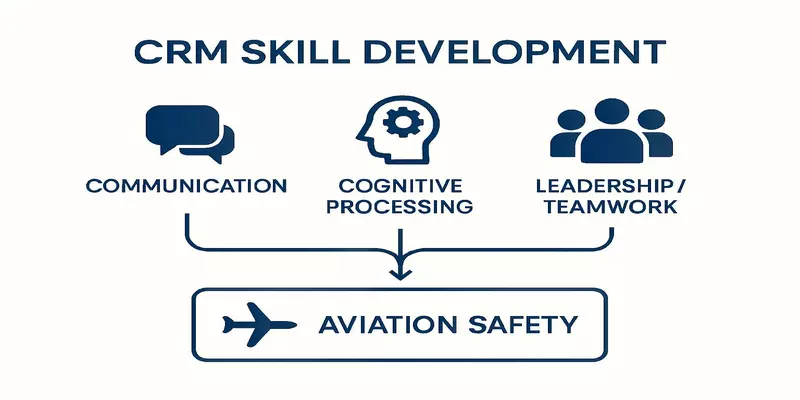
Communication and Teamwork Training
Employees should learn how to:
- Share accurate operational information.
- Give clear instructions.
- Listen actively.
- Communicate under pressure.
- Escalate concerns appropriately.
- Coordinate with other departments.
- Manage difficult passenger interactions.
These skills are essential because operational problems rarely remain within one department.
Scenario-Based Training
Scenario-based training allows employees to practice responding to realistic situations in a controlled environment.
Examples include:
- A sudden check-in system failure.
- A baggage discrepancy before departure.
- A delayed aircraft with connecting passengers.
- A passenger complaint involving missed connections.
- A shortage of ground handling equipment.
- Severe weather affecting airport operations.
Exercises should be designed around approved procedures and relevant operational responsibilities.
Employees can then discuss what went well, what could be improved, and which communication or coordination gaps need attention.
Continuous Professional Development
Training should not end after initial employment.
Aviation procedures, technology, operational risks, and customer expectations continue to evolve.
Regular refresher training, safety briefings, coaching, and performance reviews help employees maintain their skills.
Experienced supervisors can also share practical lessons with new employees, helping them understand how operational decisions affect the wider airport environment.
10. Building a Stronger Safety Culture Through Problem Solving in Aviation
Safety must remain the foundation of every aviation decision.
Empowered employees should be encouraged to identify hazards, report concerns, and participate in appropriate safety improvement activities.
This is an important part of an effective Safety Management System (SMS).
According to ICAO’s safety management framework, safety risk management involves identifying hazards, assessing risks, and implementing appropriate risk controls.
The Federal Aviation Administration (FAA) also describes safety management as a structured approach involving safety policy, safety risk management, safety assurance, and safety promotion.
These principles demonstrate that aviation safety is not simply about reacting after an incident. It also involves identifying potential problems before they result in harm.
Encourage Hazard Reporting
Employees who work directly with aircraft, passengers, baggage, and airport equipment may identify hazards during routine activities.
Examples include:
- Damaged ground support equipment.
- Unsafe working conditions.
- Foreign object debris on operational areas.
- Poorly maintained equipment.
- Unsafe vehicle movements.
- Repeated procedural non-compliance.
- Potential fatigue-related concerns.
Employees should report hazards through the appropriate company and airport reporting systems.
Apply Just Culture Principles
A positive safety culture encourages honest reporting and organizational learning.
A just culture supports fair treatment when employees report mistakes or safety concerns, while still recognizing that reckless conduct and deliberate violations require appropriate accountability.
This distinction is important.
If employees believe that reporting every mistake will automatically result in punishment, they may hesitate to communicate important safety information.
Managers should therefore encourage transparency, investigate events fairly, and take corrective action based on evidence.
Monitor Safety Performance
Airlines and ground handling providers can use safety performance information to identify trends and assess whether corrective actions are working.
Relevant indicators may include:
- Aircraft ground damage.
- Employee injuries.
- Baggage and loading errors.
- Reported hazards.
- Repeated procedural deviations.
- Corrective action completion.
IATA identifies occupational health and safety, aircraft ground damage, and load and loading errors among important ground operations safety performance areas.
Monitoring such information helps organizations move from reactive problem solving towards proactive risk management.
11. How Airlines Can Measure the Success of Problem-Solving Initiatives
Airlines should not assume that empowering employees automatically improves operational performance.
The results should be monitored through relevant and reliable performance indicators.
A useful measurement system combines operational efficiency, customer experience, safety performance, and employee development.
Operational Performance Indicators
Airlines may monitor:
- Departure punctuality.
- Aircraft turnaround performance.
- Average disruption recovery time.
- Baggage delivery performance.
- Check-in queue waiting times.
- Resource utilization.
These indicators can help managers identify areas where operational processes require improvement.
However, performance measurements must be interpreted carefully. For example, reducing turnaround time should never encourage teams to skip required safety or service procedures.
Customer Service Indicators
Customer experience can be assessed through:
- Passenger satisfaction surveys.
- Complaint resolution time.
- Complaint recurrence rates.
- Baggage-related complaints.
- Passenger feedback.
- Service quality assessments.
A reduction in repeated complaints may indicate that corrective actions are addressing underlying problems.
Employee Performance Indicators
Employee empowerment can also be assessed through:
- Training completion.
- Employee participation in improvement initiatives.
- Quality of operational reporting.
- Competency assessments.
- Team communication effectiveness.
- Employee feedback.
The purpose is not to encourage staff to close complaints quickly without resolving them. It is to understand whether employees are becoming more capable, confident, and effective.
Continuous Improvement
Performance information should lead to action.
If an airline discovers that baggage transfer delays repeatedly occur during particular periods, managers should investigate the cause and evaluate possible improvements.
After implementing changes, they should monitor the results and determine whether the problem has actually decreased.
This creates a continuous improvement cycle:
Identify → Analyse → Improve → Measure → Review
When this cycle becomes part of everyday operations, problem solving develops from an occasional management activity into an organizational habit.
12. The Future of Problem Solving in Aviation: What Lies Ahead?

The aviation industry continues to evolve through digital transformation, operational modernization, changing passenger expectations, and increasing attention to sustainability.
These developments will create new challenges and opportunities for airline teams.
More Data-Driven Decisions
Airlines will increasingly use operational data to understand delays, passenger demand, aircraft utilization, and resource requirements.
Employees and managers who can interpret information and convert it into practical decisions will become increasingly valuable.
Greater Collaboration Between Stakeholders
Airlines, airports, ground handling companies, regulators, and technology providers must work together to address complex operational challenges.
Standardized procedures and consistent communication can reduce operational differences and improve coordination.
IATA’s ground operations standards emphasize the importance of standardized procedures, training, safety performance, and operational efficiency.
Increasing Importance of Human Skills
Technology may automate certain administrative tasks, but effective communication, leadership, teamwork, and sound judgment will remain important.
Employees must be able to recognize when a situation requires human intervention, additional expertise, or formal escalation.
Stronger Focus on Resilience
Future airlines will need to prepare for unexpected disruptions, including severe weather, cybersecurity incidents, infrastructure limitations, and resource shortages.
Organizations that learn from previous challenges and develop effective contingency arrangements will be better prepared to maintain safe and reliable operations.
The future of problem solving in aviation will therefore depend on combining technology, trained people, effective leadership, and strong safety management.
13. Practical Lessons for Aviation Managers and Supervisors
For managers and supervisors, improving problem solving does not necessarily require a major organizational transformation.
Small and consistent improvements can produce meaningful results.
Here are some practical actions:
- Listen to frontline employees: They often understand operational problems before they reach management.
- Define responsibilities: Ensure every employee understands their authority and escalation requirements.
- Encourage early reporting: Address operational and safety concerns before they become larger problems.
- Improve shift handovers: Share accurate information about unresolved issues and operational priorities.
- Provide regular training: Develop technical knowledge, communication skills, and decision-making capabilities.
- Review recurring problems: Investigate root causes instead of repeatedly applying temporary solutions.
- Recognize employee contributions: Appreciate practical ideas and responsible problem solving.
- Use operational data: Identify patterns and make informed improvements.
- Maintain safety standards: Never allow commercial or scheduling pressure to override safety requirements.
- Follow up on corrective actions: Confirm that improvements are effective and sustainable.
A successful supervisor understands that managing people is not simply about distributing tasks. It is about helping employees perform their responsibilities confidently while maintaining operational discipline.
An empowered team is not a team without rules. It is a team that understands the rules, knows its responsibilities, and can respond effectively within the established framework.
Conclusion: Empowered Teams Build Better Airlines
The aviation industry will always face operational challenges. Flight delays, baggage problems, technical disruptions, passenger complaints, staffing shortages, and unexpected airport situations are part of operating in a complex global environment.
However, the way airlines respond to these challenges makes a significant difference.
Problem-solving in aviation is not the responsibility of managers alone. It is a shared responsibility involving every department and every employee.
When frontline employees are trained, supported, and given appropriate authority, they can identify problems earlier, communicate more effectively, and contribute to better operational decisions.
Managers must create an environment where employees feel comfortable raising concerns, sharing ideas, and learning from experience. At the same time, airlines must maintain clear procedures, proper supervision, regulatory compliance, and an uncompromising commitment to safety.
Ultimately, empowered teams help airlines become more responsive, efficient, customer-focused, and resilient.
An aircraft may have powerful engines, advanced technology, and sophisticated navigation systems, but successful airline operations also depend on the people working together behind every departure.
A stronger airline begins with a team that knows how to solve problems, not simply how to report them
Frequently Asked Questions About Problem Solving in Aviation
1. What Is Problem Solving in Aviation?
Problem solving in aviation is the process of identifying, analyzing, and resolving operational, technical, safety, and customer service challenges within the aviation industry. It involves effective communication, teamwork, informed decision-making, and compliance with approved procedures.
2. Why Is Problem Solving Important in Airline Operations?
Problem solving is important because airlines operate in a complex and time-sensitive environment. Effective solutions help manage flight disruptions, baggage issues, passenger complaints, staffing challenges, and operational delays while maintaining safety and service standards.
3. How Does Employee Empowerment Improve Problem Solving in Aviation?
Employee empowerment gives trained employees clearly defined authority, resources, and responsibility to handle appropriate situations. It can reduce unnecessary delays, improve accountability, encourage communication, and help frontline teams respond more effectively to operational challenges.
4. What Skills Are Required for Effective Problem Solving in Aviation?
Important skills include communication, teamwork, critical thinking, decision-making, leadership, time management, situational awareness, and conflict resolution. Employees must also understand relevant operational procedures, safety requirements, and their own decision-making authority.
5. How Can Airlines Develop a Strong Problem-Solving Culture?
Airlines can develop a strong problem-solving culture by encouraging employee participation, providing regular training, improving communication, supporting safety reporting, investigating recurring problems, and recognizing effective teamwork. Leadership must also ensure that employees have the resources and authority required to perform their responsibilities.
Facebook: https://www.facebook.com/rehan.ghauri
